
Hiring a Contractor: Questions to Ask Before Signing Anything
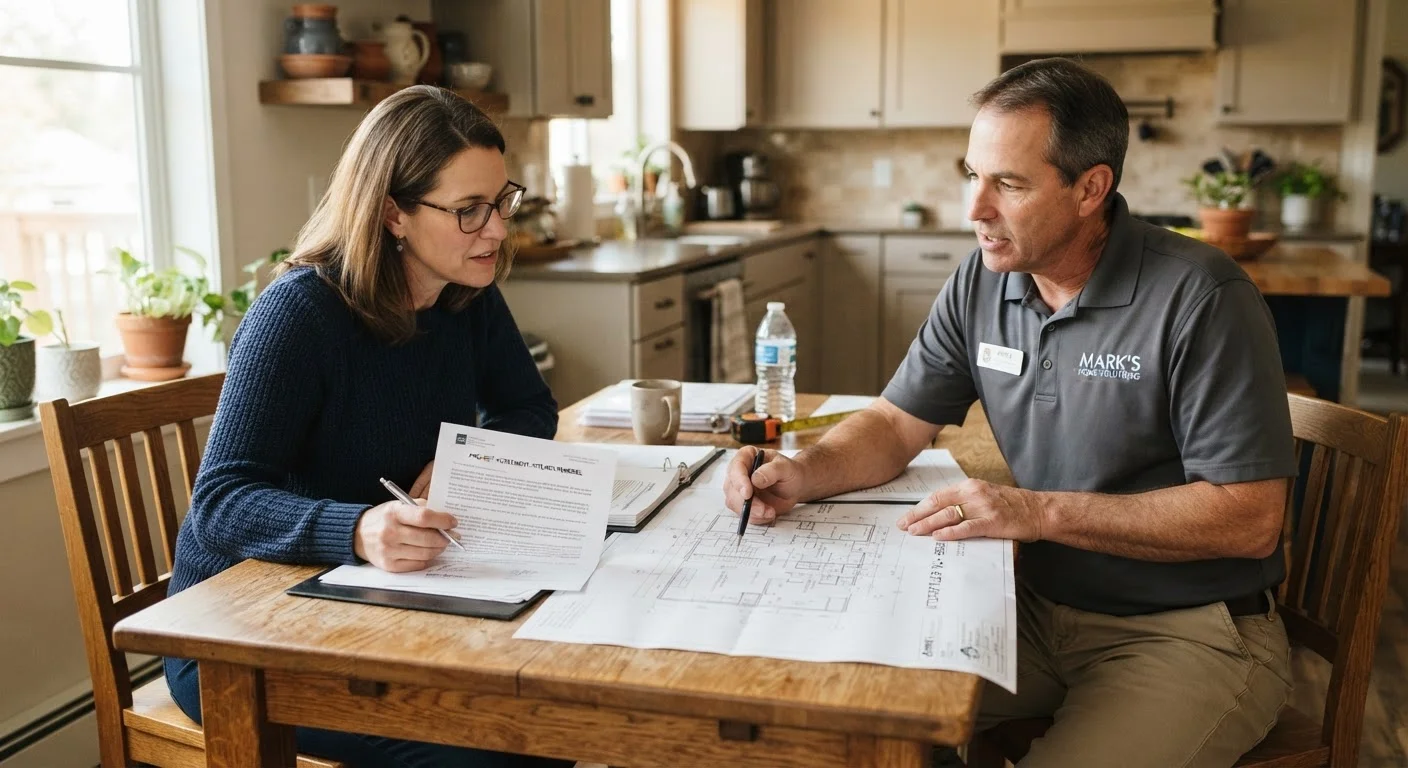
Photo credit: FaqBulletin.com | Information Made Easy
In this article
Vet bids, understand contracts, and protect your project. A practical guide to evaluating contractors with the right questions at each stage.
Key Takeaways
- Always verify a contractor's license, insurance, and references before agreeing to any work.
- Get at least three written bids and compare them line by line, not just by total price.
- A solid contract should spell out scope, materials, timeline, and payment schedule in detail.
- Never pay more than 10–15% upfront; tie remaining payments to completed milestones.
- Understand your permit responsibilities — some projects legally require licensed-trade inspections.
Start with Credentials, Not Price
The instinct to lead with cost is understandable, but vetting a contractor's qualifications first protects you from far costlier problems down the road. Before discussing dollars, ask these foundational questions:
- Are you licensed in this state for this type of work? Licensing requirements vary by state and by trade. Electrical, plumbing, and HVAC work almost always require licensed professionals. Ask to see the license number and verify it independently through your state's contractor licensing board.
- Do you carry general liability and workers' compensation insurance? Request certificates of insurance — not just verbal confirmation. If a worker is injured on your property and the contractor has no workers' comp, you may be liable.
- Can you provide three recent references for similar projects? Actually call them. Ask whether the work was finished on time, on budget, and whether the contractor communicated well throughout.
Understanding permit requirements is equally critical at this stage. Our guide on permits, codes, and licensed trades explains when your project likely requires inspections and what happens if you skip them.
Comparing Bids the Right Way
Once you have credentials confirmed, collect at least three written bids. A single quote gives you no context; three lets you spot outliers — both suspiciously low and unnecessarily high.
When the bids arrive, resist ranking them by total. Instead, break each one down:
- Are materials specified by name and quantity? A vague line item like "flooring materials" can mean anything. Ask for manufacturer names, product grades, and square footage.
- What is and isn't included? Debris removal, subfloor repair, and permit fees are commonly excluded from initial bids. Ask each contractor to confirm what happens if those costs arise.
- How is labor priced? A daily rate vs. a fixed labor total can have very different cost implications if the job runs long.
If one bid is dramatically lower than the others, ask the contractor to walk you through their assumptions. Underpriced bids often signal that corners will be cut on materials, or that scope was misunderstood — both create headaches later.
~35%
Homeowners who experience contractor disputes
Industry surveys consistently find that roughly a third of homeowners report significant disputes with contractors, most tied to unclear contracts or payment expectations.
3+
Bids recommended before choosing a contractor
Consumer protection agencies across the U.S. advise getting a minimum of three written, itemized bids for any significant home improvement project.
What a Strong Contract Must Include
A handshake or email thread is not a contract. Before any work begins, you need a signed written agreement covering:
- Full scope of work — a detailed description of every task, not just the headline project.
- Materials list — specific products, grades, and quantities. If substitutions are allowed, the contract should require your written approval.
- Start and projected completion dates — include language about what happens if work stalls without cause.
- Payment schedule tied to milestones — never pay the full amount upfront. A typical structure is 10–15% to start, installments at defined stages, and the final 10–15% held until you've inspected and approved the finished work.
- Lien waiver provisions — in most states, subcontractors can place a lien on your home if the general contractor doesn't pay them. Ask how the contract handles this.
- Change order process — any deviation from the original scope should require a written change order with revised cost before work proceeds.
Hold the Final Payment Until You're Satisfied
Retaining 10–15% of the total contract value until the final walkthrough is complete is standard practice for good reason — it ensures the contractor has financial motivation to finish every detail correctly. Don't let social pressure push you to release that payment early. A reputable contractor will expect and respect this structure.
Red Flags Worth Walking Away From
Even a polished proposal can hide warning signs. Watch for these patterns:
- Pressure to decide immediately — legitimate contractors don't manufacture urgency around bids.
- Cash-only payment requests — eliminates your paper trail and dispute options.
- No physical business address — a contractor with only a cell number and a truck is harder to hold accountable.
- Reluctance to pull permits — unpermitted work can surface as a serious liability when you sell your home or file an insurance claim. Think of vetting a contractor similarly to how you'd evaluate any significant service provider: the same due-diligence mindset applies whether you're comparing repair shops for your vehicle or evaluating bids for a home renovation.
- Vague or verbal-only answers to contract questions — if a contractor won't put it in writing, that reluctance tells you something important.
Taking the time to ask hard questions before signing is the single most effective way to protect your investment, your home, and your peace of mind.

Author
Home & Garden Editorial Team
Home & Garden Editorial Team is the collective byline for our editorial team and contributor network. Articles published under this byline or an editorial pen name are researched, written, and reviewed according to our editorial standards for clarity, consistency, and independence before publication.
View all articles →