
Dealer Service vs. Independent Shop: How to Weigh Your Options
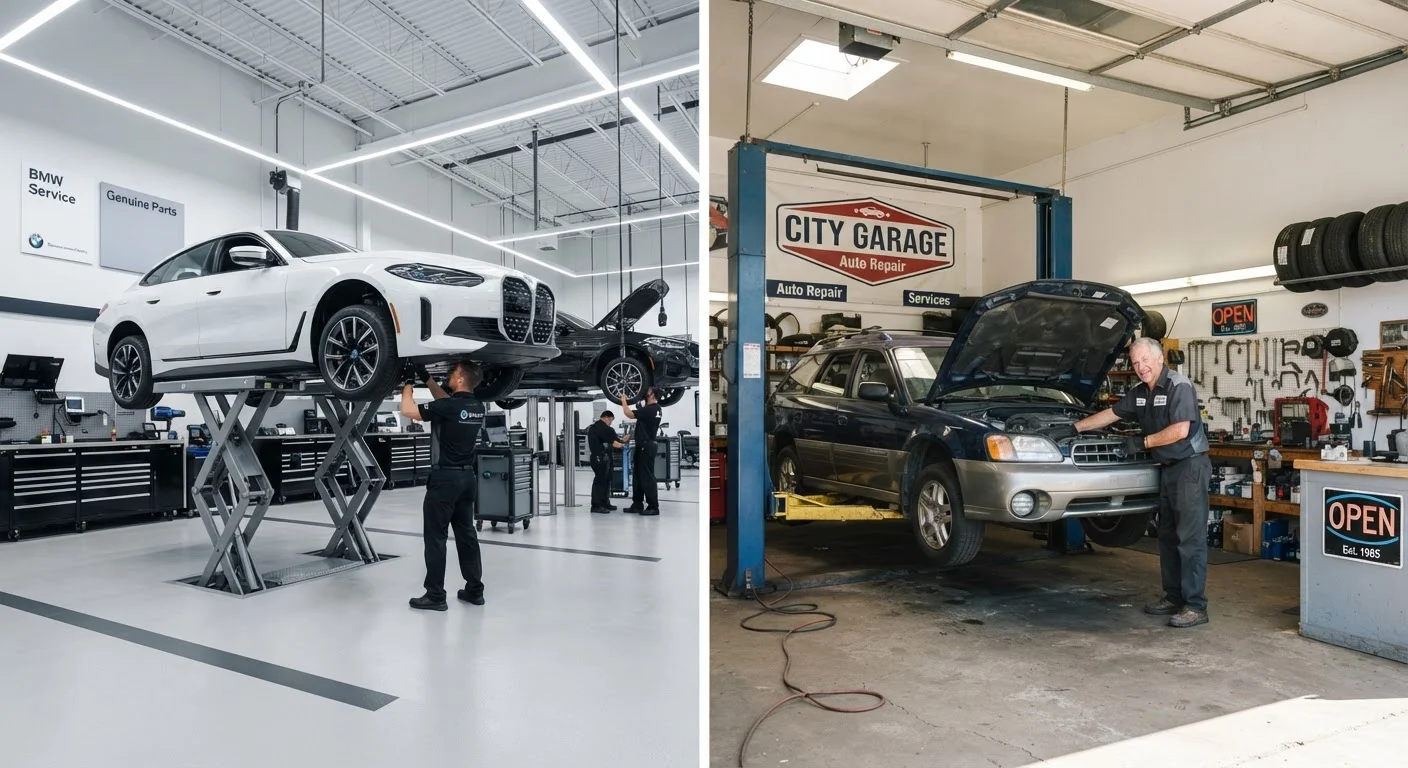
Photo credit: FaqBulletin.com | Information Made Easy
In this article
Warranty implications, cost, expertise, and convenience—here's an honest look at what each type of service provider offers.
Key Takeaways
- Dealerships specialize in your vehicle's make and have access to manufacturer-specific tools and software.
- Independent shops typically charge lower labor rates and can offer more flexible service options.
- Federal law generally protects your warranty rights when using qualified independent repair shops.
- The right choice often depends on your vehicle's age, complexity, and current warranty status.
- Keeping detailed service records matters regardless of which type of shop you choose.
What Each Type of Shop Actually Offers
When your vehicle needs service, you face a recurring decision: take it to the dealership that sold it to you, or visit a neighborhood independent repair shop. Both options are legitimate - each with a distinct set of strengths and tradeoffs worth understanding before you hand over your keys.
Dealership service centers are affiliated with a specific vehicle manufacturer. Their technicians receive factory training and have access to proprietary diagnostic software, original equipment manufacturer (OEM) parts, and manufacturer technical service bulletins. For complex repairs involving the vehicle's electronics, powertrain calibrations, or active safety systems, this specialization can be a meaningful advantage.
Independent repair shops are privately owned businesses not tied to any single brand. Many employ ASE-certified technicians - professionals who have passed standardized tests administered by the National Institute for Automotive Service Excellence. These shops typically work on a broad range of makes and models, often using quality aftermarket parts and third-party diagnostic tools that meet or exceed OEM specifications for most common repairs.
| Dealership Service | Independent Shop | |
|---|---|---|
| Technician Training | Factory-trained for specific make | ASE-certified, broad multi-make experience |
| Diagnostic Tools | Proprietary OEM software | Third-party tools; may lack brand-specific access |
| Parts Used | OEM parts standard | OEM or quality aftermarket, often buyer's choice |
| Labor Cost | Typically higher hourly rates | Typically lower hourly rates |
| Warranty Work & Recalls | Handles manufacturer warranty and recalls directly | Cannot process factory warranty claims |
| Best Vehicle Age | New to mid-age, especially under warranty | Mid-age to older vehicles |
| Personalized Service | High volume; less personal continuity | Often builds long-term client relationships |
Warranty: What the Law Actually Says
One of the most persistent myths about vehicle maintenance is that taking your car to an independent shop automatically voids the factory warranty. This is generally not accurate under U.S. federal law.
The Magnuson-Moss Warranty Act of 1975 places significant restrictions on manufacturers' ability to void a warranty simply because the owner chose a non-dealer service provider. In most cases, a manufacturer must demonstrate that the independent shop's work directly caused the failure in question - not merely that the car was serviced elsewhere.
Know Your Rights Before You Service
Under the Magnuson-Moss Warranty Act, manufacturers generally cannot void your warranty solely because you used an independent shop for routine maintenance. Request that any shop performing work use fluids and parts that meet your manufacturer's specifications, and keep every receipt as documentation. When in doubt, a quick call to your dealership's service advisor before the appointment can clarify whether a specific repair has warranty implications.
That said, there are important caveats. Some warranty provisions - particularly those tied to specific fluids, software calibrations, or specialized components - may require dealer service to remain valid. Always review your warranty documentation carefully and consult the manufacturer's maintenance guidelines if you're uncertain. If your vehicle is still within its bumper-to-bumper coverage period, confirming any gray areas with the dealer before independent service is a prudent step.
Cost, Convenience, and Expertise Compared
Labor rates at dealerships tend to run higher than at independent shops, reflecting overhead costs, specialized training, and facilities. For routine services like oil changes, tire rotations, or brake inspections, this difference can be noticeable. Independent shops frequently pass savings along to customers through lower hourly rates and flexibility in parts sourcing.
OEM vs. aftermarket parts is another consideration. Dealerships default to OEM parts, which carry the manufacturer's backing. Many independent shops offer a choice between OEM and quality aftermarket parts - a distinction that matters more for some components than others. For high-wear items like brake pads or filters, reputable aftermarket alternatives often perform comparably at lower cost.
Diagnostic capability increasingly favors dealerships for late-model vehicles with advanced driver-assistance systems (ADAS), hybrid or electric powertrains, and over-the-air software architecture. Calibrating radar sensors or programming a replacement control module often requires proprietary tools. For vehicles more than five to seven years old, however, independent shops generally have equivalent access to the necessary diagnostic equipment.
For more context on managing the full cost of vehicle ownership, see how to avoid being overcharged on scheduled maintenance. And if you're weighing whether owning your car long-term even makes sense, understanding the financial tradeoffs of owning versus leasing can add useful perspective.
How to Make the Decision for Your Situation
A few practical questions can guide most service decisions:
- Is your vehicle under warranty? If yes, review what the warranty requires and consider dealer service for any work that could interact with covered components.
- How old and complex is your vehicle? Newer vehicles with sophisticated electronics often benefit from dealer access to manufacturer tools. Older, simpler vehicles rarely require that level of specialization.
- What's the nature of the repair? Routine maintenance - oil changes, fluid flushes, belt replacements - is well within the competence of a qualified independent shop. Software updates, recall work, and ADAS calibrations are typically best handled by the dealer.
- Do you have a trusted shop with a track record? A long-established independent shop with verifiable reviews and certified technicians can offer continuity and personalized attention that a dealership's service queue sometimes cannot.
Regardless of which route you choose, maintain a thorough service record. Document every visit, keep receipts, and note the mileage at each service. This paper trail protects your warranty rights, supports resale value, and helps any future technician understand your vehicle's history. You might also explore where DIY maintenance saves money and where it gets risky for tasks you might handle yourself between professional visits.

Author
Automotive Editorial Team
Automotive Editorial Team is the collective byline for our editorial team and contributor network. Articles published under this byline or an editorial pen name are researched, written, and reviewed according to our editorial standards for clarity, consistency, and independence before publication.
View all articles →