
Owning vs. Leasing a Vehicle: The Financial Tradeoffs Explained
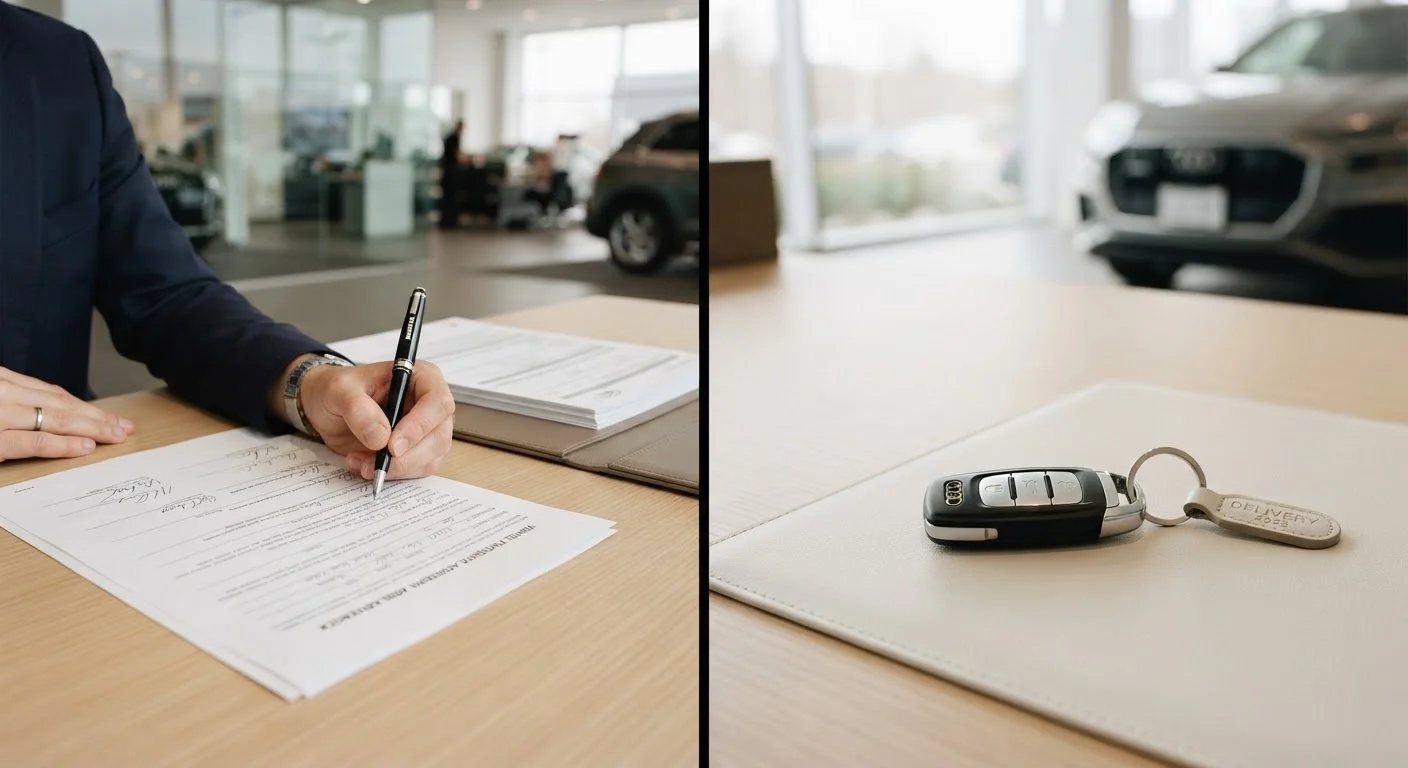
Photo credit: FaqBulletin.com | Information Made Easy
In this article
Leasing offers lower monthly payments; owning builds equity. A clear comparison of the long-term financial implications of each path.
Key Takeaways
- Leasing typically offers lower monthly payments but builds no equity in the vehicle.
- Buying costs more upfront but results in ownership of an asset you can sell or keep.
- Depreciation hits hardest in the first few years - a key factor in both paths.
- Lease agreements carry mileage limits and wear penalties that can add up quickly.
- Long-term drivers generally spend less per mile owning; frequent upgraders may favor leasing.
- Your credit score, annual mileage, and budget timeline all affect which option makes sense.
How Each Path Works Financially
When you buy a vehicle - whether with cash or through a loan - you're purchasing an asset outright. Your monthly loan payments build toward full ownership, and once the loan is paid off, you hold the title free and clear. You're free to sell, trade in, modify, or simply drive it into the ground.
When you lease a vehicle, you're essentially renting it for a defined term - typically 24 to 39 months. Your monthly payment covers the vehicle's projected depreciation over that period plus a finance charge (called the money factor), not the full value of the car. At the end of the lease, you return the vehicle or pay a buyout price to purchase it. For more on how depreciation shapes both scenarios, see how car depreciation actually works.
The fundamental financial difference: buying is a path to ownership of an asset; leasing is a recurring cost with no residual ownership unless you opt to buy at term's end.
| Criterion | Buying (Loan) | Leasing | |
|---|---|---|---|
| Monthly Payment | Higher - covers full vehicle value | Lower - covers depreciation only | |
| Ownership at End of Term | Yes - you hold the title | No - vehicle is returned | |
| Mileage Flexibility | Unlimited | Capped - overage fees apply | |
| Customization | Allowed - it's your property | Restricted - must be returned stock | |
| Long-Term Cost | Lower after loan payoff | Higher - perpetual payments | |
| Maintenance Responsibility | Full owner responsibility | Covered partly by warranty cycle | |
| Equity / Resale Value | Builds over time | None - no asset accumulated |
Where Leasing Costs More Than It Appears
Lease agreements include terms that can significantly raise your effective cost if you're not careful. Mileage caps - commonly 10,000 to 15,000 miles per year - charge a per-mile penalty (often $0.15-$0.30 per mile) for overages. A driver who logs 18,000 miles annually and is capped at 12,000 could owe $900-$1,800 at lease end just in mileage fees.
Wear-and-tear charges are another hidden exposure. Lessees must return the vehicle in acceptable condition - definitions vary by lender - and can be billed for anything from minor dings to worn tires. These end-of-lease surprises are a common frustration for first-time lessees.
Perhaps most importantly: because you're perpetually making monthly payments with no ownership phase, leasing costs more over a lifetime of car use than buying and holding. The lessee who continuously cycles from one lease to the next never reaches a payment-free period.
Gap Insurance Is Rarely Optional on Leases
If a leased vehicle is totaled or stolen, standard auto insurance pays the market value - which may be less than what you still owe under the lease contract. Gap insurance (Guaranteed Asset Protection) covers that difference. Many lease agreements include it, but not all. Verify your coverage before driving off the lot.
The Long-Term Math on Buying
Buying carries higher upfront friction - a larger down payment is often required to avoid being "upside down" on a loan, and monthly payments during the loan term typically exceed equivalent lease payments. However, once the loan is retired, the vehicle continues to deliver transportation value at dramatically lower monthly cost. Even as maintenance expenses rise with age, total ownership cost per mile tends to fall significantly in the post-loan years.
There's also the matter of equity. A paid-off vehicle can be traded in, sold, or used as collateral. That residual value doesn't exist in a lease. For households thinking about long-term financial stability, managing assets and liabilities together is worth considering as part of any vehicle decision.
That said, buying isn't consequence-free. Owners carry full responsibility for repair costs once a factory warranty expires - a used vehicle out of warranty can generate unpredictable expenses. See the true cost of owning a car in America for a full breakdown of what vehicle ownership costs beyond the sticker price.
Which Path Fits Your Situation
There's no single right answer, but a few questions sharpen the decision considerably:
- How many miles do you drive annually? High-mileage drivers are strongly penalized under standard lease terms. Buying is generally the more practical choice if you exceed 15,000 miles per year.
- How long do you plan to keep the vehicle? Leasing favors those who want a new vehicle every two or three years. Owners who hold their vehicle for seven or more years extract the most financial value from purchasing.
- How important is cash flow flexibility? Lower monthly lease payments may free up budget for other financial priorities - but only if the discipline to direct that freed-up cash elsewhere is there.
- What's your credit profile? Both leasing and financing require creditworthiness; very favorable terms on either path typically require a strong score.
If you're new to vehicle ownership and trying to get your footing on costs and obligations, our guide for first-time car owners covers the administrative and financial basics. And if you're managing a vehicle on a constrained budget, keeping a car on a tight household budget offers practical strategies regardless of how you acquired the vehicle.
This article is for general informational and educational purposes only and does not constitute personalized financial or legal advice. Consult a qualified financial professional for guidance specific to your situation.

Author
Automotive Editorial Team
Automotive Editorial Team is the collective byline for our editorial team and contributor network. Articles published under this byline or an editorial pen name are researched, written, and reviewed according to our editorial standards for clarity, consistency, and independence before publication.
View all articles →