
How Car Depreciation Actually Works - and Why It Matters
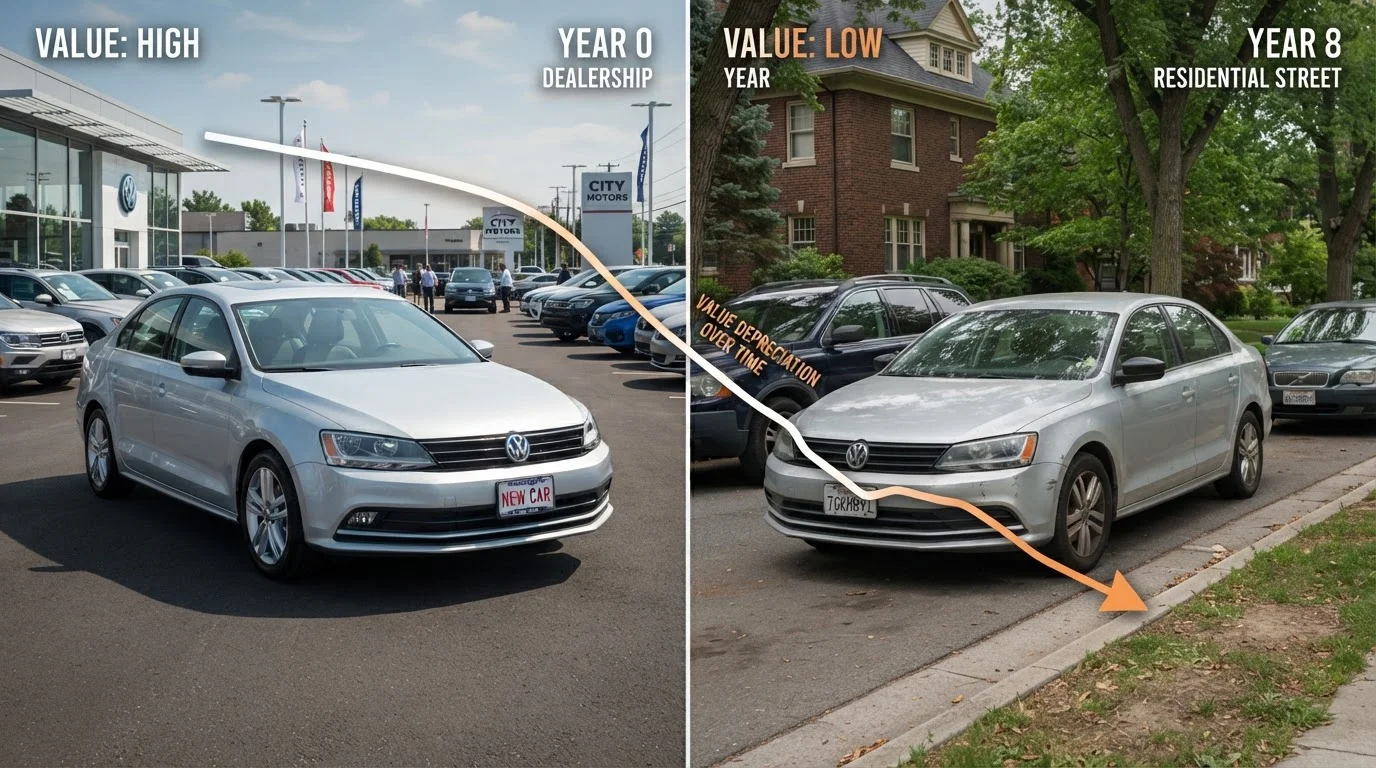
Photo credit: FaqBulletin.com | Information Made Easy
In this article
Depreciation is the single largest cost of car ownership. Here's how it's calculated, when it hits hardest, and what it means for your finances.
Key Takeaways
- New vehicles typically lose 15-25% of their value in the first year alone.
- Depreciation is often the largest single cost of car ownership - larger than fuel or insurance.
- Vehicles generally lose around 50-60% of their value within the first five years.
- Factors like mileage, condition, and vehicle type all influence how fast a car depreciates.
- Understanding depreciation helps you make smarter decisions about buying, selling, or leasing.
Why Depreciation Is the Cost You Don't See on a Bill
Every car owner pays for fuel, insurance, and maintenance - those costs show up as regular charges. Depreciation works differently. It's a silent drain on your vehicle's value that accumulates whether you drive 5,000 miles a year or 20,000. Because no one sends you an invoice for it, it's easy to ignore - but that doesn't make it any less real.
According to data from industry sources including Edmunds and AAA's annual driving cost studies, depreciation consistently accounts for the largest share of total vehicle ownership costs, often exceeding $3,000-$5,000 per year for a mid-range new vehicle in its early years. For a fuller picture of all the costs involved, see the true cost of owning a car in America.
15-25%
Value lost in a new car's first year
Industry analyses consistently find new vehicles lose this share of their value within 12 months of purchase, primarily due to the shift from new to used status.
~50-60%
Value lost over first five years
Vehicle valuation data from sources including Edmunds and Kelley Blue Book suggest most new cars lose roughly half or more of their original value within five years.
$3,000-$5,000
Annual depreciation cost for a typical new vehicle
AAA's annual Your Driving Costs study has consistently ranked depreciation as the single largest component of new vehicle ownership cost in the US.
How Depreciation Is Calculated
Depreciation is simply the difference between what you paid for a vehicle and what it's worth today. If you bought a car for $32,000 and it's now worth $20,000 three years later, you've experienced $12,000 in depreciation - roughly $4,000 per year on average.
In practice, depreciation doesn't occur evenly. The steepest drop happens in the first 12 months, when a new car transitions to "used" status and loses the premium buyers pay for that new-car experience. After that initial cliff, the rate of decline typically slows but continues for the life of the vehicle.
A commonly cited pattern is that a vehicle loses roughly 50-60% of its original value over the first five years. The exact rate depends on several variables:
- Vehicle type and segment: Pickup trucks and certain SUVs have historically retained value better than compact sedans in US markets.
- Mileage: Higher annual mileage accelerates depreciation because it shortens remaining useful life.
- Condition: Accident history, interior wear, and mechanical reliability all influence what buyers will pay.
- Market demand: Economic conditions, fuel prices, and consumer preferences shift over time and can affect resale values for entire categories of vehicles.
When Depreciation Hits Hardest - and Why It Matters Financially
The first year of ownership is when depreciation is most aggressive. Driving a brand-new vehicle off the lot and returning the next day would typically yield a meaningfully lower trade-in offer than what was paid the day before - not because the car changed, but because its market classification did.
This timing has practical financial consequences. If you finance a new vehicle and the loan balance falls slower than the car depreciates, you can end up "underwater" or "upside down" on the loan - meaning you owe more than the vehicle is currently worth. This creates a gap that can be financially painful if you need to sell, trade in, or if the vehicle is totaled in an accident.
“Depreciation is a real cost, even though you never write a check for it. Most drivers dramatically underestimate how much value their vehicle is losing each year.”
— Greg Brannon, Director of Automotive Engineering, AAA
Understanding this dynamic is directly relevant to whether buying or leasing makes more sense for your situation. When you lease, the monthly payment is structured around the vehicle's projected depreciation over the lease term - you're essentially paying for the value the car loses, not the whole car. See the financial tradeoffs of owning vs. leasing for a detailed comparison.
What You Can - and Can't - Control
No driver can halt depreciation, but ownership decisions do influence its pace. Keeping a vehicle in good mechanical and cosmetic condition, following scheduled maintenance, and avoiding accidents all help preserve resale value relative to comparable vehicles. Excessive mileage, deferred repairs, and a documented accident history all accelerate value loss.
Timing also matters. Selling or trading in a vehicle before major depreciation milestones - such as crossing high-mileage thresholds or approaching a model redesign cycle - can sometimes yield better resale outcomes, though market conditions always play a role.
For households managing vehicle ownership on a tighter budget, keeping a car on a tight household budget covers strategies for reducing the overall financial burden. And if depreciation makes you rethink ownership entirely, renting vs. owning everyday items explores when alternatives to outright purchase can make financial sense.
This article is for general informational purposes only and does not constitute financial or legal advice. For guidance specific to your financial situation, consult a qualified financial professional.
Frequently Asked Questions

Author
Automotive Editorial Team
Automotive Editorial Team is the collective byline for our editorial team and contributor network. Articles published under this byline or an editorial pen name are researched, written, and reviewed according to our editorial standards for clarity, consistency, and independence before publication.
View all articles →