
Whole Foods vs. Processed Foods: What the Difference Really Means for Your Health
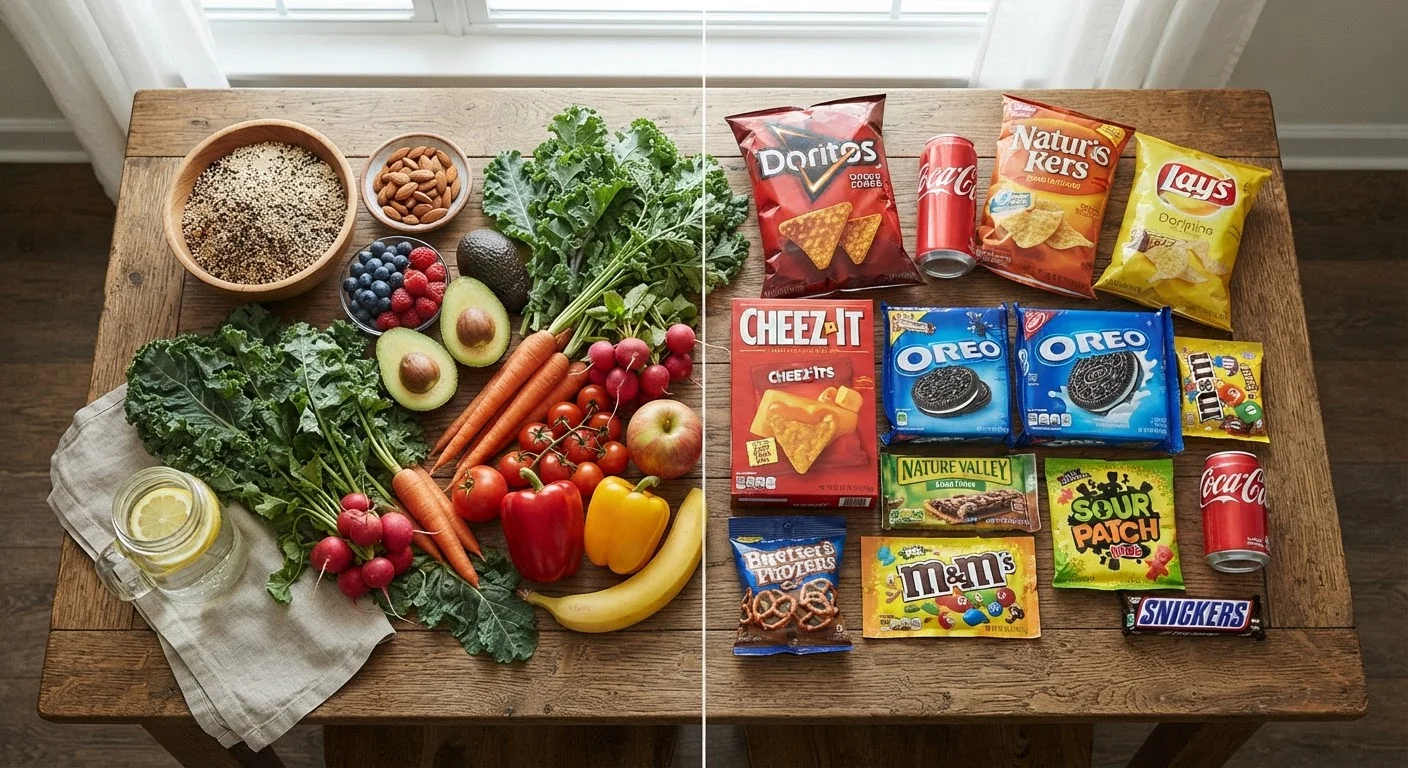
Photo credit: FaqBulletin.com | Information Made Easy
In this article
Not all processing is equal. Understand where the real health distinctions lie between whole, minimally processed, and ultra-processed foods.
Key Takeaways
- "Processed" covers a wide spectrum — not all processed foods are nutritionally equivalent or harmful.
- Ultra-processed foods are the category most consistently linked to adverse health patterns in research.
- Whole and minimally processed foods tend to deliver more fiber, micronutrients, and fewer additives.
- Food labels can help you identify degree of processing — ingredient lists are especially informative.
- A balanced diet can include some processed foods; the overall dietary pattern is what matters most.
What We Actually Mean by 'Processed'
The word "processed" is one of nutrition's most overloaded terms. Technically, any food that has been washed, cut, cooked, fermented, frozen, or packaged has undergone some form of processing. By that definition, bagged spinach and pasteurized milk are processed — yet few nutrition researchers would place them in the same category as a cheese puff or a packaged dessert cake.
A more useful framework is the NOVA classification, developed by nutrition researchers at the University of São Paulo. NOVA divides foods into four groups based on the extent and purpose of industrial processing:
- Group 1 — Unprocessed or minimally processed foods: Fresh fruits, vegetables, plain meats, eggs, plain nuts, and legumes. Altered only by cleaning, drying, or basic preservation.
- Group 2 — Processed culinary ingredients: Oils, butter, flour, sugar, and salt — used in home cooking but rarely eaten alone.
- Group 3 — Processed foods: Products made by adding salt, sugar, or oil to Group 1 foods. Examples include canned tomatoes, salted nuts, and simple cheeses.
- Group 4 — Ultra-processed foods (UPFs): Industrially formulated products containing ingredients rarely found in a home kitchen — emulsifiers, flavor enhancers, hydrogenated oils, high-fructose corn syrup, and artificial colors. Think packaged snacks, carbonated soft drinks, and reconstituted meat products.
This distinction matters because health research increasingly points to Group 4 — not processing in general — as the category most associated with negative dietary outcomes. Understanding where a food falls on this spectrum is far more useful than simply labeling something "processed" as shorthand for unhealthy.
A Note on the Term 'Natural'
"Natural" is not a regulated nutritional claim in the United States — it carries no standardized legal definition in food labeling. A product labeled natural may still be heavily processed and high in added sugar or sodium. When evaluating a food's degree of processing, the ingredient list is a more reliable tool than front-of-package terms like "natural," "clean," or "simple."
How Whole Foods and Ultra-Processed Foods Differ Nutritionally
Whole foods — fruits, vegetables, whole grains, legumes, nuts, seeds, and unmodified animal products — arrive with their nutritional matrix largely intact. That matrix includes not just individual vitamins and minerals, but the physical structure of the food itself: cell walls, fiber, water content, and naturally occurring phytochemicals that interact in complex ways during digestion.
Ultra-processed foods are typically low in dietary fiber, micronutrients, and water, while being calorie-dense and high in added sugars, sodium, and saturated or trans fats. They are also engineered for palatability — combinations of fat, sugar, and salt calibrated to encourage consumption beyond hunger cues, according to food science research.
| Criterion | Whole Foods | Ultra-Processed Foods |
|---|---|---|
| Fiber content | Naturally high | Typically very low |
| Added sugars | None | Often high |
| Sodium | Naturally low | Frequently elevated |
| Micronutrient density | High; intact vitamins and minerals | Low; often added back artificially |
| Ingredient list length | One ingredient | Often 20+ ingredients |
| Shelf life | Short; perishable | Extended via preservatives |
| Calorie density | Moderate; water and fiber add volume | High relative to volume |
| Research-linked outcomes | Associated with favorable health patterns | Associated with higher disease risk in observational studies |
Research published in peer-reviewed journals, including large prospective studies in Europe and the United States, has found consistent associations between high ultra-processed food consumption and elevated rates of obesity, type 2 diabetes, cardiovascular disease, and certain cancers. It is important to note that most of this evidence is observational — it identifies associations rather than proving direct causation. Nonetheless, the consistency across populations and study designs has led many health authorities to highlight UPF reduction as a meaningful dietary goal.
For a deeper look at how to decode the labels on these products, see our guide on reading a nutrition facts label.
Where Minimally Processed Foods Fit In
An honest discussion of this topic requires acknowledging that not all processed foods represent a nutritional compromise. Minimally processed and Group 3 foods include some genuinely practical and nutritious options:
- Frozen vegetables: Flash-frozen shortly after harvest, they often retain comparable — sometimes superior — vitamin content to fresh produce that has been transported and stored for days.
- Canned legumes: Sodium-rinsed canned beans are a highly accessible source of plant protein and fiber. Learn more in our comparison of protein sources.
- Plain fermented dairy: Yogurt and kefir involve bacterial fermentation — a process that alters the food but may support gut health according to current research.
- Whole grain breads and cereals: When made with intact grains and minimal additives, these retain meaningful fiber content.
The practical takeaway for households is to focus on ingredient lists rather than front-of-package claims. A short ingredient list featuring recognizable foods is a reliable indicator of minimal processing. When ingredient lists run long and include industrial additives with unfamiliar names, that food likely belongs in the ultra-processed category — regardless of what health claims appear on the front of the package. Our article on popular nutrition claims that aren't backed by science explores how marketing language can diverge from nutritional reality.
This article is for general informational and educational purposes only and does not constitute medical or dietary advice. Consult a qualified healthcare professional or registered dietitian for guidance specific to your health needs.

Author
Health & Wellness Editorial Team
Health & Wellness Editorial Team is the collective byline for our editorial team and contributor network. Articles published under this byline or an editorial pen name are researched, written, and reviewed according to our editorial standards for clarity, consistency, and independence before publication.
View all articles →