
Transferring a Car Title: What the Process Actually Involves
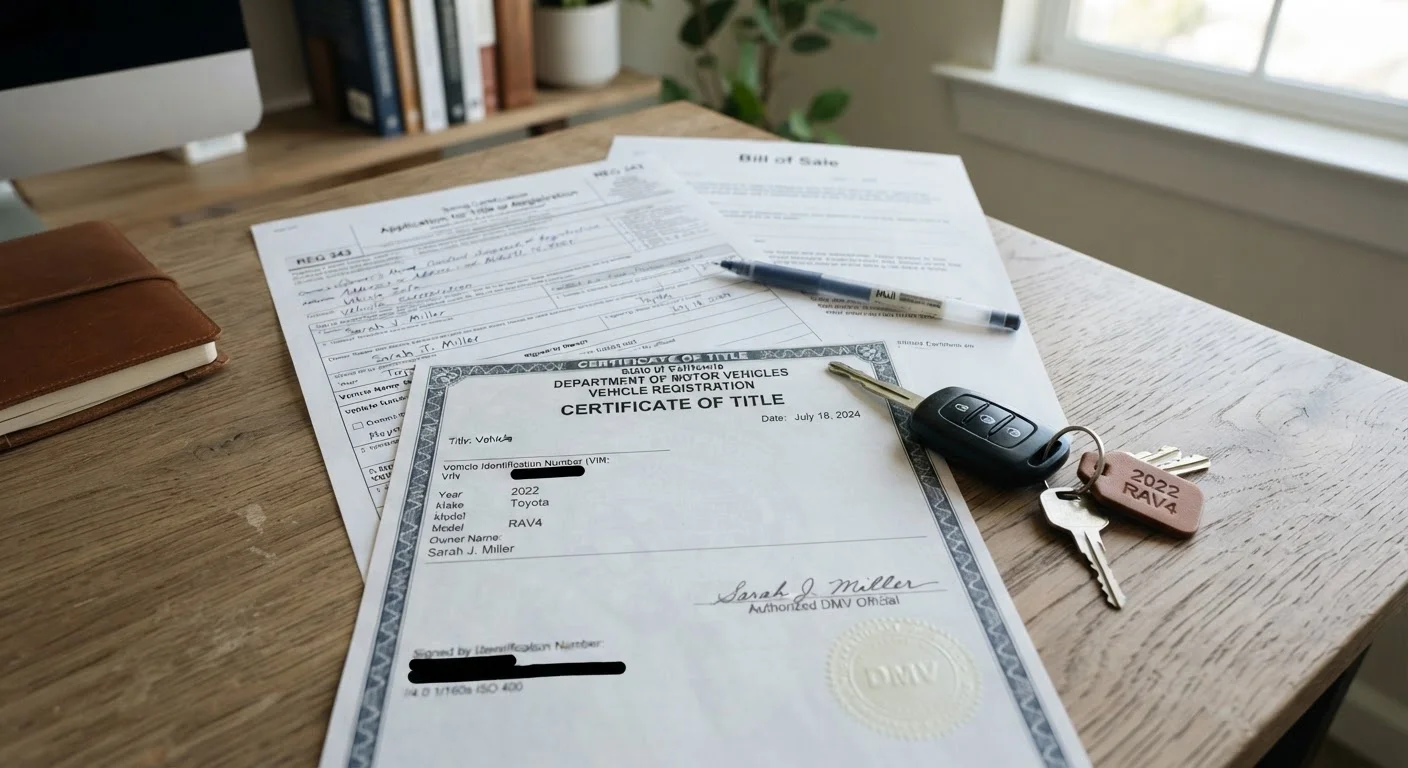
Photo credit: FaqBulletin.com | Information Made Easy
In this article
Title transfers can trip up even experienced owners. This guide walks through the paperwork, fees, and common holdups at the DMV.
Key Takeaways
- Both the seller and buyer must sign the title correctly - errors cause the most common transfer rejections.
- Most states require the transfer to be filed within 10 to 30 days after the sale date.
- Fees vary by state and are often tied to the vehicle's declared sale price or assessed value.
- Any existing lien must be fully released before a clean title can transfer to a new owner.
- Private-party sales carry different documentation requirements than dealership purchases.
Why Title Transfers Matter
A vehicle title is the legal document that establishes ownership. When a car changes hands - whether through a private sale, a gift, or an inheritance - the title must be formally transferred to reflect the new owner. Skipping or delaying this step creates real problems: the seller may remain liable for parking tickets, accidents, or emissions violations connected to the vehicle, while the buyer may struggle to register the car or prove ownership.
The process involves more administrative precision than most people expect. A single incorrect entry, a missing signature, or an unresolved lien can stall the transfer entirely. Understanding what the DMV actually needs - and in what order - keeps the transaction from dragging on longer than necessary. For a broader look at how title rules fit into overall vehicle ownership requirements, see our guide on the financial and administrative basics of car ownership.
What you will need
Step-by-Step: Completing the Transfer
The sequence below reflects the standard process applicable in most U.S. states. Because requirements differ - sometimes significantly - always verify the specifics with your state's DMV before visiting in person. Our state-by-state registration overview covers how title and registration rules vary across the country.
Obtain and review the existing title
The seller must provide the original title - not a copy. Examine it carefully for any existing lien holder listed on the document. If a lien is present, the seller needs to supply a lien release letter from the financing institution before the transfer can proceed. Check that the VIN on the title matches the VIN on the vehicle's dashboard and door jamb.
Complete the title's seller section
The seller fills out the designated section on the back of the title, which typically includes: their printed name exactly as it appears on the front, the sale date, the agreed sale price, the current odometer reading, and their signature. Every field must be completed - leaving anything blank is a common rejection point. Corrections should generally not be made with white-out; most DMVs require a fresh title if the form is altered.
Complete the buyer section
The buyer fills in their full legal name, address, and signature in the designated buyer fields. If the vehicle will be co-owned (e.g., by two spouses), both names should appear here exactly as they should appear on the new title. Decide whether ownership will be structured as 'and' (both signatures required to sell later) or 'or' (either party can act alone), as this distinction affects future transactions.
Gather supporting documents
Compile all required paperwork before heading to the DMV. At minimum this typically includes: the signed title, a completed bill of sale, government-issued IDs for both parties, and any lien release documents. Some states also require a separate odometer disclosure form, a smog or emissions certificate, or proof of insurance. Check your state DMV's website for the exact list - requirements differ meaningfully from state to state.
Submit the paperwork and pay fees
Visit your local DMV office (or use the state's online portal if available) and submit the completed documents. Title transfer fees vary by state and are often calculated as a percentage of the vehicle's declared sale price or a flat administrative fee - expect anywhere from $15 to over $100 depending on your state. Some states also collect sales tax on the vehicle purchase at this stage. The DMV will issue a new title in the buyer's name, either on the spot or by mail within a few weeks.
Don't Let the Transfer Deadline Lapse
Most states impose a strict deadline - commonly 10 to 30 days from the sale date - for filing a title transfer. Missing this window typically results in penalty fees and, in some states, may complicate the validity of the transfer itself. Check your state DMV's deadline before the sale is finalized so both parties know the timeline.
Common Holdups and How to Avoid Them
Title transfers get delayed for a predictable set of reasons. Being aware of them ahead of time dramatically reduces the chance of a second DMV trip.
- Incorrect odometer disclosure: Federal law requires an accurate odometer reading on titles for most vehicles under ten years old. Leaving this field blank or entering the wrong figure can void the transfer.
- Missing bill of sale: Many states require a bill of sale documenting the agreed purchase price. Even where not strictly required, it protects both parties if a dispute arises.
- Unresolved liens: If the seller financed the vehicle, the lender holds a lien on the title. The seller must provide a lien release letter - usually issued by the lender after the loan is paid off - before the title can be transferred free and clear.
- Name mismatches: The name on the title must match the seller's government-issued ID exactly. Variations in middle names or abbreviations can trigger rejection.
- Out-of-state titles: Buying a car titled in another state adds a step: the buyer's home state typically requires a VIN inspection and may impose additional fees before issuing a local title.
Once the transfer is complete, keep a copy of your new title in a safe place. Our article on keeping your vehicle records in order outlines which documents to retain and for how long. Before your next registration renewal, our annual vehicle checkup checklist can help you confirm that your title information on file is accurate.
Request a Title History Before You Buy
Before completing a private-party purchase, consider running a vehicle history check using the VIN. This can surface past title brands such as 'salvage,' 'flood,' or 'rebuilt,' which affect insurability and resale value. A branded title isn't always a dealbreaker, but it's essential information to have before money changes hands.

Author
Automotive Editorial Team
Automotive Editorial Team is the collective byline for our editorial team and contributor network. Articles published under this byline or an editorial pen name are researched, written, and reviewed according to our editorial standards for clarity, consistency, and independence before publication.
View all articles →