
Solo Travel vs. Group Tours: Weighing the Real Trade-Offs
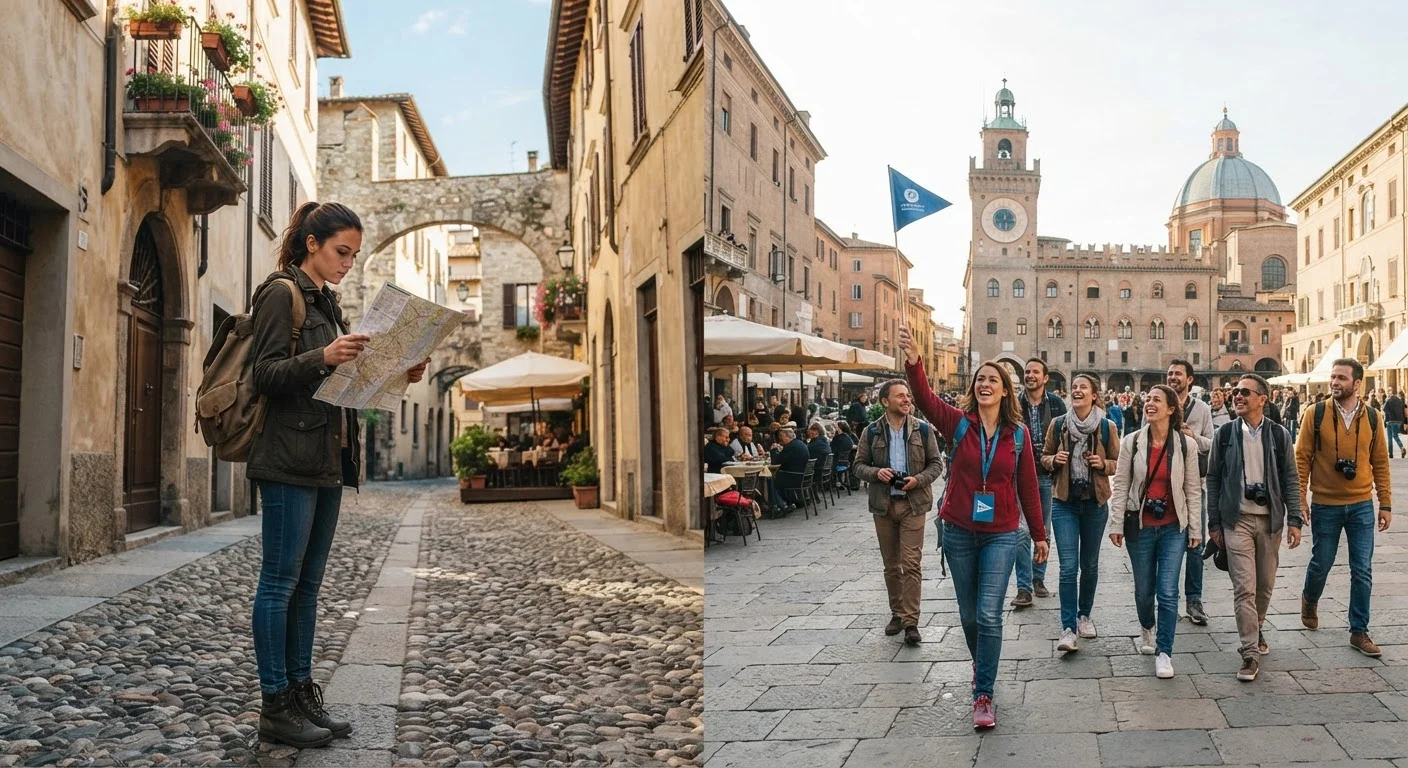
Photo credit: FaqBulletin.com | Information Made Easy
In this article
Freedom vs. structure, cost vs. convenience—compare what solo travel and organized group tours each genuinely offer.
Key Takeaways
- Solo travel maximizes flexibility but places all logistics, safety planning, and decision-making on one person.
- Group tours reduce planning burden and often unlock access to experiences that are hard to arrange independently.
- Cost comparisons are rarely straightforward — solo travel can run cheaper or more expensive depending on destination and style.
- Your comfort with uncertainty, travel experience level, and destination type all influence which approach works better.
- Many experienced travelers mix both approaches across different trips rather than committing to one style exclusively.
The Core Trade-Off: Freedom vs. Structure
Solo travel and organized group tours sit at opposite ends of the same spectrum. One hands you a blank itinerary; the other fills it in for you. Neither is inherently better — but treating them as interchangeable will leave you frustrated.
Solo travelers design every element of a trip from scratch: flights, accommodation, daily timing, restaurant choices, and backup plans when things go sideways. That latitude is genuinely liberating for some people and quietly exhausting for others. Group tours flip that equation entirely — a leader handles logistics, a coach moves the group, and the schedule is set before you board the plane.
The practical implications ripple outward. Solo travelers in well-documented destinations like Western Europe or major US cities can navigate confidently with modest preparation. In regions with significant language barriers, limited infrastructure, or complex entry requirements, a structured tour can transform an overwhelming proposition into an achievable one. For destination-by-destination planning ideas, the Trip Planning hub is a useful starting point.
| Solo Travel | Group Tours | |
|---|---|---|
| Flexibility | Full control over pace and itinerary | Fixed schedule set in advance |
| Planning burden | Entirely on the traveler | Handled by operator |
| Cost predictability | Variable; single supplements add up | Upfront pricing, fewer surprises |
| Social experience | Self-directed; can be isolating | Built-in group companionship |
| Destination access | Limited to publicly available options | Often includes exclusive or vetted access |
| Best for complex destinations | Challenging without local knowledge | Strong fit; guide navigates friction |
| Safety support | Traveler manages independently | Guide provides local emergency resources |
What Solo Travel Actually Costs You (in More Ways Than One)
Solo travelers avoid tour operator margins, but they absorb every single-supplement charge — the fee hotels and cruise lines add when a room is occupied by one person instead of two. In practice, this can add 25–50% to accommodation costs on some itineraries, narrowing the price gap with group tours considerably.
On the upside, solo travelers can chase shoulder-season deals, stay in hostel dorms, cook their own meals, or linger in an affordable city longer than a tour schedule would allow. Flexibility is a genuine cost tool when used deliberately.
Time is the less-discussed currency. Researching visas, comparing flight options, reading accommodation reviews, and building contingency plans takes real hours. Group tours commodify that research — someone else already did it. If your vacation time is scarce, buying back that planning bandwidth has genuine value.
Consider a Hybrid Approach
Many experienced travelers book independent flights and accommodation, then layer in a single guided day tour or activity for the most logistically complex part of a trip. This captures flexibility on your own terms while letting experts handle the segments where local knowledge matters most. It's a particularly useful strategy for first-time visits to destinations where language or navigation adds real friction.
What Group Tours Actually Deliver
The honest case for group tours goes beyond convenience. Reputable operators negotiate access that individual travelers genuinely cannot replicate — private museum openings, local home dinners, guided entry to sites with restricted visitor numbers, and transportation on routes with no reliable public option.
For travelers visiting a destination for the first time — particularly in regions where navigation, language, or cultural norms add friction — a guided framework can be the difference between a rewarding trip and a stressful one. That's not a knock on solo capability; it's an honest recognition of context.
Group tours also solve a social problem that solo travel can create. Traveling alone is often deeply fulfilling, but it can also be isolating, especially on longer trips. Small-group tours (typically 8–16 people) build in the kind of low-stakes companionship that many solo travelers find they miss. This intersects interestingly with all-inclusive resort trade-offs, where structured packages similarly trade spontaneity for built-in social infrastructure.
Safety, Accessibility, and the Variables People Don't Mention
Safety considerations legitimately differ between the two formats. Solo travelers — particularly those traveling for the first time to unfamiliar regions — carry the full weight of situational awareness, medical emergencies, and backup planning. Group tours distribute some of that risk: a guide knows local emergency contacts, hospitals, and reliable ground-level resources.
Accessibility is another underexamined variable. Travelers managing health conditions, mobility considerations, or dietary restrictions may find group tours either more or less accommodating depending on the operator. Some specialized group tours are designed specifically around accessibility needs; solo travel can offer equivalent flexibility if logistics are managed carefully in advance.
Trip type also matters. A city break versus a nature-focused expedition demands very different planning approaches — and the solo vs. group calculus shifts accordingly. Urban destinations typically favor independent exploration; remote wildlife or adventure travel often benefits from guided structure.
Whatever format you choose, verify visa requirements, health advisories, and entry conditions through official government sources before booking. Conditions change, and no tour operator or planning guide can substitute for checking current official guidance.
72%
Solo travelers who are women
MMGY Global's Portrait of American Travelers has consistently found women make up a substantial majority of solo leisure travelers in the US.
8–16
Typical small-group tour size
Many tour operators define 'small group' as 8 to 16 participants, a format research suggests balances flexibility with shared logistics.

Author
Travel Editorial Team
Travel Editorial Team is the collective byline for our editorial team and contributor network. Articles published under this byline or an editorial pen name are researched, written, and reviewed according to our editorial standards for clarity, consistency, and independence before publication.
View all articles →