
What Makes a Destination Genuinely Family-Friendly
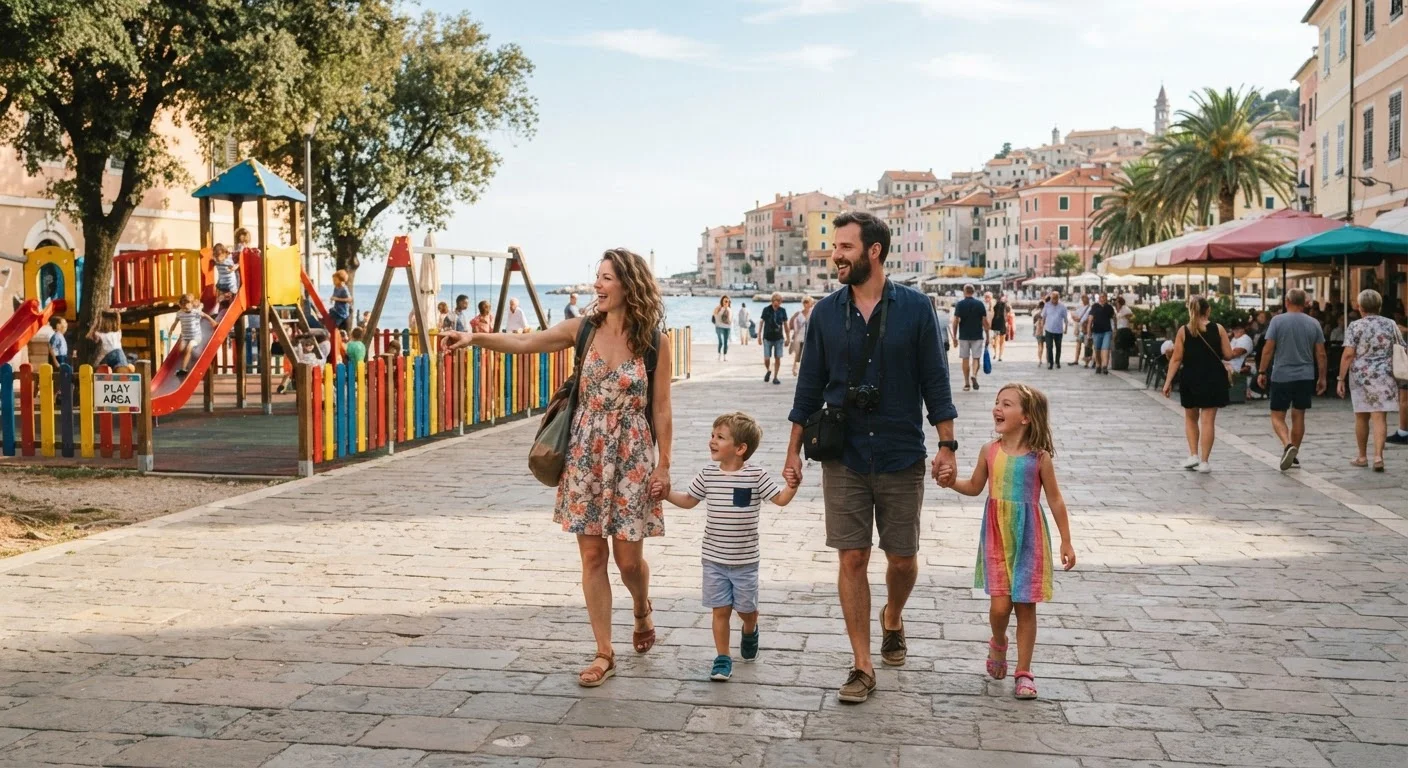
Photo credit: FaqBulletin.com | Information Made Easy
In this article
The term 'family-friendly' gets applied loosely. Here's what it actually means in practice — from infrastructure to safety to age-appropriate activities.
Key Takeaways
- Infrastructure — strollers, restrooms, transit — matters more than themed attractions.
- Age-appropriate activities vary widely; a destination perfect for toddlers may frustrate teens.
- Safety includes traffic patterns, food safety, and medical access, not just low crime rates.
- Pacing and proximity of activities reduce the friction that derails family trips.
- Marketing language like 'family-friendly' is self-applied and should be verified independently.
- Accommodation type shapes the entire trip experience for families.
Why the Label Tells You Almost Nothing
"Family-friendly" appears on tourism websites, hotel listings, and travel blogs so frequently it has nearly lost meaning. Any destination can apply the label to itself — there's no standard definition, no certification body, and no requirement to back the claim up. That's not cynicism; it's a practical starting point for smarter destination research.
What the label should signal is that a place has been thoughtfully designed — or at minimum, genuinely accommodates — the real-world needs of adults traveling with children. That covers a wide range of considerations: physical infrastructure, the availability of age-appropriate activities, food accessibility, healthcare proximity, and the general pace of the place. When families evaluate destinations on these dimensions rather than on marketing language alone, they make far better choices.
For a structured starting point on planning family travel, our trip planning hub covers the fundamentals before you even start comparing destinations.
Infrastructure: The Unsexy Factor That Makes or Breaks Trips
Infrastructure is where many destinations quietly fail families. Consider the basics: Can you navigate the main attractions with a stroller, or are cobblestones and stairs the default? Are clean, accessible restrooms available at regular intervals — critical with toddlers and early readers who give approximately 90 seconds of warning? Is public transportation legible and manageable with bags, children, and no margin for confusion?
These aren't comfort preferences — they're operational requirements. A destination with world-class museums but no accessible transit from the airport puts families in a difficult position from the moment they land. Conversely, a smaller destination with well-maintained pedestrian paths, frequent and clean restroom facilities, and easy parking near attractions can deliver a far smoother experience than its more celebrated counterparts.
72%
Families cite logistics as top travel stressor
According to a survey by the American Automobile Association (AAA), the majority of family travelers identify trip logistics — not cost — as their primary source of travel stress.
3–4 hrs
Typical young child's sightseeing stamina
Child development guidance generally suggests children under age 8 have a meaningful activity window of around three to four hours before fatigue and overstimulation set in — a key factor in destination and itinerary planning.
68%
Family travelers read reviews from similar families
Research into travel decision-making consistently finds that family travelers place higher trust in user-generated reviews from travelers with similar family compositions than in official tourism materials.
Accommodation infrastructure matters too. A hotel room designed for two adults becomes cramped fast with children and their gear. Our comparison of hotels, vacation rentals, and campgrounds breaks down the practical trade-offs families face at every price point.
Age-Appropriate Activities and the Range Problem
One of the most common family travel mismatches involves the age range within a single group. A destination that works beautifully for a 4-year-old may bore a 12-year-old into a full-blown rebellion by day two. Genuine family-friendliness means a destination offers a realistic variety of activities across developmental stages — not just a splash pad and a cartoon character.
Concrete questions to ask: Does the destination have both high-stimulation options (theme-park-style experiences, interactive museums) and lower-key alternatives (nature trails, beaches, open playgrounds) so different energy levels and temperaments are served? Are the "kid activities" actually engaging for children, or are they watered-down adult experiences with a sticker sheet attached?
National parks offer a useful case study. Many are genuinely excellent for school-age children and teens — Junior Ranger programs, accessible trails, and dramatic scenery engage a wide range. But terrain, altitude, and distance between facilities can make the same park a poor fit for families with toddlers or infants. Our on-the-ground look at national parks with kids separates the brochure from the reality.
Safety, Pacing, and What Gets Left Off the Brochure
Safety for families is multidimensional. Crime statistics matter, but so does traffic culture — a destination with aggressive driving patterns and few pedestrian signals is genuinely stressful with children in tow. Food safety is relevant for younger children and kids with allergies. Proximity to medical care becomes a real concern for families with infants or children managing health conditions.
Pacing is the overlooked dimension. Even in a safe, well-equipped destination, families burn out when activities are spread far apart, when lines are consistently long, or when the cultural pace of the destination (late dinner hours, minimal shaded rest areas, limited afternoon breaks) conflicts with children's schedules. A destination that clusters family-relevant attractions within walkable or short-transit distance allows for the spontaneous downtime that keeps trips from unraveling.
Over-scheduling is the stealth enemy of family travel. Our article on keeping trips memorable without overscheduling is worth reading before you finalize any itinerary. The best destination in the world delivers a miserable trip if the pacing doesn't match your family's real rhythm.
“The destinations that work best for families aren't necessarily the most spectacular — they're the ones where the logistics are quiet enough that you can actually be present with your kids.”
— Margot Pellegrini, Family travel researcher and contributor to academic tourism studies
Frequently Asked Questions

Author
Travel Editorial Team
Travel Editorial Team is the collective byline for our editorial team and contributor network. Articles published under this byline or an editorial pen name are researched, written, and reviewed according to our editorial standards for clarity, consistency, and independence before publication.
View all articles →