
Choosing a Caribbean Island for a Family Trip
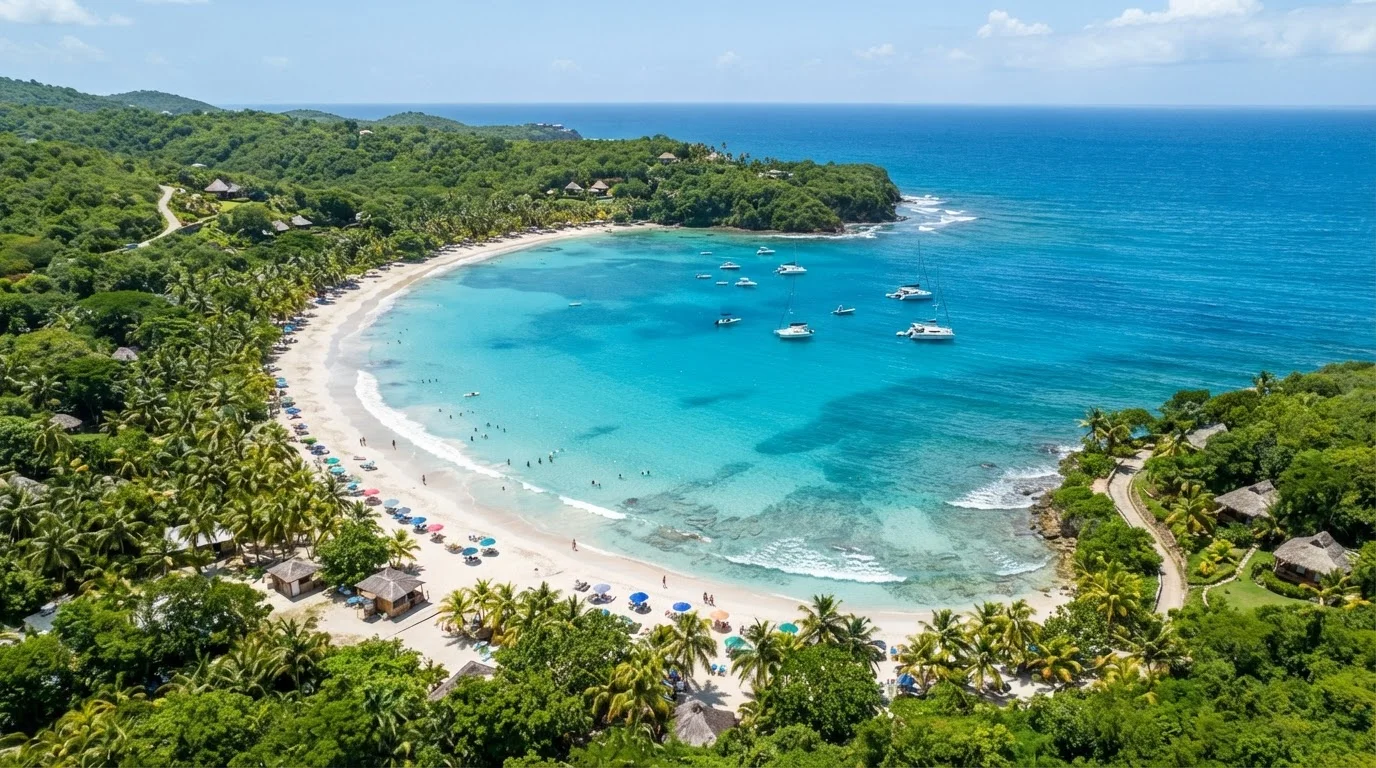
Photo credit: FaqBulletin.com | Information Made Easy
In this article
Language, entry requirements, terrain, and family amenities vary widely across the Caribbean. Here's a framework for narrowing it down.
Key Takeaways
- Passport and entry rules differ between US territories and independent Caribbean nations.
- Island terrain and beach type vary widely — matching these to your kids' ages matters enormously.
- All-inclusive resorts simplify budgeting but limit authentic local exploration.
- Hurricane season runs June through November, making travel timing a critical variable.
- Language, local customs, and healthcare access all affect family comfort on the ground.
Why One Framework Beats Endless Scrolling
The Caribbean contains more than 700 islands across roughly 25 countries and territories. Browsing them without a filter is a recipe for decision paralysis. Instead of comparing every destination at once, work through a short set of practical criteria that immediately shrinks the list to a handful of genuinely good fits for your specific family.
This approach works whether you're weighing a beach-heavy getaway, an adventure-focused trip, or something in between. For the broader question of whether an island stay, a cruise, or a different style of trip suits your family best, our family cruise pre-trip checklist covers that decision in depth.
What you will need
Step-by-Step: Narrowing Down Your Island
Follow these steps in order. Each one filters out destinations that won't work and keeps the ones that will.
Clarify Your Entry Document Situation
US citizens traveling to American territories — Puerto Rico and the US Virgin Islands — do not need a passport and can use a standard domestic flight. Every other Caribbean destination requires a valid US passport. This single factor shapes your timeline: if anyone in your group needs to apply for or renew a passport, your departure window shifts significantly. Check current processing times through official US government channels well in advance.
Set a Realistic Travel-Time Threshold
Flight duration from the continental US varies considerably — Puerto Rico is roughly 3–4 hours from the East Coast, while more southerly islands like Barbados or Trinidad can run 5–7 hours. Non-stop service exists for major hubs, but connecting flights can extend travel days dramatically. Decide upfront how many hours in transit your family can realistically handle before the trip feels like a chore. Younger children and families with babies will likely want to minimize total travel time.
Match the Terrain to Your Kids' Ages
Caribbean islands vary enormously in what they offer physically. Some — like Aruba — are flat, arid, and lined with calm leeward beaches ideal for young children. Others — like Dominica or St. Lucia — are mountainous, heavily forested, and built around hiking, waterfalls, and adventure activities better suited to older kids and teens. Reef-protected lagoons are safer for inexperienced swimmers than open Atlantic-facing beaches. Be specific about what your family actually wants to do each day.
Consider Language and Cultural Comfort
English is widely spoken in Jamaica, Barbados, the Bahamas, the Cayman Islands, and US territories. Spanish is the primary language in Cuba, the Dominican Republic, and Puerto Rico (though English is also official in Puerto Rico). French Creole dominates in Haiti and Martinique; Dutch and Papiamento in Aruba, Bonaire, and Curaçao. For families with young children who may feel anxious navigating unfamiliar environments, an English-dominant destination often reduces daily friction — though any of these islands warmly welcomes tourists.
Check the Travel Calendar Against Hurricane Season
Hurricane season officially runs from June 1 through November 30, with peak activity typically in August and September. Travel during this period carries real weather risk, especially for smaller islands with limited infrastructure. That said, southern Caribbean islands — Aruba, Bonaire, Curaçao — sit largely outside the hurricane belt and experience fewer storm disruptions. Always verify current travel advisories through official US government sources before booking, and consider travel insurance that covers weather-related cancellations.
Build a Rough Per-Day Budget by Island
Cost of living varies meaningfully across the region. US territories use the US dollar with no conversion friction. Independent nations use a range of currencies, some pegged to the dollar (Eastern Caribbean dollar, Barbadian dollar), others floating. Islands with heavy tourism infrastructure — the Cayman Islands, St. Barts, Turks and Caicos — tend to carry significantly higher price tags than the Dominican Republic or Jamaica. Factor in meal costs, activity fees, ground transport, and whether an all-inclusive structure actually covers what you expect it to.
Amenities, Accommodation, and On-the-Ground Reality
Once you've narrowed to two or three islands, shift focus to the specifics of how your family will actually spend its time. Kid-friendly infrastructure ranges from full-service resort corridors (common in Cancún's neighboring islands and parts of Jamaica and the Dominican Republic) to quieter, more independent setups on smaller islands like Nevis or Saba.
All-inclusive properties can dramatically simplify budgeting for families — but they come with real trade-offs in flexibility and authentic local experience. Our all-inclusive resort breakdown lays out what that model actually covers and where it falls short. For families open to vacation rentals or boutique hotels, see our accommodation comparison guide for a side-by-side look at the trade-offs.
Ask About Kids' Clubs and Shore Excursions
Many larger Caribbean resorts offer supervised kids' programs that give parents a few hours of downtime each day. If this matters to your family, confirm age minimums and program hours directly with the property — these details are rarely prominent on booking sites. Shore excursion operators catering to families also vary by island, so research activity availability specific to your destination rather than assuming it's universal.
Healthcare access is easy to overlook in the excitement of planning. Larger islands — Puerto Rico, Jamaica, the Dominican Republic — have hospitals and clinics in tourist areas. Smaller or more remote islands may have limited emergency care. Families with young children or members who have medical needs should factor this in before finalizing a destination.
Making the Final Call
If two islands are still tied after working through all these filters, trust the terrain. A family with toddlers will nearly always be happier on a calm, flat-water bay than on a surf-facing beach, regardless of what else the destination offers. Similarly, a family with teenagers who want adventure will get more out of an island with zip-lining, hiking, and water sports than one built around resort pools.
For families still weighing a Caribbean island against a Pacific alternative, our Hawaii island comparison walks through a parallel decision-making process. And if you're still figuring out whether your family leans toward nature or cultural experiences generally, the city break vs. nature destination guide is worth a read before you commit.
The right Caribbean island exists for nearly every kind of family — the key is being honest about what your group actually needs, not just what looks beautiful in photos.

Author
Travel Editorial Team
Travel Editorial Team is the collective byline for our editorial team and contributor network. Articles published under this byline or an editorial pen name are researched, written, and reviewed according to our editorial standards for clarity, consistency, and independence before publication.
View all articles →