
Teaching a Dog to Walk Politely on a Leash
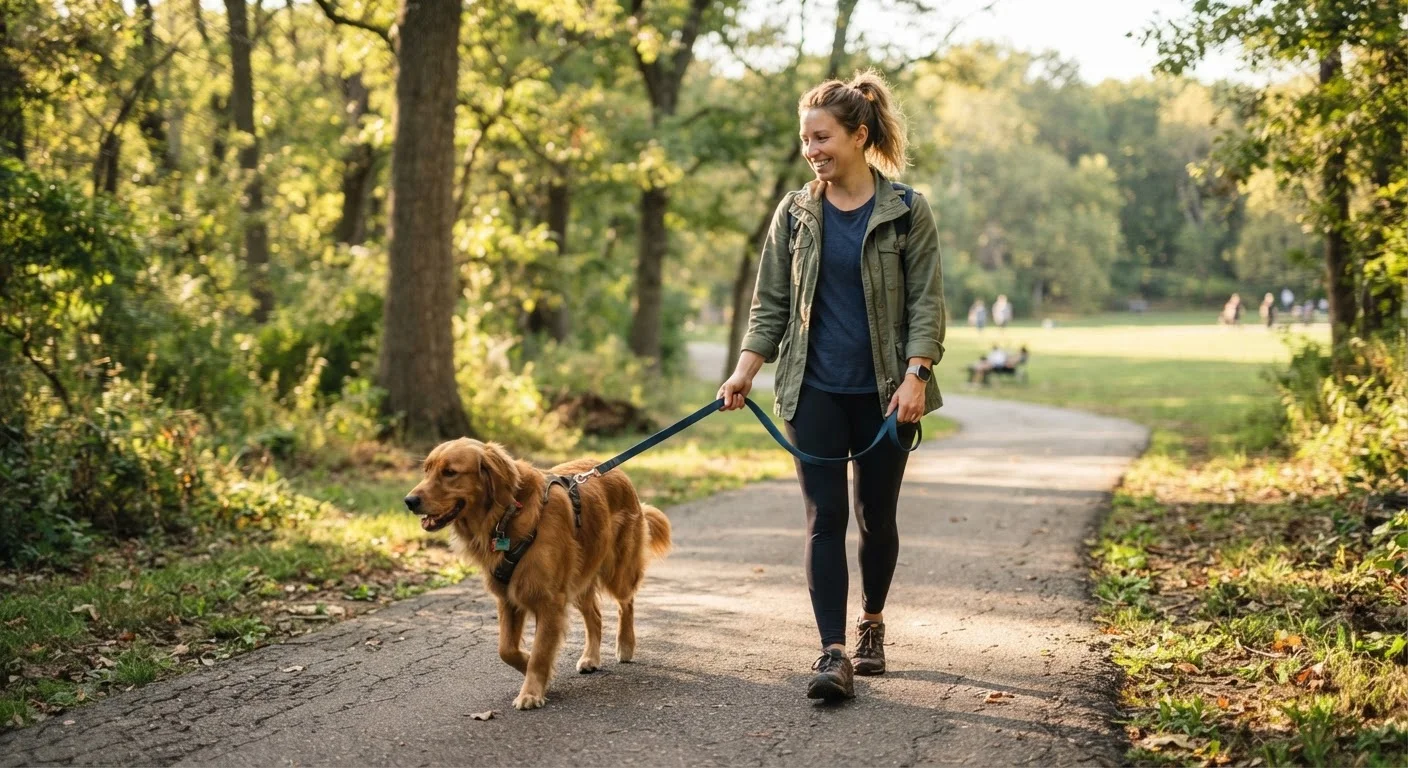
Photo credit: FaqBulletin.com | Information Made Easy
In this article
Pulling, lunging, and zigzagging don't have to be permanent. Learn the step-by-step mechanics behind calm, consistent leash walking.
Key Takeaways
- Pulling is self-reinforcing — stopping forward movement the moment tension occurs is the foundational correction.
- Short, frequent training sessions outperform long, infrequent ones for building leash manners.
- A flat collar or front-clip harness paired with a 4–6 foot leash gives reliable control without pain.
- Consistency across all household members and walking environments is essential for lasting results.
- Most dogs show meaningful improvement within two to four weeks of daily structured practice.
Why Dogs Pull — and Why It Keeps Working
Pulling on a leash is not defiance or dominance — it is simply a behavior that has been accidentally reinforced thousands of times. Every time a dog pulls forward and the owner follows, the dog learns that tension equals forward progress. The behavior is on a continuous reinforcement schedule, which makes it highly persistent.
Understanding this mechanism changes how you approach training. The goal is not to physically overpower your dog or use corrections to punish pulling. The goal is to make tension consistently unproductive while making a loose leash consistently rewarding. Dogs are pragmatic — they repeat what works.
Several variables affect how quickly a dog responds: age, prior reinforcement history, breed-specific drives (terriers and sighthounds, for example, carry strong pulling instincts), and how consistently the new rules are applied. The factors shaping a dog's long-term behavior extend well beyond the leash itself, and being realistic about your individual dog's starting point will help you stay patient through the process.
Avoid Choke Chains and Prong Collars
Pain- and pressure-based equipment can suppress pulling in the short term but often creates negative associations with walks, other dogs, or strangers — potentially worsening reactivity over time. Current behavioral science and major veterinary organizations favor force-free methods. See what the research says about training approaches before choosing your equipment.
What You'll Need Before You Start
Equipment matters, but it doesn't need to be expensive or elaborate. The right setup removes unnecessary variables and lets you focus on the behavior itself.
What you will need
Front-clip harness
Redirects a pulling dog toward you rather than allowing them to leverage their chest against the leash.
Standard 4–6 foot leash
Gives you precise control of distance without the variable tension a retractable leash creates.
High-value training treats
Used to mark and reward the exact moment the dog maintains a loose leash beside you.
Treat pouch or bait bag
Keeps rewards instantly accessible so you can mark behavior within one to two seconds.
Clicker (optional marker)
Provides a precise, consistent sound marker if you prefer clicker training over a verbal marker word.
If you've recently brought a new dog home, the first 30 days guide covers how to layer leash training into a broader routine-building phase without overwhelming your dog. Leash training is most effective once a dog has a basic sense of safety and structure in their environment.
The Step-by-Step Training Process
These steps build on each other progressively. Do not rush to outdoor, high-distraction environments until each indoor phase is reliable. Regression is normal and expected when you raise difficulty — it is a signal to slow down, not start over.
Establish a marker and load your reinforcer
Before attaching a leash, teach your dog what the reward signal means. Choose a verbal marker — a short, distinct word like "yes" — or use a clicker. Say the marker and immediately deliver a treat five to ten times in a row until your dog's ears perk at the sound. This is called "charging" the marker. A charged marker lets you pinpoint the exact behavior you're rewarding during walks.
Practice leash pressure awareness indoors
Clip the leash on your dog inside your home or yard. Hold the leash loosely and simply wait. The moment your dog generates slack — stepping toward you or releasing tension — mark and reward. This teaches the foundational concept: a loose leash predicts good things. Do this for five minutes before adding any movement.
Introduce the "stop dead" method for pulling
Begin walking in your low-distraction area. The instant the leash goes taut, stop completely. Do not pull back, lurch forward, or say anything. Simply become a statue. Wait for your dog to release tension by turning toward you or stepping back. The moment the leash goes loose, mark, reward, and resume walking. Pulling ends forward motion — that is the entire lesson.
Reward position, not just loose leash
Once your dog is stopping the pull, start rewarding them specifically for walking beside your leg — the heel position. Mark and treat every two to three steps initially, then every five, then variably as the behavior becomes reliable. Keeping the treat delivery at your hip naturally teaches the dog where the reward zone is. Over time, the position itself becomes the habit.
Introduce the direction-change method
When your dog forges ahead repeatedly, calmly turn and walk the opposite direction before the leash goes fully taut. Mark and reward when your dog catches up beside you. This technique — sometimes called the "penalty yards" method — teaches your dog that pulling actually takes them away from where they want to go, while staying close keeps them moving forward.
Proof the behavior across environments
Once your dog walks politely in a quiet yard, systematically increase difficulty. Move to a slightly busier area — a neighborhood sidewalk, then a park — and expect some regression. Raise your treat rate at each new location and treat it as a fresh training session. Generalization takes time; dogs do not automatically transfer a skill from one environment to another. Consistent exposure is what builds true reliability.
Keep Sessions Under 15 Minutes
Dogs reach a point of diminishing returns faster than most owners expect. Two focused 10-minute sessions per day will produce faster results than a single 40-minute walk where frustration builds on both ends of the leash. End every session on a success — even a small one.
Maintaining Progress and Troubleshooting Common Setbacks
Leash manners are maintenance skills — they erode without practice. Once your dog is walking politely, occasional refresher sessions in new environments prevent backsliding. If you find your dog regressing after weeks of solid performance, examine what changed: a new neighborhood route, a different handler, or less frequent practice are the most common culprits.
If your dog lunges at other dogs or people: This is reactivity, which is a separate behavioral issue that often requires a more structured desensitization protocol and, in many cases, guidance from a certified professional trainer or veterinary behaviorist. Do not attempt to muscle through reactive episodes — that approach tends to worsen the underlying emotional response.
If multiple household members walk the dog: Consistency is everything. Everyone must use the same rules, the same marker word, and the same response to pulling. A dog who gets to pull with one person will test all handlers. Consider sharing this guide with everyone who walks your dog and running a brief alignment session together before taking the dog out.
Retractable Leashes Undermine This Training
Retractable leashes teach dogs that pulling extends their range — the opposite of what you're building here. For the duration of training, use only a fixed 4–6 foot leash. Once polite walking is well established, you can make context-specific decisions about equipment, but during the learning phase, a standard leash is non-negotiable.
For dogs with higher exercise demands, keep in mind that a 20-minute structured training walk is not a substitute for adequate physical activity. The exercise needs across breeds and life stages vary considerably — a high-energy working breed may need additional off-leash time in a safe area to meet their baseline activity requirements alongside leash training sessions.

Author
Pets Editorial Team
Pets Editorial Team is the collective byline for our editorial team and contributor network. Articles published under this byline or an editorial pen name are researched, written, and reviewed according to our editorial standards for clarity, consistency, and independence before publication.
View all articles →