
Litter Box Problems That Are Actually Medical Red Flags
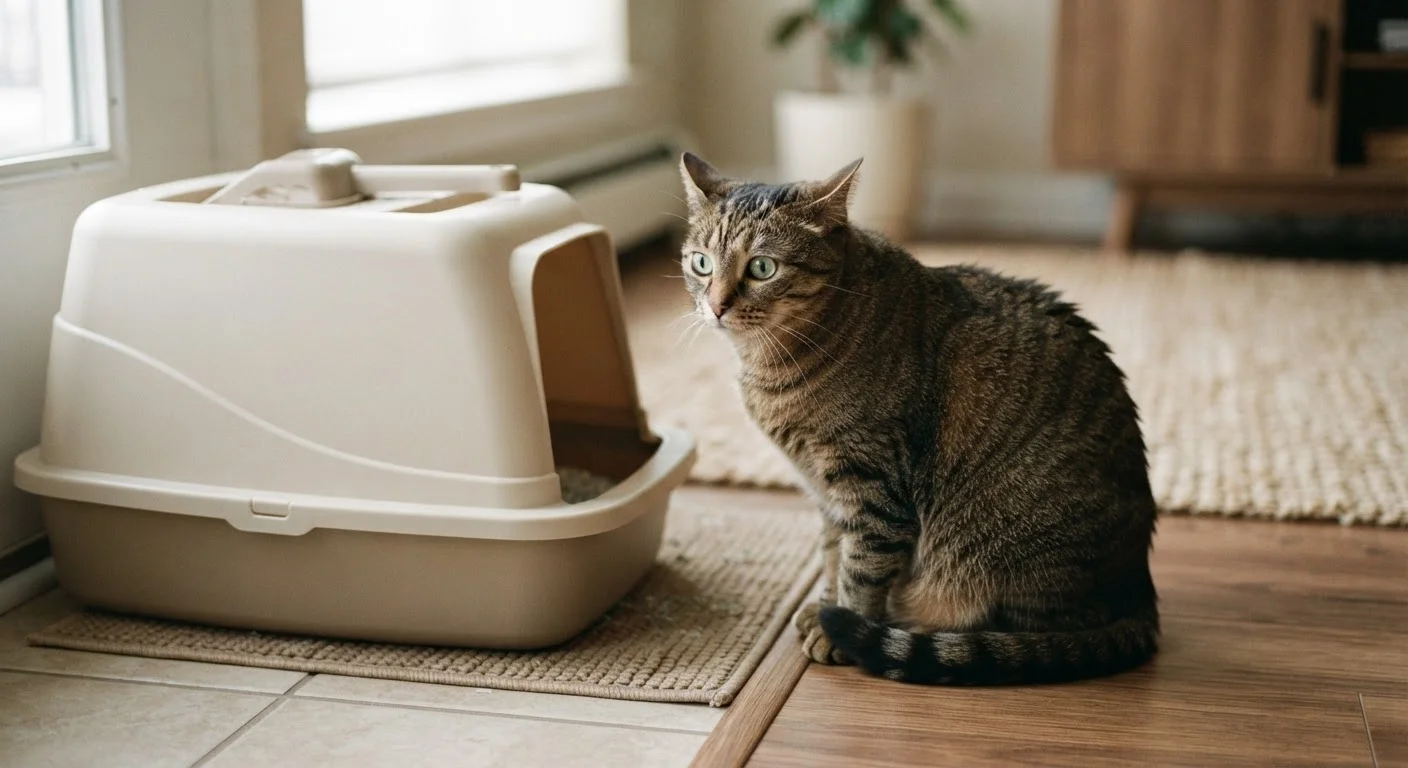
Photo credit: FaqBulletin.com | Information Made Easy
In this article
Avoiding the box, straining, or blood in urine can signal serious health issues. Know when litter box changes need a vet's attention.
Key Takeaways
- Avoiding the litter box or straining without producing urine can indicate a life-threatening urinary blockage.
- Blood in urine, excessive frequency, or crying while urinating always warrant same-day veterinary attention.
- Diarrhea or unusually soft stools lasting more than 24–48 hours may signal infection, parasites, or disease.
- Behavioral causes and medical causes can look identical — always rule out health problems first.
- Cats instinctively hide pain, so litter box changes are among the clearest distress signals owners will see.
Why Litter Box Changes Deserve More Than a Cleaning
Most cat owners assume litter box problems are behavioral — stress, a dirty box, or a territorial dispute with another pet. Sometimes that's true. But a significant number of litter box changes are driven by underlying medical conditions that worsen rapidly without treatment. Dismissing these signs as a preference issue can delay care that genuinely matters.
Cats are instinctive about concealing discomfort, so changes in elimination habits — frequency, location, posture, or output — are often the earliest and clearest signals that something is wrong. Learning to read those signals accurately is one of the most important things a cat owner can do. As a useful counterpoint, our article on common cat health myths vets hear too often addresses how easily feline discomfort can be misread.
Assuming box avoidance is purely behavioral without ruling out a medical cause first.
Why it happens: Behavioral litter box problems are widely discussed, so owners often jump to environmental fixes — new litter, more boxes, location changes — before considering illness.
Waiting days to act when a cat is straining or producing no urine.
Why it happens: Owners may interpret repeated trips to the box as constipation or normal urgency, not recognizing that straining with no output is a potential obstruction emergency.
Attributing blood in the litter or urine to a minor irritation that will resolve on its own.
Why it happens: Small amounts of blood may not appear alarming, and owners sometimes hope it's temporary. Feline idiopathic cystitis (FIC) can cause bleeding that recurs and worsens without treatment.
Treating chronic loose stools or diarrhea as a dietary quirk rather than a symptom.
Why it happens: Cats with sensitive stomachs are common, and owners often cycle through food changes without investigating further. Persistent soft stools can normalize over weeks without owners realizing it.
Ignoring increased urination frequency as simply "drinking more water."
Why it happens: Increased thirst and urination often look benign — after all, hydration seems positive. Owners may not connect the two as a paired symptom pattern.
When to Stop Waiting and Call Your Vet
Not every litter box irregularity is an emergency, but certain combinations of signs should trigger same-day veterinary contact. A male cat who visits the box repeatedly and produces little or no urine is a medical emergency — urethral obstruction can be fatal within 24 to 48 hours. Female cats are not immune to urinary tract disease, but their anatomy makes complete blockage less common.
Male Cat Not Urinating: Treat as Emergency
A male cat who squats repeatedly in the litter box but produces no urine may have a urethral obstruction — a condition that can become fatal within 24 to 48 hours without veterinary intervention. Do not wait to see if it resolves. Contact an emergency veterinary clinic immediately if your regular vet is unavailable.
Blood visible in the litter, excessive vocalization during elimination, or a cat who suddenly stops using the box entirely all fall into the category of "call your vet now." Likewise, diarrhea accompanied by lethargy, weight loss, or vomiting beyond 48 hours is not something to manage at home with diet changes alone.
~1–3%
Cats affected by feline lower urinary tract disease annually
Veterinary literature estimates that feline lower urinary tract disease (FLUTD) affects roughly 1–3% of cats seen in practice each year, making it one of the most common reasons for vet visits.
58%
FLUTD cases attributed to idiopathic cystitis
According to veterinary research, feline idiopathic cystitis — often stress-linked — accounts for the majority of FLUTD diagnoses, underscoring why stress management is part of treatment.
Owners who observe these patterns in small animals often benefit from understanding how broadly this principle applies. Our coverage of why small pets get sick quietly reinforces how quickly masked symptoms can escalate across species.
This article is for general informational purposes only and does not constitute veterinary medical advice. Always consult a licensed veterinarian for concerns about your cat's health.

Author
Pets Editorial Team
Pets Editorial Team is the collective byline for our editorial team and contributor network. Articles published under this byline or an editorial pen name are researched, written, and reviewed according to our editorial standards for clarity, consistency, and independence before publication.
View all articles →