
Cash Envelopes vs. Digital Budgeting Apps: Which Habit Sticks?
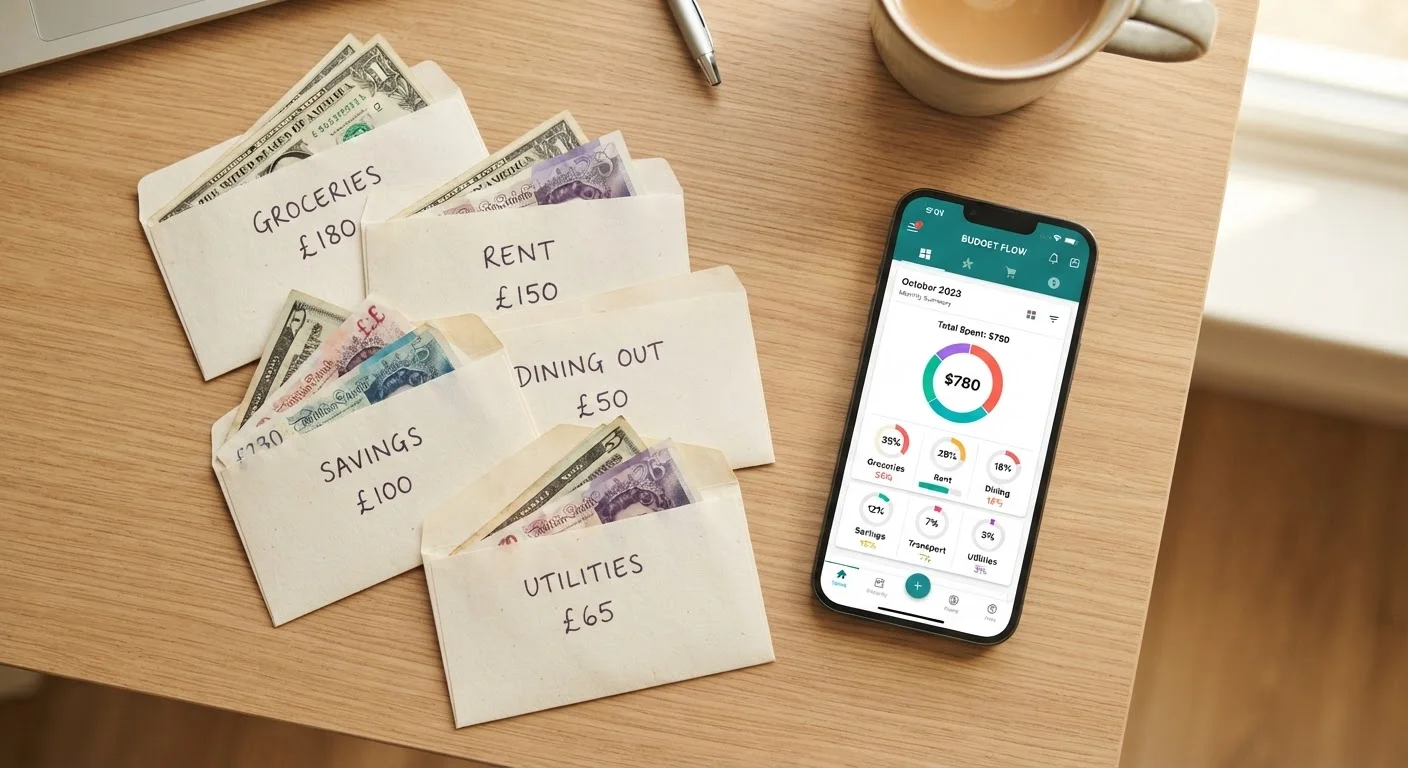
Photo credit: FaqBulletin.com | Information Made Easy
In this article
Compare the old-school envelope method with app-based budgeting to see which approach fits different spending personalities.
Key Takeaways
- Cash envelopes create a physical spending limit that stops overspending cold — when the cash is gone, it's gone.
- Digital budgeting apps offer automation and real-time visibility but require consistent manual review to stay effective.
- Research suggests handling physical money triggers more deliberate spending decisions than tapping a card.
- Neither method outperforms the other universally — the best system is the one you'll actually maintain.
- Hybrid approaches (cash for high-risk categories, apps for everything else) work well for many households.
- Consistency over a full budget cycle matters more than which tool you pick.
How Each Method Actually Works
The cash envelope method is straightforward: at the start of each budget period, you withdraw cash and divide it into labeled envelopes — one per spending category. Groceries get $400, dining out gets $150, gas gets $100, and so on. When an envelope is empty, spending in that category stops. No transfers, no exceptions. The system predates smartphones by decades and still holds up precisely because of its rigidity. For a deeper look at how families adapt it today, see how envelope budgeting works in a digital world.
Digital budgeting apps work by connecting to your bank accounts and credit cards, automatically categorizing transactions, and tracking spending against limits you set. You define a monthly budget for each category, and the app updates your balance in real time as purchases come through. Some apps also flag unusual activity, send overspending alerts, and generate monthly summaries. The convenience is real — but so is the risk of passive engagement.
Both methods share the same core logic: assign dollars to categories before you spend them. The difference is entirely in execution and the psychological friction each one creates.
The Psychology Behind Each Approach
The envelope method's strength is tactile. Research in behavioral economics — including work from the Journal of Consumer Research — has found that people experience more "pain of paying" with physical cash than with cards or digital payments. That discomfort isn't a drawback; it's the mechanism that makes the system work. Handing over a $20 bill registers differently than a tap-to-pay transaction.
~83%
Americans using primarily cashless payments
A Pew Research Center survey found the vast majority of Americans now go cashless most or all of the time, underscoring why digital tracking tools have grown in relevance.
Higher
Spending restraint with cash vs. cards
Multiple consumer behavior studies have found that people tend to spend more when using cards or digital payment methods compared to physical cash for equivalent purchases.
Digital apps reduce that friction almost entirely. That's efficient — but efficiency can become a vulnerability. When spending feels frictionless, small decisions compound quickly. The app records everything accurately, but a dashboard you check weekly won't stop an impulse purchase on Tuesday.
That said, apps do something envelopes can't: they give you pattern recognition over time. Seeing three months of restaurant spending charted visually can motivate lasting behavior change in ways that counting envelope cash never could. For households that respond to data over discipline, that visibility is meaningful.
If you're choosing a method for the first time, consider which failure mode you're more prone to — impulsive overspending in the moment, or neglecting to review your finances at all. Your answer likely points to your better fit.
Head-to-Head: Where Each Method Wins and Loses
Neither system is perfect. The comparison below covers the practical tradeoffs most households run into.
| Criterion | Cash Envelopes | Digital Budgeting Apps |
|---|---|---|
| Setup time | 30–60 minutes monthly | 1–2 hours initial setup, then automated |
| Works for digital/online spending | No — cash only | Yes — syncs to accounts |
| Overspending prevention | Hard stop (envelope empties) | Alert-based, easy to override |
| Spending awareness | High — every transaction is felt | Moderate — requires active review |
| Multi-user access | Difficult — physical cash required | Easy — shared dashboard |
| Historical trend tracking | None built-in | Strong — months of data charted |
| Risk of tech failure | None | Sync errors, app outages possible |
| Suitable for beginners | Very — no learning curve | Moderate — requires comfort with apps |
One limitation worth noting: cash envelopes don't cover digital payments, recurring subscriptions, or online purchases cleanly. You'd still need a separate system for those — which is why many households run a hybrid: cash for variable categories like groceries and dining, and an app for bills, subscriptions, and tracking net worth. For a broader look at format tradeoffs, pen-and-paper vs. spreadsheets vs. apps covers the full landscape.
Building a Habit That Lasts
The honest answer is that the "best" budgeting method is the one you'll repeat next month. Both systems fail when abandoned. A cash envelope sitting on the counter untouched is no better than an app you haven't opened in six weeks.
Habit research consistently points to two factors that determine whether a financial routine survives: low setup friction and visible progress. Cash envelopes win on setup — there's no account linking, no software learning curve. Apps win on progress tracking — dashboards make trends visible in ways that counting remaining cash cannot match.
If you're starting from scratch, building a first budget on a tight income offers a plain-language framework that works with either method. Once you've completed your first full budget cycle, use a monthly budget review checklist to lock in what's working and adjust what isn't.
Whatever you pick, commit to one full month before evaluating. Switching methods mid-cycle guarantees confusion. Staying consistent — even imperfectly — is what separates people who budget from people who budget successfully.
This article is for general informational purposes only and does not constitute personalized financial advice. Consult a qualified financial professional for guidance specific to your situation.

Author
Personal Finance Editorial Team
Personal Finance Editorial Team is the collective byline for our editorial team and contributor network. Articles published under this byline or an editorial pen name are researched, written, and reviewed according to our editorial standards for clarity, consistency, and independence before publication.
View all articles →