
Understanding Dietary Reference Intakes: What DRIs, RDAs, and DVs Actually Mean
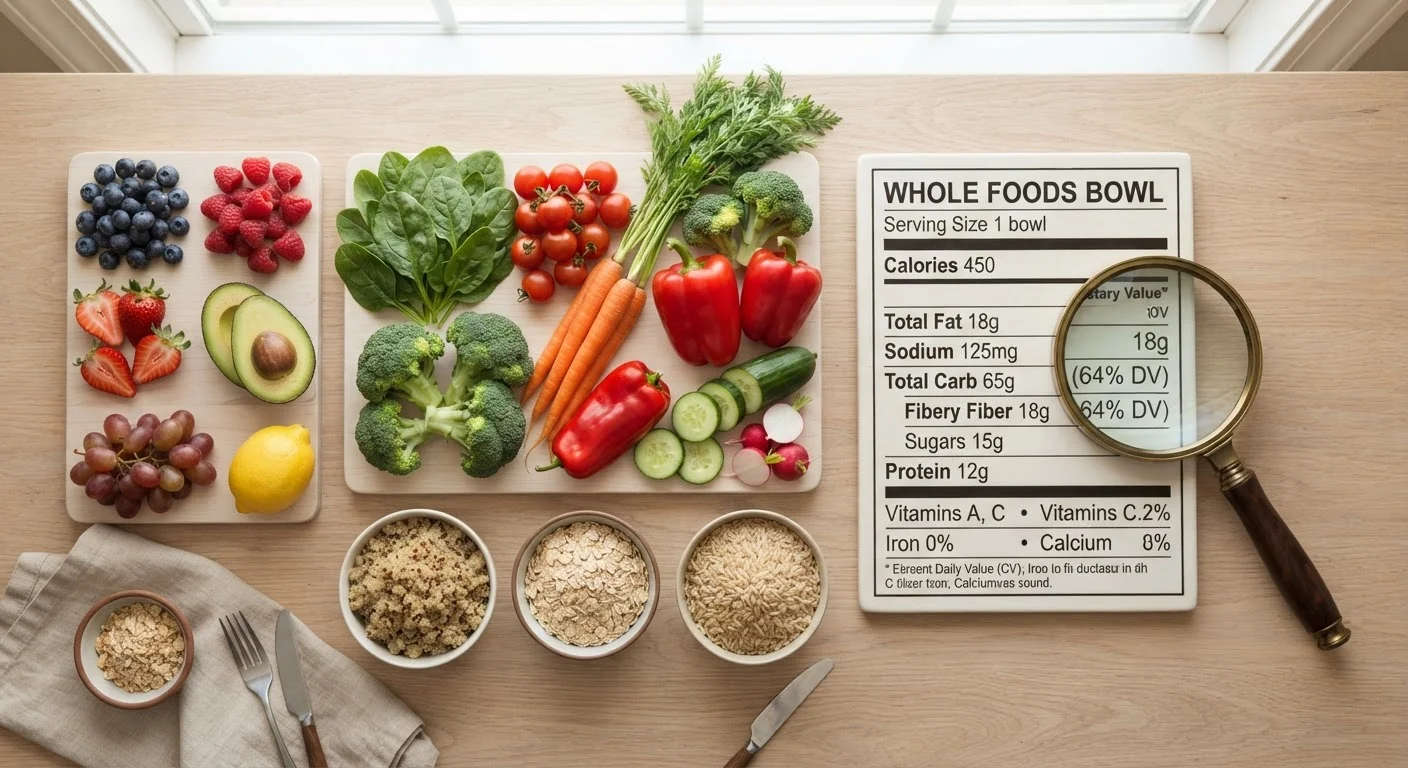
Photo credit: FaqBulletin.com | Information Made Easy
In this article
Government nutrition guidelines use a lot of acronyms. Here's a clear explanation of DRIs, RDAs, AIs, and Daily Values and how they relate to each other.
Key Takeaways
- DRIs are the overarching framework; RDAs, AIs, EARs, and ULs are specific values within it.
- An RDA meets the needs of about 97–98% of healthy individuals in a given group — not an average.
- Daily Values on food labels are derived from DRIs but are simplified for general population use.
- Exceeding the Tolerable Upper Intake Level (UL) regularly increases the risk of adverse health effects.
- DRIs vary by age, sex, pregnancy status, and other factors — one number rarely fits everyone.
- These values are general population guidance, not personal prescriptions; consult a healthcare provider for individual needs.
The DRI Framework: One Umbrella, Many Measures
When government agencies and nutrition scientists talk about how much of a nutrient people need, they are drawing from a structured system called the Dietary Reference Intakes (DRIs). Developed by the National Academies of Sciences, Engineering, and Medicine, DRIs replaced older, simpler reference values in the 1990s with a more nuanced framework.
Rather than a single number, the DRI system contains four distinct types of values:
- Estimated Average Requirement (EAR): The daily intake estimated to meet the needs of half of the healthy individuals in a specific group. Used primarily by researchers and public health planners, not typically cited on labels.
- Recommended Dietary Allowance (RDA): Set two standard deviations above the EAR, this value meets the needs of approximately 97–98% of healthy people in a given group. It is what most people think of as a nutrient target.
- Adequate Intake (AI): Used when evidence is insufficient to calculate an EAR and therefore an RDA. It represents an observed intake level considered sufficient for most healthy individuals.
- Tolerable Upper Intake Level (UL): The highest daily intake unlikely to cause harm for most people. It is a ceiling, not a goal.
Each value is calculated separately for different life-stage groups — infants, children, adolescents, adult men, adult women, pregnant individuals, and older adults — reflecting the reality that nutritional needs are not one-size-fits-all.
97–98%
Healthy individuals covered by the RDA
The RDA is set to meet the nutrient needs of nearly all healthy people in a defined demographic group, per the National Academies framework.
~50%
Population covered by the EAR
The Estimated Average Requirement meets the needs of only half the population in a group — it is used as a scientific baseline, not a personal target.
2016
Year FDA last updated Daily Values
The FDA's revision aligned the % Daily Values on Nutrition Facts labels more closely with current Dietary Reference Intakes established by the National Academies.
What the RDA Really Means — and Common Misconceptions
The Recommended Dietary Allowance is probably the most familiar term in the DRI family, and also one of the most frequently misunderstood. A common error is treating the RDA as an average requirement — the amount a typical person needs. In fact, it is set well above the average to cover nearly the entire healthy population.
This means that most people consuming somewhat less than the RDA for a given nutrient are probably meeting their individual needs — but there is no reliable way to know this without clinical testing. Consistently falling far short of the RDA for critical nutrients like iron, calcium, or folate is associated with increased risk of deficiency.
“The RDA is not an average requirement — it is intentionally set high enough to cover the vast majority of the healthy population. Using it as a minimum threshold misrepresents its purpose.”
— National Academies of Sciences, Engineering, and Medicine, Publisher of the Dietary Reference Intakes framework
It is also worth noting that RDAs apply to dietary intake over time — typically an average across several days — not a daily precision target. Eating a little less on one day and more on another is well within the spirit of these guidelines.
For nutrients where the science is still developing, an AI substitutes for the RDA. Vitamin D historically had an AI for much of the population before updated research allowed more precise RDA figures to be established for most age groups.
Daily Values: How DRIs Show Up on Food Labels
When you pick up a packaged food and glance at the Nutrition Facts label, the percentages listed — "% Daily Value" — are not pulled directly from DRIs. They are derived from a separate but related set of reference values called Daily Values (DVs), established by the U.S. Food and Drug Administration (FDA).
DVs are deliberately simplified. Rather than displaying separate figures for a 25-year-old man and a 60-year-old woman, the FDA sets a single reference value intended to be broadly applicable to adults and children over age four. This makes labels practical for general consumers, though it means the percentage shown may not reflect your personal requirement precisely.
The FDA last significantly updated Daily Values in 2016, aligning many of them more closely with current DRIs. As a result, the % DV on a modern Nutrition Facts label is a reasonably useful — if imprecise — guide for gauging whether a food is a meaningful source of a given nutrient. A food providing 20% DV or more is generally considered a high source; 5% DV or less is considered low.
For a practical walkthrough of how to use these percentages when shopping, see Reading a Nutrition Facts Label Without Getting Confused.
Putting It All Together: Using DRIs in Real Household Life
Understanding the vocabulary of DRIs matters most when you are trying to make sense of nutrition recommendations, evaluate health claims, or structure meals for your household. A few practical principles help:
- Focus on dietary patterns, not single-nutrient precision. DRIs are designed as population benchmarks. Consistently eating a varied diet rich in vegetables, whole grains, legumes, lean proteins, and dairy or fortified alternatives tends to meet most RDAs without tracking every nutrient. Building balanced weekly meals is one practical approach to covering nutritional bases naturally.
- Know which numbers to watch on labels. For most households, the % Daily Value for sodium, saturated fat, fiber, vitamin D, calcium, iron, and potassium offers the most actionable insight at a glance.
- Respect the UL for supplements. Whole foods rarely push people above a UL, but high-dose supplements can. Nutrients like vitamin A, iron, niacin, and zinc all carry documented risks at sustained high intakes.
- Recognize life-stage differences. Nutrient needs shift significantly during pregnancy, infancy, adolescence, and older adulthood. Reference values for a 35-year-old adult may not apply to a teenager or a grandparent in the same household.
A Practical Starting Point for Most Households
Rather than tracking individual nutrient totals against DRIs daily, focus on consistently meeting the broad food group patterns described in current federal dietary guidelines. These patterns are specifically designed to reach most RDAs for healthy adults as a natural outcome of balanced eating. If you have a health condition, are pregnant, or are managing nutrition for a child or older adult, a registered dietitian can translate DRIs into personalized guidance.
This article provides general nutrition education and is not a substitute for personalized medical or dietary advice. Consult a registered dietitian or qualified healthcare provider for guidance specific to your health needs.
Frequently Asked Questions

Author
Health & Wellness Editorial Team
Health & Wellness Editorial Team is the collective byline for our editorial team and contributor network. Articles published under this byline or an editorial pen name are researched, written, and reviewed according to our editorial standards for clarity, consistency, and independence before publication.
View all articles →