
The Nutrition of Everyday Cooking: How Preparation Methods Change What's in Your Food
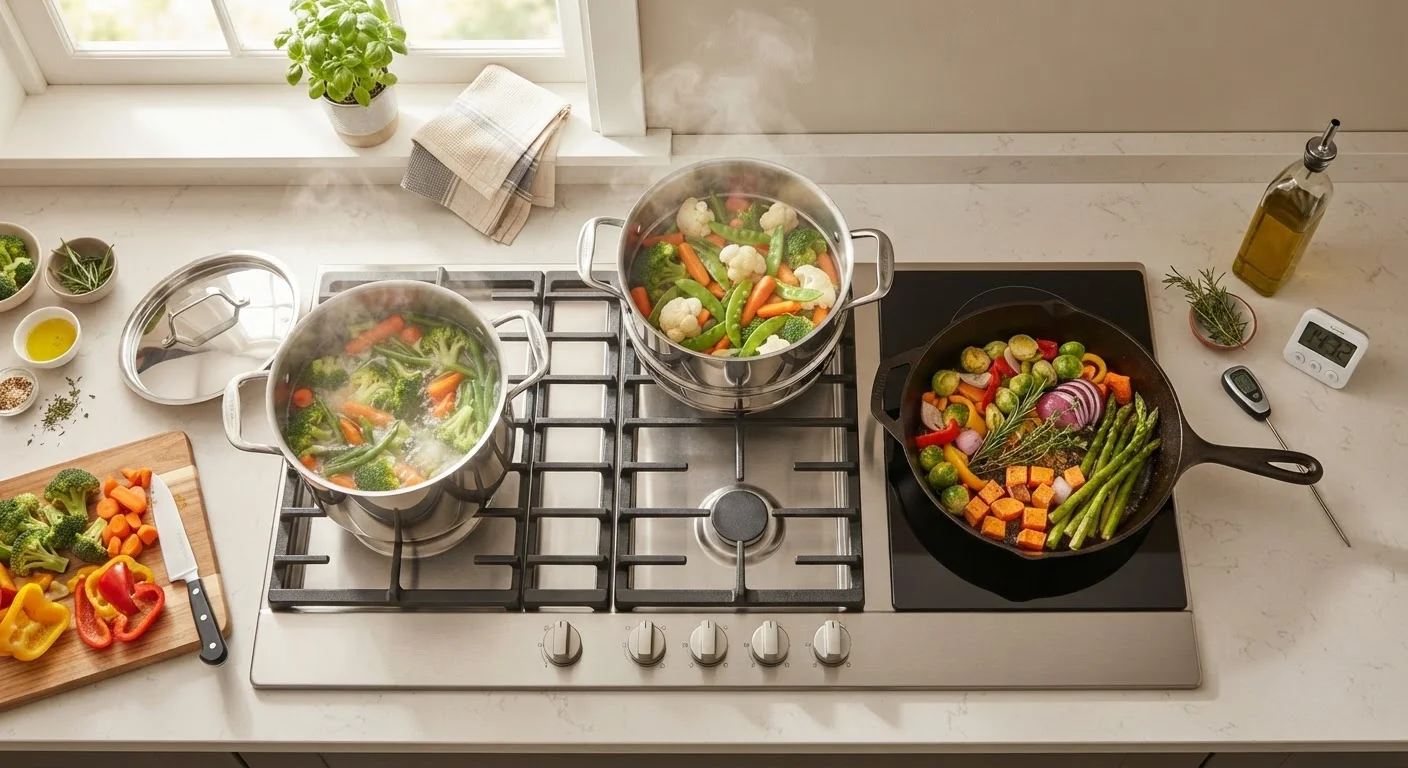
Photo credit: FaqBulletin.com | Information Made Easy
In this article
Boiling, roasting, steaming, and frying don't just affect flavor—they change nutrient content. Here's what food science tells us about cooking and nutrition.
Key Takeaways
- Boiling can cause significant loss of water-soluble vitamins like vitamin C and B vitamins into the cooking water.
- Steaming is one of the most nutrient-preserving cooking methods for vegetables.
- Roasting and baking retain most nutrients but can degrade heat-sensitive vitamins at high temperatures.
- Frying adds fat and calories but doesn't necessarily destroy all nutrients — the trade-off depends on the food and oil used.
- Using cooking liquid (such as vegetable broth from boiled produce) recaptures some leached nutrients.
- No single cooking method is universally superior — variety and balance matter most.
Why Your Cooking Method Matters Nutritionally
Most households think about nutrition at the grocery store — choosing whole grains, picking fresh produce, reading labels. But a second, equally important nutritional decision happens at the stove. The way you apply heat to food can meaningfully shift its vitamin and mineral content before it reaches anyone's plate.
This isn't a reason for alarm. Cooking is essential — it improves food safety, digestibility, and flavor. But understanding the basic science behind how different preparation methods affect nutrients helps you make small, practical adjustments that add up over time. If you're building a foundation in nutrition generally, our nutrition fundamentals guide is a useful starting point.
The nutrients most affected by cooking are water-soluble vitamins — particularly vitamin C and the B vitamins — which dissolve easily into cooking liquid and are sensitive to heat. Fat-soluble vitamins (A, D, E, and K) are more stable under heat but can be lost if the cooking fat is thrown away. Minerals are generally more heat-stable, though they can leach into water much like vitamins.
Up to 55%
Vitamin C lost during boiling
Research published in peer-reviewed food science literature has found that boiling vegetables can reduce vitamin C content by up to 55%, depending on the vegetable, cooking time, and water volume used.
~25%
Vitamin C retained better with steaming vs. boiling
Multiple food science studies comparing steaming and boiling consistently show steaming preserves a meaningfully greater proportion of water-soluble vitamins in vegetables.
2–3x
Increase in lycopene bioavailability from cooking tomatoes
According to nutritional research, cooking tomatoes — whether roasting, stewing, or pureeing — can increase the bioavailability of lycopene by two to three times compared to raw tomatoes.
Boiling, Steaming, and Simmering: The Water-Based Methods
Boiling is one of the most common cooking methods in American kitchens, but it's also among the least efficient for retaining water-soluble nutrients. When vegetables are submerged in water and heated, vitamins like C and folate migrate out of the food and into the cooking liquid. Studies have shown that boiling can reduce vitamin C content in some vegetables by 50% or more depending on time and temperature.
Steaming significantly reduces this loss. Because the food sits above the water rather than in it, far fewer nutrients leach away. The cooking time is also usually shorter. For everyday vegetables — broccoli, green beans, zucchini — steaming is a reliable, nutrient-preserving choice.
Simmering (lower heat, less aggressive bubbling) causes less structural breakdown than a rolling boil, and if you're making soups or stews where the liquid is consumed, nutrient loss becomes largely irrelevant — those vitamins are still in the bowl. This is one reason that homemade soups and one-pot meals can be surprisingly nutritious.
Save Your Cooking Water
The water left after boiling or blanching vegetables is rich in leached vitamins and minerals. Rather than discarding it, cool it and use it as a base for soups, to cook grains, or to enrich sauces. This simple habit recovers nutrients that would otherwise be lost and adds depth of flavor at the same time.
Roasting, Baking, and Grilling: Dry-Heat Methods
Dry-heat methods like roasting, baking, and grilling don't involve water, so there's minimal leaching of water-soluble vitamins. However, prolonged exposure to high temperatures can still degrade heat-sensitive nutrients, particularly vitamin C and some B vitamins.
Roasting vegetables at moderate oven temperatures tends to preserve a reasonable portion of their nutrient content while concentrating their natural sugars — which is why roasted carrots or sweet potatoes taste notably sweeter than boiled ones. The Maillard reaction (the browning that happens at higher heat) is a purely flavor and texture phenomenon and doesn't signal nutritional loss on its own.
Grilling introduces one additional consideration: charring. Heavily charred or burned surfaces on meat and some vegetables can produce compounds associated with potential health concerns. Keeping grill temperatures moderate and avoiding prolonged direct flame contact reduces this. For more context on how macronutrients like protein behave across cooking methods, see our macronutrients explainer.
Frying and Sautéing: Cooking with Fat
Frying adds calories from oil, but it doesn't render food nutritionally empty. Proteins in meat and eggs remain largely intact after frying, and fat-soluble vitamins — which, by definition, dissolve in fat — are often well-preserved and can actually become more bioavailable when consumed alongside dietary fat.
Sautéing (using a small amount of oil over moderate heat for a short time) is among the more nutritionally balanced methods for many vegetables. The brief cooking time limits heat exposure, the fat aids absorption of fat-soluble nutrients, and there's no water to leach vitamins away.
Deep-frying at very high temperatures for extended periods causes the most nutrient degradation among frying methods, and the significant addition of oil substantially increases caloric density. The type of oil also influences the final nutritional profile of the dish.
None of this means fried food has no place in a healthy diet — context and overall eating patterns matter far more than any single preparation choice. Our balanced eating guide explores how individual meals fit into a broader nutritional picture.
Practical Takeaways for Everyday Cooking
Food science on cooking methods doesn't need to turn every meal into a calculation. A few straightforward habits can meaningfully support better nutrient retention across the week:
- Use cooking water wisely. Save the water from boiled vegetables to use in soups, sauces, or grains — it carries leached vitamins and minerals.
- Favor shorter cooking times where possible. The longer food is exposed to heat, the greater the nutrient loss. Lightly cooked vegetables retain more than thoroughly softened ones.
- Match method to nutrient goal. Steaming protects water-soluble vitamins; cooking with a little fat enhances fat-soluble vitamin absorption.
- Embrace variety. Eating a mix of raw and cooked foods across the day captures benefits from both states — some nutrients are more available raw, others more available cooked.
Understanding how preparation affects what's in your food is part of broader nutritional literacy. Those interested in applying this practically will find value in exploring the distinctions between whole and processed foods, where preparation at an industrial level introduces its own nutritional considerations.
This article is for general informational and educational purposes only and is not a substitute for professional medical or nutritional advice. Consult a qualified healthcare provider or registered dietitian for guidance specific to your health needs.
Frequently Asked Questions

Author
Health & Wellness Editorial Team
Health & Wellness Editorial Team is the collective byline for our editorial team and contributor network. Articles published under this byline or an editorial pen name are researched, written, and reviewed according to our editorial standards for clarity, consistency, and independence before publication.
View all articles →