
The Pros and Cons of Year-Round Schooling
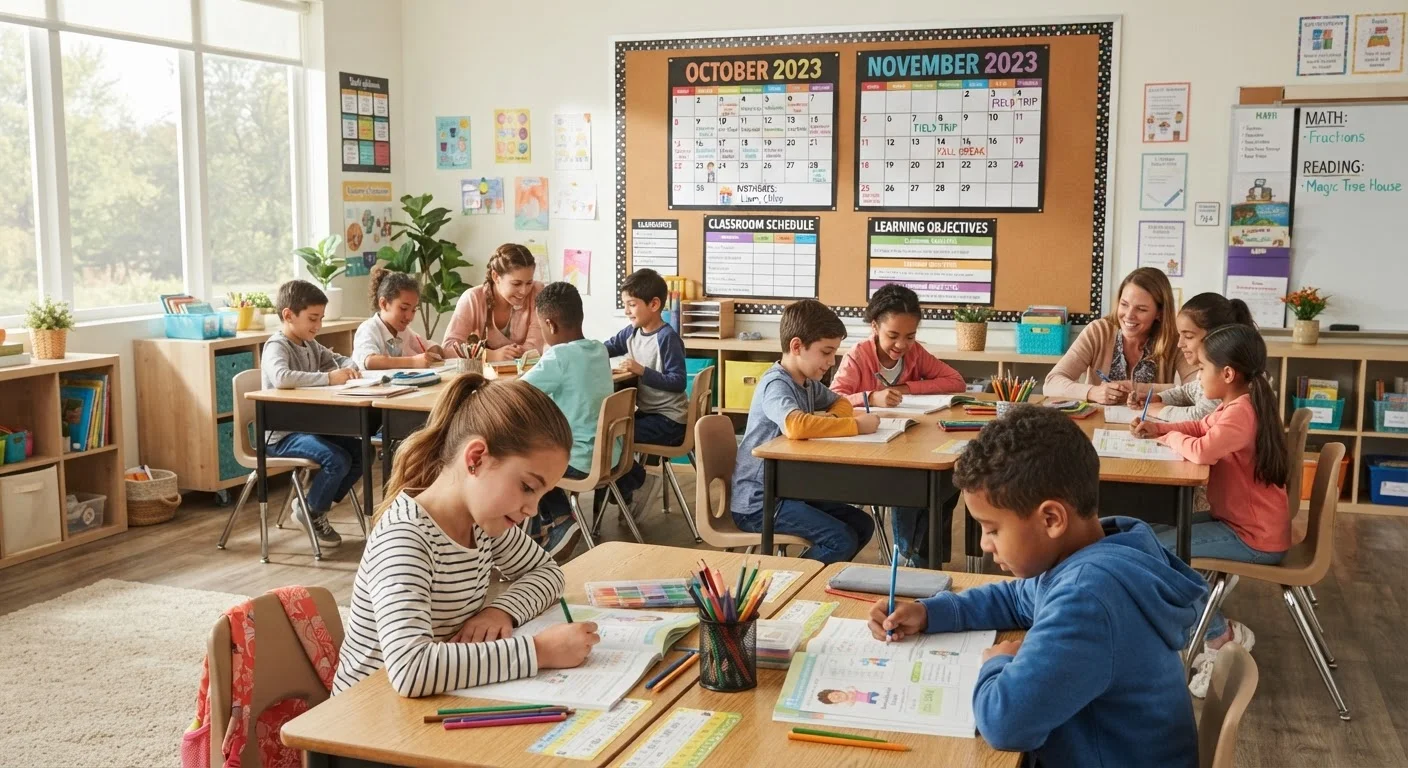
Photo credit: FaqBulletin.com | Information Made Easy
In this article
Year-round calendars are growing in popularity. Here's an honest look at the benefits and drawbacks for students and families.
Key Takeaways
- Year-round schooling keeps the same number of instructional days as traditional calendars - it only redistributes breaks.
- Research on academic outcomes is mixed; the structure may help some students more than others.
- Families with multiple children or working parents face real logistical and financial adjustments.
- Multi-track systems can ease school overcrowding but complicate family scheduling.
- The right calendar depends heavily on your child's learning style, your district's goals, and your family's routine.
Reduces summer learning loss for at-risk students
Research suggests students from lower-income households lose more academic ground over long summer breaks. Shorter, more frequent breaks can help close this gap by keeping skills fresher.
More frequent breaks may reduce teacher and student burnout
Intersession breaks spread throughout the year can provide mental recovery periods, potentially improving focus and engagement when students return to class.
Multi-track scheduling eases overcrowding without new construction
Districts facing capacity problems can enroll more students by staggering attendance groups, reducing the need for costly facility expansions.
Intersessions can offer targeted academic support
Some year-round schools use intersession weeks for optional remediation or enrichment programs, giving struggling students extra instructional time without extending the regular school year.
Disrupts traditional summer family routines and childcare
Established summer camps, family vacations, and extended-family visits are often built around a long summer break. Frequent short intersessions can be harder and more expensive to fill with quality care.
Academic benefits are modest and inconsistently demonstrated
The research base shows small average gains, but results vary significantly by implementation, demographics, and how the intersession time is used - making sweeping claims unreliable.
Multi-track schedules can split siblings across different calendars
When children in the same household are assigned to different rotation tracks, families face the logistical burden of managing two separate school schedules simultaneously.
Facilities costs don't necessarily decrease
Keeping a school building operational year-round raises utility and maintenance expenses, which can offset some of the savings from avoiding new construction.
Less access to traditional seasonal employment for teens
Older students who rely on summer jobs to save for college or contribute to family income may find year-round calendars limit those opportunities.
What Year-Round Schooling Actually Means
Despite the name, year-round schooling does not add more school days. Most year-round calendars still total 180 instructional days - the same as a traditional September-to-June schedule. What changes is how those days are distributed. Rather than one long summer break, students typically follow a pattern such as 45 days in school followed by 15 days off (a "45-15" schedule), or variations like 60-20 or 90-30 cycles.
There are two main operating models. A single-track system means all students follow the same modified calendar together. A multi-track system divides students into groups that rotate on staggered schedules, so the building is always partially occupied - a common strategy for overcrowded schools.
As of the most recent data from the National Center for Education Statistics, roughly 3,700 public schools in the United States operate on some form of year-round calendar, concentrated heavily in states like California, Nevada, and North Carolina. Understanding which model your district uses matters enormously for evaluating the trade-offs. For a broader look at how school calendar decisions connect to larger enrollment policies, see how open enrollment and school choice work.
The Case For Year-Round Schooling
Supporters of year-round calendars point to several evidence-based and practical advantages worth taking seriously.
Reduces summer learning loss for at-risk students
Research suggests students from lower-income households lose more academic ground over long summer breaks. Shorter, more frequent breaks can help close this gap by keeping skills fresher.
More frequent breaks may reduce teacher and student burnout
Intersession breaks spread throughout the year can provide mental recovery periods, potentially improving focus and engagement when students return to class.
Multi-track scheduling eases overcrowding without new construction
Districts facing capacity problems can enroll more students by staggering attendance groups, reducing the need for costly facility expansions.
Intersessions can offer targeted academic support
Some year-round schools use intersession weeks for optional remediation or enrichment programs, giving struggling students extra instructional time without extending the regular school year.
~3,700
U.S. public schools on year-round calendars
According to the National Center for Education Statistics, year-round schools remain a small but growing share of public schools, concentrated in high-enrollment states.
2-3 months
Typical summer learning loss window
Education researchers estimate students can lose up to two to three months of learning over a standard summer break, with the effect more pronounced in math and for lower-income students.
Beyond academics, shorter breaks can simplify childcare planning - parents are not scrambling for a full summer of coverage. And for schools operating beyond capacity, multi-track scheduling can serve significantly more students without building new facilities, which has real budget implications for districts.
The Case Against Year-Round Schooling
The concerns are just as real, and families should weigh them honestly before assuming a year-round calendar is the right fit.
Disrupts traditional summer family routines and childcare
Established summer camps, family vacations, and extended-family visits are often built around a long summer break. Frequent short intersessions can be harder and more expensive to fill with quality care.
Academic benefits are modest and inconsistently demonstrated
The research base shows small average gains, but results vary significantly by implementation, demographics, and how the intersession time is used - making sweeping claims unreliable.
Multi-track schedules can split siblings across different calendars
When children in the same household are assigned to different rotation tracks, families face the logistical burden of managing two separate school schedules simultaneously.
Facilities costs don't necessarily decrease
Keeping a school building operational year-round raises utility and maintenance expenses, which can offset some of the savings from avoiding new construction.
Less access to traditional seasonal employment for teens
Older students who rely on summer jobs to save for college or contribute to family income may find year-round calendars limit those opportunities.
Multi-Track vs. Single-Track: Know the Difference
Not all year-round schools operate the same way. Single-track schools keep all students on one shared calendar, while multi-track schools rotate groups on staggered schedules to manage enrollment. If your school uses multi-track scheduling, your child's specific track assignment determines their actual calendar - and it may differ from a neighbor's child at the same school. Always confirm the specific track schedule with the school directly before making childcare or travel plans.
It is also worth noting that the academic evidence is less settled than advocates sometimes suggest. A widely cited 2007 meta-analysis published in the Review of Educational Research found that year-round schooling produced modest positive effects, but the gains were often small and varied considerably by student population and implementation quality. Families comparing this option with others - including home-based instruction - may find it useful to review how homeschooling compares to traditional schooling across key dimensions.
Practical Planning Considerations for Families
Whether your district is adopting a year-round calendar or you are weighing a school transfer, a few practical questions can help frame your decision:
- Childcare logistics: Do your current care arrangements - summer camps, family help, after-school programs - align with shorter, more frequent breaks? Frequent intersessions may require more flexible and often more costly coverage.
- Siblings on different schedules: If you have children in multiple schools and they operate on different tracks, coordinating family time becomes substantially harder.
- Seasonal income or employment: Families where a parent works seasonally or in industries tied to summer (agriculture, tourism, landscaping) may find the traditional calendar better aligned with household rhythm.
- Your child's learning profile: Students who genuinely struggle to retain skills over a 10-to-12-week summer gap are the most likely to benefit from a year-round structure.
If your child is transitioning to a new school calendar, a good starting point is getting supplies, health forms, and routines in order early. The back-to-school readiness checklist can help you stay organized regardless of which calendar your school follows.

Author
Education Editorial Team
Education Editorial Team is the collective byline for our editorial team and contributor network. Articles published under this byline or an editorial pen name are researched, written, and reviewed according to our editorial standards for clarity, consistency, and independence before publication.
View all articles →