
Talking to Your Child's Teacher: Habits That Actually Improve the Relationship
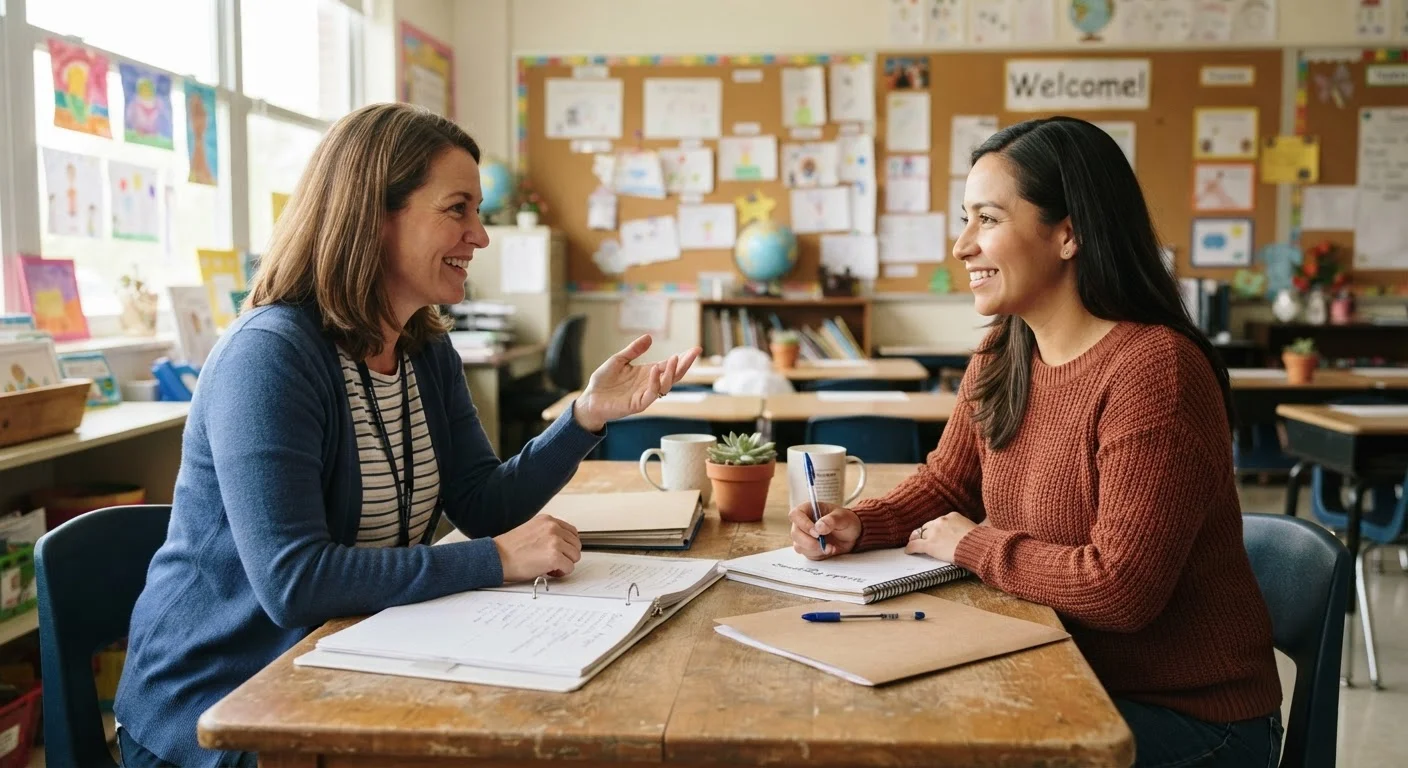
Photo credit: FaqBulletin.com | Information Made Easy
In this article
Strong parent-teacher communication benefits students. Learn the habits that build trust and keep conversations productive.
Key Takeaways
- Proactive, positive outreach before problems arise sets the foundation for a stronger relationship.
- Specific, factual questions get better responses than vague concerns or emotional complaints.
- Following up after meetings shows teachers you take their input seriously.
- Respecting a teacher's time and communication preferences makes collaboration smoother.
- Students benefit most when parents and teachers operate as a coordinated team, not opposing parties.
Why the Relationship Matters More Than the Meetings
Parent-teacher communication is often treated as a checkbox: attend conferences, sign the progress report, send an email when something goes wrong. But research consistently shows that the quality of that communication - not just its frequency - is what shapes student outcomes. When parents and teachers trust each other, small problems get addressed early, and students receive more consistent support at home and at school.
The challenge is that most parents and teachers interact under pressure: something is already going wrong, time is short, and emotions are running high. Building habits that work across the whole school year - not just during crises - changes the dynamic entirely. For families navigating the particular intensity of the middle years, see what to expect in middle school for context on how parental involvement often needs to shift.
The Habits That Actually Build Trust
Strong parent-teacher relationships are built through consistent, low-stakes interactions - not just high-stakes ones. The practices below are drawn from what educators and family engagement researchers identify as most effective.
Reach out early in the year with a positive introduction, before any problems arise.
Teachers receive most parent communication as complaints or concerns. An early, friendly message establishing who you are and expressing genuine support sets a different tone and makes future conversations easier to start.
Ask specific, observable questions rather than broad or loaded ones.
Vague questions like 'Is my child doing okay?' put teachers in an awkward position and yield vague answers. Specific questions give teachers something concrete to address and signal that you're engaged with the details.
Respect stated communication channels and response time expectations.
Teachers often manage 25-30 students and their families simultaneously. Using the channels they've established - and not expecting immediate replies - reduces friction and shows professional respect.
Follow up after meetings with a brief summary of what was agreed.
Conferences often cover a lot of ground quickly. A short follow-up email restating the key points and any next steps you both agreed to prevents misunderstanding and shows the teacher you were listening.
Share relevant context about your child's home life when it affects school performance.
Teachers cannot adapt their support if they don't know what's happening outside school. Sharing relevant changes - a family disruption, a health issue, a sleep problem - gives teachers the information they need to respond appropriately.
Acknowledge and affirm teacher efforts when you notice positive impact.
Recognition is rare in teaching. A genuine, specific acknowledgment of something the teacher did that helped your child costs nothing and meaningfully reinforces the relationship.
What to Say (and What to Avoid)
The language parents use shapes how teachers receive them. A message that opens with a complaint - even a valid one - tends to put teachers on the defensive. A message that opens with a question or observation invites collaboration.
When You Disagree With the Teacher
Disagreements between parents and teachers are normal and don't have to damage the relationship. If you feel a decision is wrong or unfair, request a meeting rather than responding in writing while frustrated. In that meeting, focus on what outcome you both want for your child - starting from shared goals rather than opposing positions tends to produce better results. If a concern remains unresolved, schools have established channels (department heads, counselors, administrators) for escalation.
When your child is struggling but you're not sure why, resist the urge to speculate about the cause in your first communication. Instead, share what you're observing at home and ask what the teacher is seeing. This approach gives the teacher useful information without implying blame. If you're also wondering whether something deeper is at play, factors that hold capable students back is worth reading before your next conversation.
Similarly, if the topic involves a major decision like grade retention, come prepared with specific questions rather than assumptions. what research says about grade retention can help you ask the right questions and avoid common misunderstandings.
74%
Teachers who say parent involvement improves student performance
A National Education Association survey found nearly three-quarters of teachers believe active parent engagement has a meaningful positive effect on student achievement.
2x
More likely to succeed when families are engaged
Research compiled by the Harvard Family Research Project indicates students whose families maintain consistent school involvement are roughly twice as likely to complete homework regularly and stay academically on track.
Making the Relationship Last All Year
The most effective parent-teacher relationships don't peak at fall conferences - they sustain across the school year through small, consistent touchpoints. A brief note acknowledging a positive experience, a quick check-in after a hard week, or a follow-up email after a meeting all signal that you're engaged and that you take the teacher's perspective seriously.
Parents who model positive adult relationships with authority figures also teach children something important: that adults can disagree respectfully, communicate directly, and work toward shared goals. This kind of emotional modeling is one of the quieter benefits of strong parent-teacher partnerships - it shows students what healthy communication looks like in action. For more on how consistent small habits shape wellbeing over time, see daily habits that support emotional health.
When the relationship is strong, it becomes a resource your child can draw on throughout the year - not just in emergencies.

Author
Education Editorial Team
Education Editorial Team is the collective byline for our editorial team and contributor network. Articles published under this byline or an editorial pen name are researched, written, and reviewed according to our editorial standards for clarity, consistency, and independence before publication.
View all articles →