
Subsidized vs. Unsubsidized Federal Student Loans
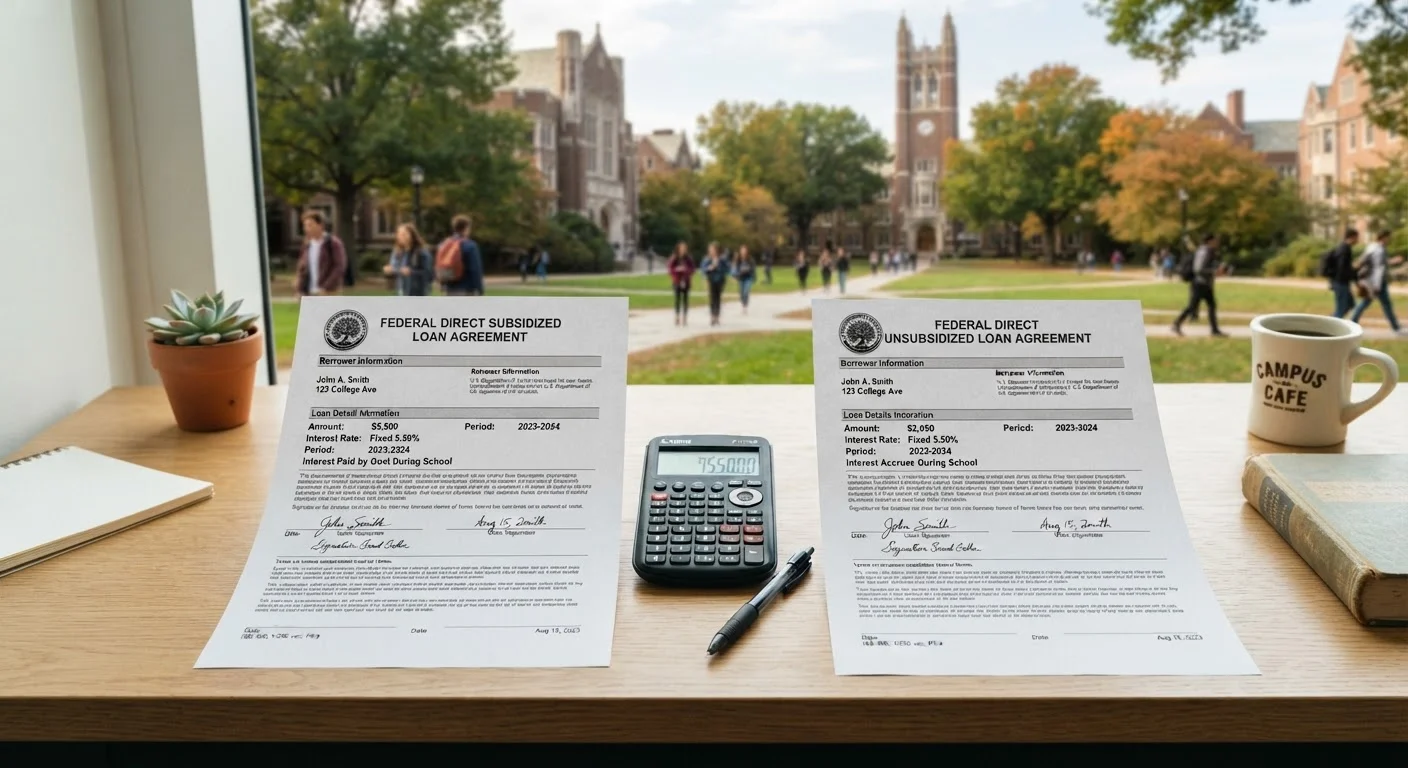
Photo credit: FaqBulletin.com | Information Made Easy
In this article
One accrues interest while you're in school; the other doesn't. Here's exactly how each loan type works and who qualifies.
Key Takeaways
- Subsidized loans require demonstrated financial need; unsubsidized loans do not.
- The U.S. Department of Education pays subsidized loan interest during in-school, grace, and deferment periods.
- Unsubsidized loan interest accrues from disbursement, increasing your total balance if unpaid.
- Both loan types share the same federal interest rates and income-driven repayment options.
- Annual borrowing limits are lower for subsidized loans and only available to undergraduates.
- Completing the FAFSA is required for both loan types and determines your subsidized eligibility.
How Each Loan Type Works
Both Direct Subsidized and Direct Unsubsidized Loans are federal student loans issued by the U.S. Department of Education. They carry the same fixed interest rates set annually by Congress and qualify for the same federal repayment plans, including income-driven options. The defining difference is who pays the interest - and when.
With a Direct Subsidized Loan, the federal government covers all interest that accrues while you are enrolled at least half-time, during the six-month grace period after leaving school, and during any approved deferment. You graduate owing only what you borrowed.
With a Direct Unsubsidized Loan, interest begins accruing the moment funds are disbursed. If you do not pay that interest while in school, it capitalizes - meaning it is added to your principal balance - once repayment begins. A $10,000 unsubsidized loan at a 6.5% rate will accrue roughly $650 in interest per year; over four years of school plus a six-month grace period, that unpaid interest can add more than $2,900 to what you owe before your first payment is due.
For a full picture of all the aid types the FAFSA can unlock alongside these loans, see everything covered under a FAFSA submission.
| Criterion | Direct Subsidized | Direct Unsubsidized |
|---|---|---|
| Who pays interest in school | U.S. Department of Education | Borrower (accrues immediately) |
| Eligibility | Undergraduates with financial need | Undergrad, graduate, professional |
| FAFSA required | Yes | Yes |
| Annual limit (1st-year dependent) | Up to $3,500 | Up to $5,500 combined |
| Lifetime aggregate cap | $23,000 | $31,000 (dependent undergrad) |
| Interest during grace period | Government-covered | Accrues and may capitalize |
| Income-driven repayment eligible | Yes | Yes |
| PSLF eligible | Yes | Yes |
Eligibility and Borrowing Limits
Eligibility is where the two loans diverge most sharply. Subsidized loans are restricted to undergraduate students who demonstrate financial need as calculated by the FAFSA. Graduate and professional students are not eligible. Need is determined by comparing your expected family contribution (or, under the newer FAFSA framework, your Student Aid Index) to your school's cost of attendance.
Annual subsidized loan limits range from $3,500 for first-year undergraduates to $5,500 for third-year and beyond, with a lifetime aggregate cap of $23,000. Unsubsidized loans are available to undergraduates, graduate students, and professional degree students regardless of income. Annual limits are higher - dependent undergraduates can borrow up to $7,500 per year (combined subsidized and unsubsidized), while independent undergraduates and graduate students have higher ceilings.
The strategic takeaway: always exhaust your subsidized eligibility first. Unsubsidized borrowing should fill the gap only after subsidized limits are reached.
$23,000
Subsidized loan lifetime cap for undergraduates
Per U.S. Department of Education guidelines, dependent undergraduates may not exceed this aggregate subsidized borrowing limit.
~43M
Americans holding federal student loan debt
According to Federal Student Aid data, tens of millions of borrowers carry outstanding federal loan balances, the majority from Direct Loan programs.
6.53%
Federal undergraduate unsubsidized rate (2024-25)
Congress sets federal student loan interest rates annually; the 2024-25 undergraduate unsubsidized rate is 6.53%, matching the subsidized rate for undergrads.
Managing Interest to Reduce Long-Term Cost
Because unsubsidized interest capitalizes, the decisions you make during school have real consequences at repayment. Borrowers who make small interest-only payments while enrolled - even $50-$100 per month - can prevent hundreds or thousands of dollars of capitalized interest from inflating their principal.
If you already have a mix of both loan types and are heading into repayment, understanding payoff strategy matters. The debt avalanche vs. debt snowball methods can help you decide how to sequence payments when you carry multiple balances.
Both loan types qualify for federal income-driven repayment plans - such as SAVE, IBR, and PAYE - which cap monthly payments as a percentage of discretionary income. They are also eligible for Public Service Loan Forgiveness (PSLF) if you work for a qualifying employer. Neither subsidized nor unsubsidized loans can be discharged through consolidation strategies the same way private debts sometimes are; for a look at how consolidation differs from other debt tools, the debt consolidation vs. balance transfer comparison provides useful context.
For families still uncertain about how financial aid packages work overall, separating college financial aid myths from reality addresses common misconceptions that can lead to missed aid opportunities.
This article provides general educational information about federal student loan programs and is not personalized financial or legal advice. Loan terms, interest rates, and borrowing limits are set by federal law and may change. Consult your school's financial aid office or a qualified financial counselor for guidance specific to your situation.

Author
Education Editorial Team
Education Editorial Team is the collective byline for our editorial team and contributor network. Articles published under this byline or an editorial pen name are researched, written, and reviewed according to our editorial standards for clarity, consistency, and independence before publication.
View all articles →