
The Oil Change Interval Myth: Is Every 3,000 Miles Still the Rule?
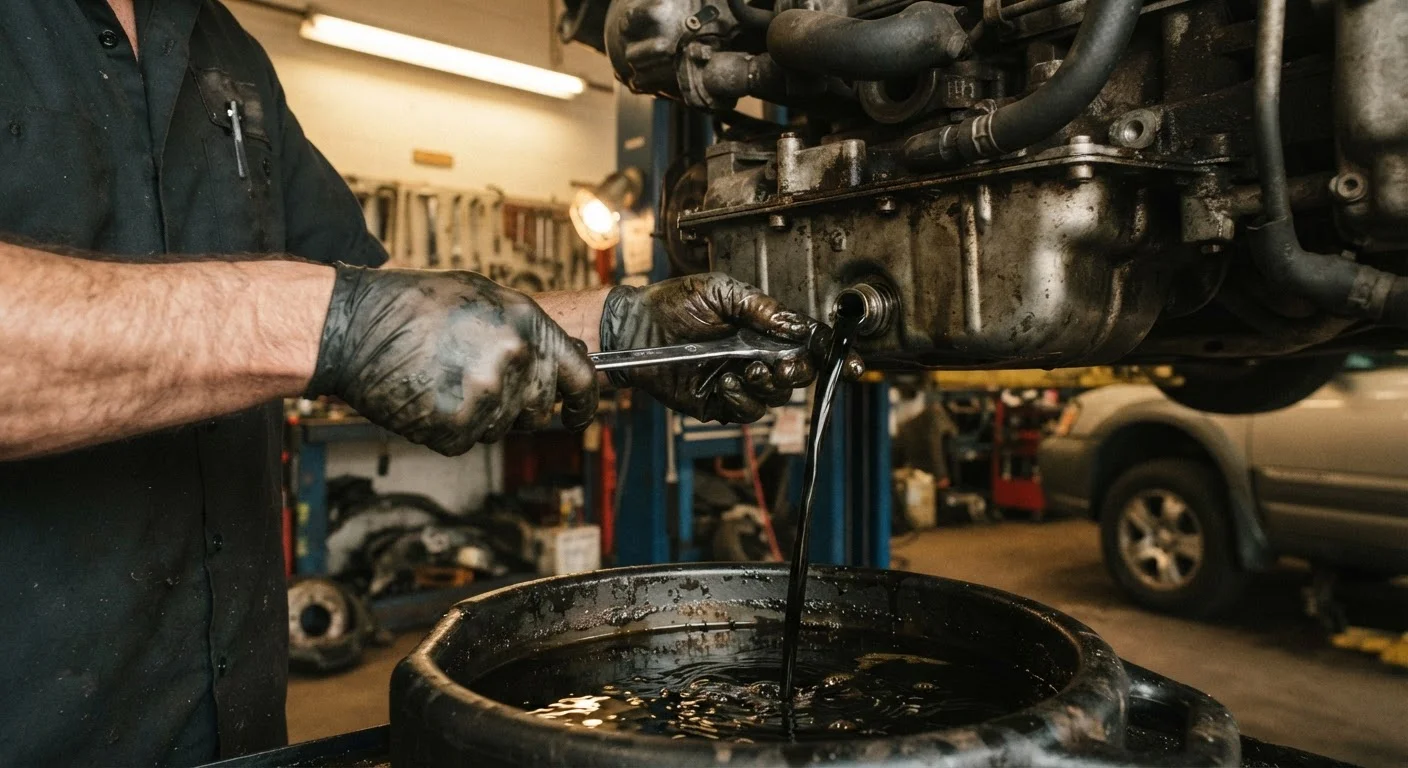
Photo credit: FaqBulletin.com | Information Made Easy
In this article
The 3,000-mile oil change rule is outdated for most modern vehicles. Here's what actually determines when your oil needs changing.
Key Takeaways
- Most modern vehicles can safely go 5,000-10,000 miles or more between oil changes.
- Your owner's manual - not a quick-lube shop's sticker - is the authoritative guide for your vehicle.
- Driving habits matter: frequent short trips, towing, and extreme temperatures accelerate oil degradation.
- Many newer vehicles include an oil life monitoring system that calculates change intervals in real time.
- Changing oil too early wastes money; changing it too late risks expensive engine damage.
Where the 3,000-Mile Rule Came From
The 3,000-mile oil change interval has roots in a different era of automotive engineering. Decades ago, conventional motor oil broke down relatively quickly, and engine tolerances were looser - meaning more contaminants entered the oil faster. For vehicles of that generation, frequent oil changes were genuinely protective.
The rule stuck largely because quick-lube shops and oil manufacturers had a financial interest in keeping it alive. A sticker on your windshield recommending your next change at 3,000 miles is a marketing tool, not an engineering specification. For the vast majority of cars on the road today, following that advice means changing perfectly good oil before it has done anything close to its useful work.
Myth
You must change your oil every 3,000 miles or you risk damaging your engine.
Fact
Most modern vehicles are engineered for oil change intervals of 5,000 to 10,000 miles or more, depending on oil type and driving conditions.
The 3,000-mile guideline predates modern synthetic oils and today's precision-engineered engines. Following it on a current-generation vehicle simply means discarding oil that still has substantial protective life remaining. Always defer to the interval stated in your owner's manual, which is calibrated to your specific engine and the oil type it requires.
Myth
Dark oil means the oil is dirty and needs to be changed immediately.
Fact
Oil darkens naturally as it circulates and picks up combustion byproducts - that discoloration is a sign it is doing its job, not that it has failed.
Motor oil is designed to suspend contaminants and carry them to the filter. A darkened color indicates normal operation. Truly degraded oil may appear sludgy, have a burned smell, or show up as a low reading on the dipstick - visual darkness alone is not a reliable indicator that a change is due. Use your owner's manual interval or your vehicle's oil life monitor as the guide, not color alone.
Myth
Synthetic oil makes your engine dependent on it - you can't switch back to conventional oil.
Fact
Synthetic and conventional oils of the same viscosity rating are fully compatible and interchangeable in most engines; there is no dependency created.
This misconception has persisted for decades without engineering basis. Synthetic oils meet the same industry standards as conventional oils and can generally be mixed or alternated without harm to the engine. That said, if your vehicle's manufacturer specifies full synthetic - which is increasingly common - using conventional oil may not deliver the protection the engine was designed around. Check your manual for the required specification, not just the viscosity grade.
Myth
If you miss an oil change by a few thousand miles, your engine is already damaged.
Fact
Occasional moderate overextension of an oil change interval is unlikely to cause immediate engine damage, though it is not a habit worth developing.
Modern full-synthetic oils are formulated with significant protective margin. Going modestly beyond the recommended interval once is not catastrophic, but consistently pushing well past the specified mileage - particularly under severe driving conditions - does accelerate wear on bearings, camshafts, and other precision components. The risk is cumulative rather than immediate. Return to the correct schedule and keep records of your service intervals.
Myth
The oil change reminder sticker placed by a quick-lube shop reflects your vehicle's actual engineering requirements.
Fact
Those stickers are set by the service provider's policy, often at 3,000 miles, and have no connection to your vehicle manufacturer's specifications.
Quick-lube shops apply stickers based on a standard internal policy designed to bring customers back sooner. The figure printed on the sticker is not derived from your vehicle's engineering data. Your owner's manual and your vehicle's oil life monitor - if equipped - are the authoritative sources. Using them correctly saves money and avoids unnecessary waste of still-functional oil.
What Modern Engineering Actually Requires
Today's vehicles are built to a fundamentally different standard. Tighter engine tolerances, improved metallurgy, and more sophisticated oil filtration systems all extend the point at which oil becomes a liability rather than a protectant. Equally important is the oil itself: modern full-synthetic and synthetic-blend formulations are engineered to resist thermal breakdown, oxidation, and viscosity loss far longer than conventional oils from the 1970s or 1980s.
7,500-10,000 mi
Typical modern oil change interval with full-synthetic oil
Many major automakers specify intervals in this range for normal driving conditions when full-synthetic oil is used, as documented in their owner's manuals.
~$0 extra
Engine benefit from early oil changes beyond manufacturer schedule
Automotive engineers and industry organizations such as the American Automobile Association (AAA) have noted that changing oil before the manufacturer's recommended interval provides no measurable engine protection benefit.
Over 40%
Share of U.S. drivers who still change oil every 3,000 miles
Surveys by consumer automotive organizations have found a significant portion of drivers continue following the outdated 3,000-mile guideline despite manufacturer recommendations to the contrary.
The single most reliable source for your vehicle's correct interval is its owner's manual. Manufacturers set these intervals based on extensive testing specific to that engine, and they carry legal and warranty weight. Many manuals now list two schedules - one for normal driving and one for severe conditions - which brings us to a factor many drivers overlook entirely.
Driving Conditions Change the Equation
Even if your owner's manual says 7,500 miles under normal conditions, your actual driving pattern may qualify as severe - and that distinction matters. Manufacturers typically define severe driving as:
- Frequent short trips under five miles, especially in cold weather
- Extended idling or stop-and-go traffic
- Towing, hauling heavy loads, or driving on unpaved roads
- Operating in extreme heat or extreme cold
Short trips are particularly hard on oil because the engine never fully reaches operating temperature, so moisture and combustion byproducts accumulate in the oil rather than burning off. If most of your miles are urban commutes under five miles, your oil may degrade faster than the mileage alone suggests.
Severe Driving Can Shorten Your Interval Significantly
If your daily driving consists mostly of short urban trips, stop-and-go traffic, or regular towing, your oil may degrade faster than the standard interval accounts for. In these cases, follow your owner's manual's severe-duty schedule - typically a shorter mileage or time threshold - rather than the normal interval. Your vehicle's oil life monitor, if equipped, will also reflect these conditions in its calculations.
For a complete picture of how oil changes fit within the broader rhythm of vehicle upkeep, see our full maintenance guide from purchase to 100,000 miles covering every major service milestone.
Oil Life Monitoring Systems and What They Actually Do
Many vehicles manufactured in the past decade include an oil life monitoring system (OLMS). These systems do not measure oil quality directly with a sensor - instead, they use algorithms that factor in engine temperature cycles, RPM patterns, load, and mileage to calculate how much protective life remains in the oil. When the system alerts you, that is the appropriate time to change the oil, regardless of the mileage on the clock.
Ignoring an oil life alert or dismissing it as inaccurate defeats the purpose of the system. Conversely, changing oil early because a third-party sticker says so - while the vehicle's own monitor shows 60% oil life remaining - is simply unnecessary spending. Trust the system your vehicle's engineers built into it, and confirm its recommendations against the owner's manual guidance.
One practical note: always check your oil level on the dipstick periodically between changes. Monitoring systems track degradation, not consumption. Some engines burn small amounts of oil between services, and running low does real damage regardless of how fresh the oil is.

Author
Automotive Editorial Team
Automotive Editorial Team is the collective byline for our editorial team and contributor network. Articles published under this byline or an editorial pen name are researched, written, and reviewed according to our editorial standards for clarity, consistency, and independence before publication.
View all articles →