
Synthetic vs. Conventional Motor Oil: What Changes Under the Hood
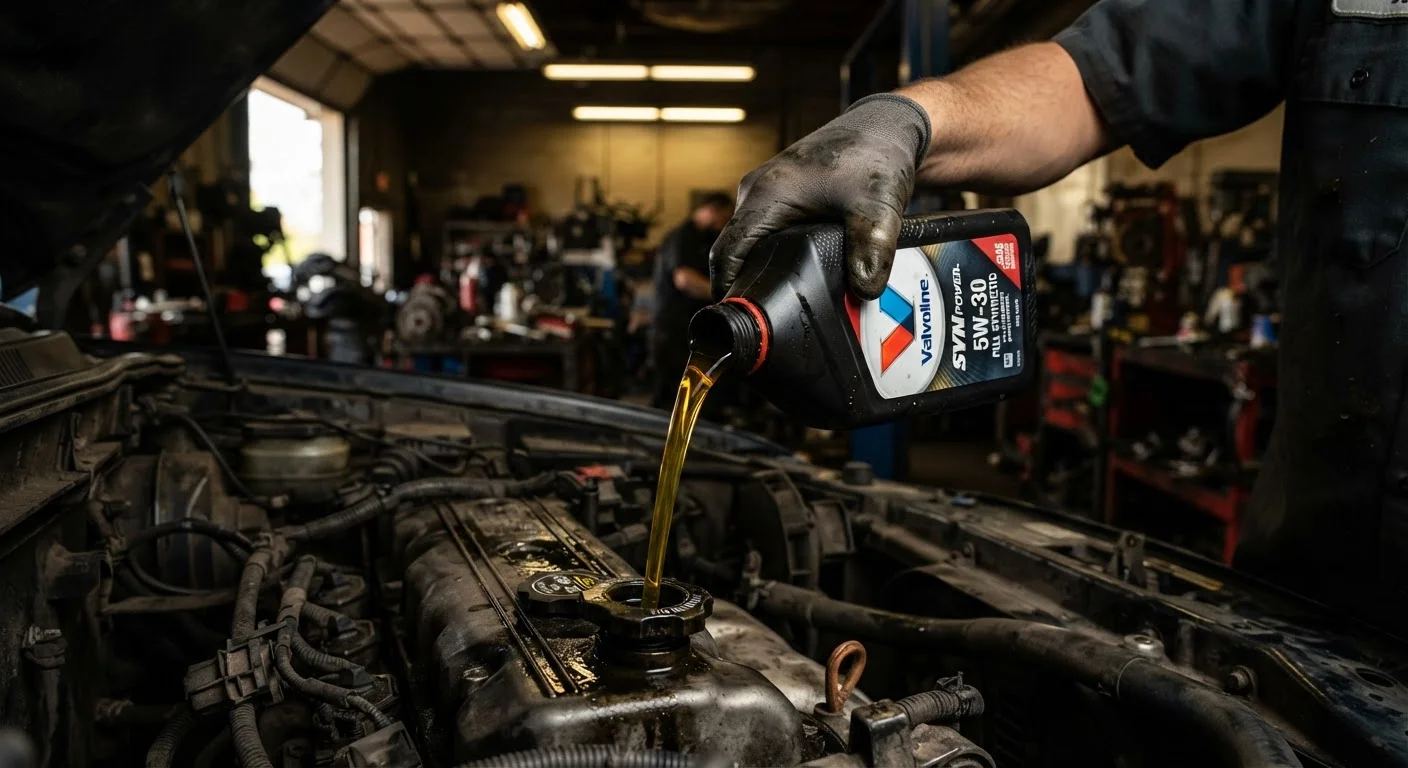
Photo credit: FaqBulletin.com | Information Made Easy
In this article
Understand the real differences between synthetic and conventional oil—viscosity, longevity, and which conditions favor each type.
Key Takeaways
- Synthetic oil is chemically engineered for more uniform molecules, offering better performance at temperature extremes.
- Conventional oil is refined from crude petroleum and generally carries a lower upfront cost per quart.
- Synthetic oil typically allows longer drain intervals-often 7,500 to 10,000+ miles-versus 3,000-5,000 miles for conventional.
- Your vehicle owner's manual is the authoritative source for which oil type and viscosity your engine requires.
- Switching between oil types is generally safe, but always consult your manual or a qualified mechanic before changing.
How Each Oil Is Made-and Why It Matters
Motor oil's primary job is to lubricate moving engine parts, reduce friction, carry heat away from critical components, and suspend contaminants until the next oil change. What separates synthetic from conventional oil isn't what it does-it's how it's made and how consistently it does that job under stress.
Conventional motor oil is refined from crude petroleum. The refining process removes many impurities, but the resulting molecules are naturally varied in size and shape. That inconsistency means conventional oil can behave less predictably under temperature extremes-it may thicken too much in extreme cold or thin too quickly in intense heat.
Synthetic motor oil is manufactured through chemical processes that build uniform, precisely engineered molecules. This molecular consistency is the source of most of synthetic oil's performance advantages: better flow at low temperatures, stronger resistance to breakdown at high temperatures, and more stable viscosity throughout the oil's service life.
There is also a middle-ground product-synthetic blend oil-which mixes conventional base stock with synthetic components. It offers some performance improvement over full conventional oil, typically at a moderate price point between the two.
What About High-Mileage Oil?
A third category-high-mileage oil-is formulated specifically for vehicles with roughly 75,000 miles or more. These blends often include seal conditioners and additional additives aimed at reducing oil consumption and minor leaks common in higher-mileage engines. Both synthetic-based and conventional-based high-mileage formulations exist. If your vehicle falls in this category, discuss the appropriate option with a qualified mechanic who knows your engine's history.
Performance, Longevity, and Cost: A Side-by-Side Look
Understanding the real-world trade-offs helps drivers make an informed decision rather than defaulting to habit or marketing language.
| Criterion | Synthetic Motor Oil | Conventional Motor Oil |
|---|---|---|
| Base origin | Chemically engineered molecules | Refined crude petroleum |
| Typical drain interval | 7,500-10,000+ miles | 3,000-5,000 miles |
| Cold-temperature flow | Excellent; flows quickly at startup | Can thicken significantly in cold |
| Heat resistance | High thermal stability | More prone to thinning at high heat |
| Sludge resistance | Strong resistance to sludge buildup | Higher sludge risk if intervals missed |
| Cost per quart | Higher upfront cost | Lower upfront cost |
| Best engine match | Turbocharged, newer, or performance engines | Older, standard, light-duty engines |
On the subject of drain intervals, the difference is meaningful. Most conventional oil recommendations fall in the 3,000-5,000 mile range, while full synthetics are commonly approved for 7,500 to 10,000 miles or more-always subject to your manufacturer's guidance. Over time, fewer oil changes can offset the higher per-quart cost of synthetic oil for many drivers.
For more context on what maintenance tasks make sense to handle yourself versus leaving to a professional, see our guide to DIY car maintenance.
~2x
Typical drain interval advantage of synthetic over conventional
Full synthetic oils are generally rated for roughly twice the mileage of conventional oil before requiring a change, according to manufacturer guidelines.
5W-30
One of the most common viscosity grades in US passenger vehicles
Viscosity grades like 5W-30 indicate an oil's flow characteristics at cold and operating temperatures; the correct grade is specified in your owner's manual.
~30%
Engine wear reduction attributed to proper lubrication
Industry engineering data consistently identifies lubrication failure or degraded oil as a leading contributor to premature engine wear and component damage.
Which Conditions Favor Each Oil Type?
Neither oil type is universally superior-the right choice depends heavily on your vehicle, driving habits, and climate.
When Synthetic Has a Clear Edge
- Cold weather starts: Synthetic oil flows faster when temperatures drop, reducing the brief but critical period of metal-on-metal contact during startup.
- Turbocharged engines: Turbochargers spin at extremely high speeds and run very hot. Synthetic oil's thermal stability helps protect turbo bearings far more effectively.
- Stop-and-go city driving: Frequent acceleration and idling put more heat stress on oil; synthetic resists oxidation and sludge buildup better under these conditions.
- Extended oil change intervals: If your schedule or driving pattern makes frequent oil changes difficult, synthetic's longer service life is a practical advantage.
When Conventional May Still Be Appropriate
- Older engines designed for conventional oil: Some older engine designs have seal clearances calibrated around conventional oil's characteristics.
- Light-duty, mild-climate commuting: If your vehicle's manufacturer approves conventional oil and your driving is relatively easy, the performance gap narrows considerably.
- Budget-driven maintenance cycles: When cost is a binding constraint, using the manufacturer-approved conventional oil on the correct schedule is far better than delaying changes with synthetic.
The single most important guidance applies regardless of which oil you choose: follow your vehicle's owner's manual. It specifies the viscosity grade (such as 5W-30 or 0W-20) and oil type your engine was engineered for. Deviating from that specification-not the synthetic-vs-conventional debate itself-is where most oil-related engine problems originate.

Author
Automotive Editorial Team
Automotive Editorial Team is the collective byline for our editorial team and contributor network. Articles published under this byline or an editorial pen name are researched, written, and reviewed according to our editorial standards for clarity, consistency, and independence before publication.
View all articles →