
Florida vs. California: Two Family Vacation Blueprints Compared
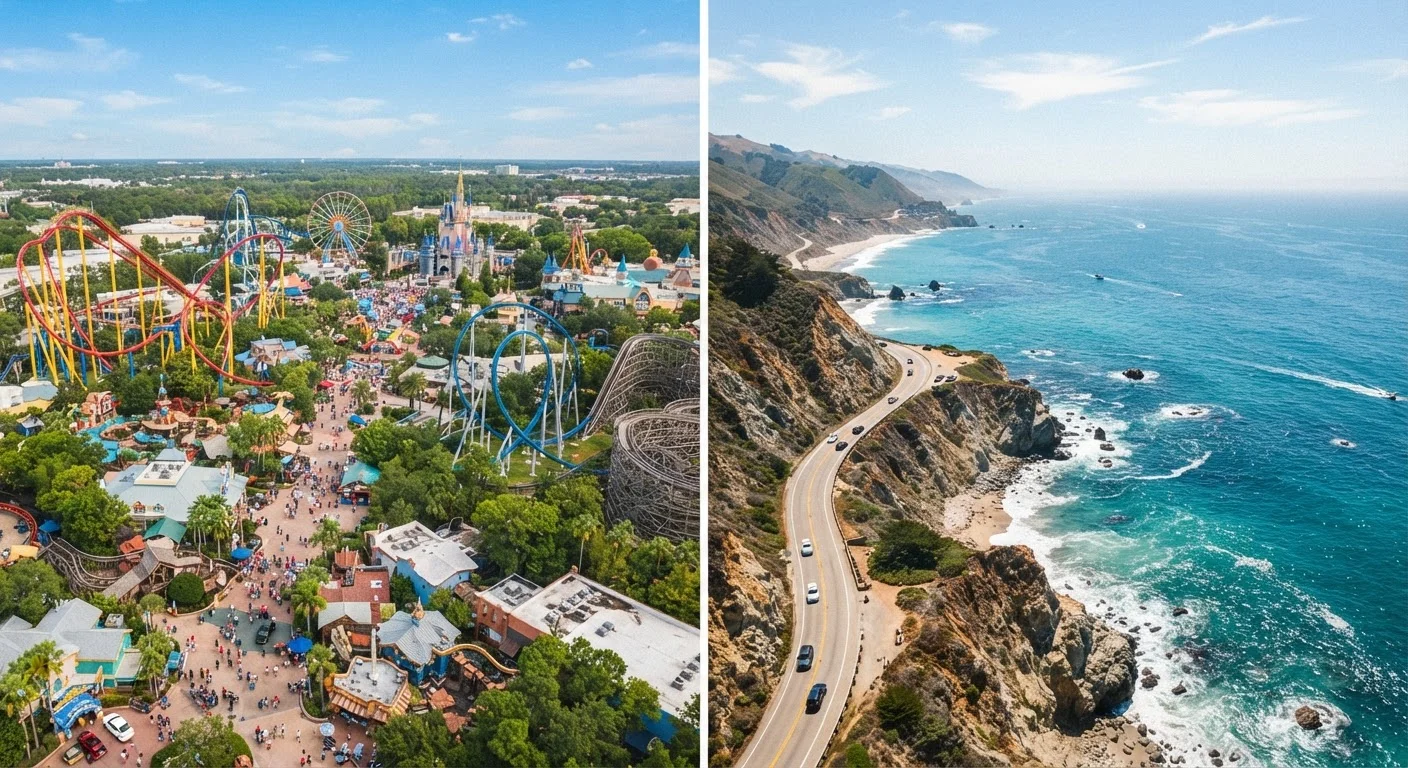
Photo credit: FaqBulletin.com | Information Made Easy
In this article
Theme parks, beaches, and road trips are on offer in both states — but the experience differs significantly. Here's how they stack up for families.
Key Takeaways
- Florida generally offers a more compact, theme-park-dense experience ideal for younger children.
- California rewards families willing to drive, with diverse landscapes ranging from beaches to national parks.
- Both states are expensive, but cost structures differ — Florida favors bundled resort packages, California rewards flexible road-trippers.
- Florida's humidity and hurricane season affect summer travel; California's inland heat and wildfire season matter for timing.
- The best choice comes down to your kids' ages, interests, and how much driving your family can realistically handle.
The Core Trade-Off: Concentration vs. Variety
Florida and California both appear on nearly every American family's travel shortlist — and for good reason. Both states deliver warm weather, world-famous attractions, and strong tourism infrastructure. But their blueprints are fundamentally different.
Florida is a destination that clusters. The Orlando corridor alone packs multiple major theme park complexes, water parks, and resort districts within a short drive of each other. Families can spend an entire week without touching a steering wheel after arriving. That density is enormously appealing when you have tired toddlers or a tight schedule.
California is a destination that stretches. A classic family road trip might span San Diego's zoo and beaches, Los Angeles's studios and boardwalks, the Central Coast, and San Francisco's waterfront — covering hundreds of miles. The payoff is breathtaking variety; the cost is time, energy, and logistics. For smart trip planning, knowing which mode suits your family is the most important decision you'll make.
Theme Parks and Major Attractions
On raw theme-park volume, Florida leads. The Orlando area hosts some of the largest and most immersive park complexes in the world, designed to keep families on-site for multiple days. Lines are long, but so is the content — young children especially can find entire days of age-appropriate rides and shows without exhaustion setting in from travel.
California competes credibly, with major park complexes near Los Angeles and San Diego, plus one of the country's most acclaimed zoos and a world-class aquarium scene. However, California's signature experiences extend well beyond parks: tide pools, redwood forests, desert landscapes at Joshua Tree, and the iconic Pacific Coast Highway all compete for your itinerary. Families who prioritize pure ride-count will lean Florida; those who want parks as one ingredient among many will find California richer.
| Florida | California | |
|---|---|---|
| Theme Park Density | Very high — multiple mega-parks clustered in Orlando | Moderate — major parks near LA and San Diego |
| Beach Style | Calm, warm Gulf Coast; choppier Atlantic side | Cool, scenic; best for families in Southern CA |
| Road Trip Factor | Low — attractions tightly clustered | High — distances between stops are significant |
| Best Season for Families | Spring and early fall (avoid peak hurricane season) | Spring and early summer (avoid inland heat and smoke) |
| Nature & Landscape Variety | Moderate — Everglades, springs, beaches | Very high — coast, desert, forests, mountains |
| Ideal Age Range | Best for younger children (under 10) | Suits mixed-age families and older kids |
Beaches, Weather, and Seasonal Timing
Florida's Gulf Coast beaches — think calm, warm, shallow water — are hard to beat for families with young kids. The Atlantic side runs warmer in summer but choppier. The trade-off: Florida summers are intensely humid, and June through November is Atlantic hurricane season. Visiting in spring or early fall typically offers better conditions.
California's beaches are cooler, often foggy in the mornings along the coast, and carry stronger surf in many spots. Southern California beaches around San Diego are the most reliably pleasant for families. Inland California bakes in summer — Death Valley and the Central Valley can reach dangerous temperatures — so itinerary sequencing matters. Wildfire smoke can also affect air quality in late summer and fall, something families with respiratory sensitivities should factor in. Always verify current conditions through official state and weather sources before travel. For more on avoiding a disappointing beach outing, see why family beach trips fall flat.
Time Your Visit to Avoid Peak Crowds
Both Florida and California see their heaviest family crowds during summer school breaks and major holidays. Families with schedule flexibility often find late April through late May or September offer meaningfully shorter park waits and more available accommodation. Check individual park websites for seasonal crowd calendars, which are typically updated annually.
Cost, Logistics, and Getting Around
Both states are among the pricier destinations in the US, but costs accumulate differently. Florida's theme park resort model encourages multi-night stays where accommodation, dining, and entertainment bundle together — expensive upfront, but predictable. Renting a car is optional if you base yourself in Orlando.
California almost always requires a rental car, and gas prices there tend to run higher than the national average. Accommodation ranges from budget motels to luxury coastal resorts. Spread across a road trip, daily costs can climb quickly. Families should also be aware that California's most popular national and state parks often require timed-entry reservations booked well in advance — a detail covered in our state travel considerations guide.
For help thinking through where to stay once you've chosen a state, our guide to family accommodation options walks through the trade-offs between hotels, vacation rentals, and campgrounds in practical detail.
If your family is still weighing whether a nature-focused trip might outperform either of these sun-and-parks options, national parks vs. beach resorts offers a useful side-by-side frame.
Prices, park reservation policies, and seasonal conditions change regularly. Verify current requirements and advisories through official state tourism offices and government sources before finalizing your trip.

Author
Travel Editorial Team
Travel Editorial Team is the collective byline for our editorial team and contributor network. Articles published under this byline or an editorial pen name are researched, written, and reviewed according to our editorial standards for clarity, consistency, and independence before publication.
View all articles →