
Sinking Funds: The Savings Technique That Prevents Surprise Expenses
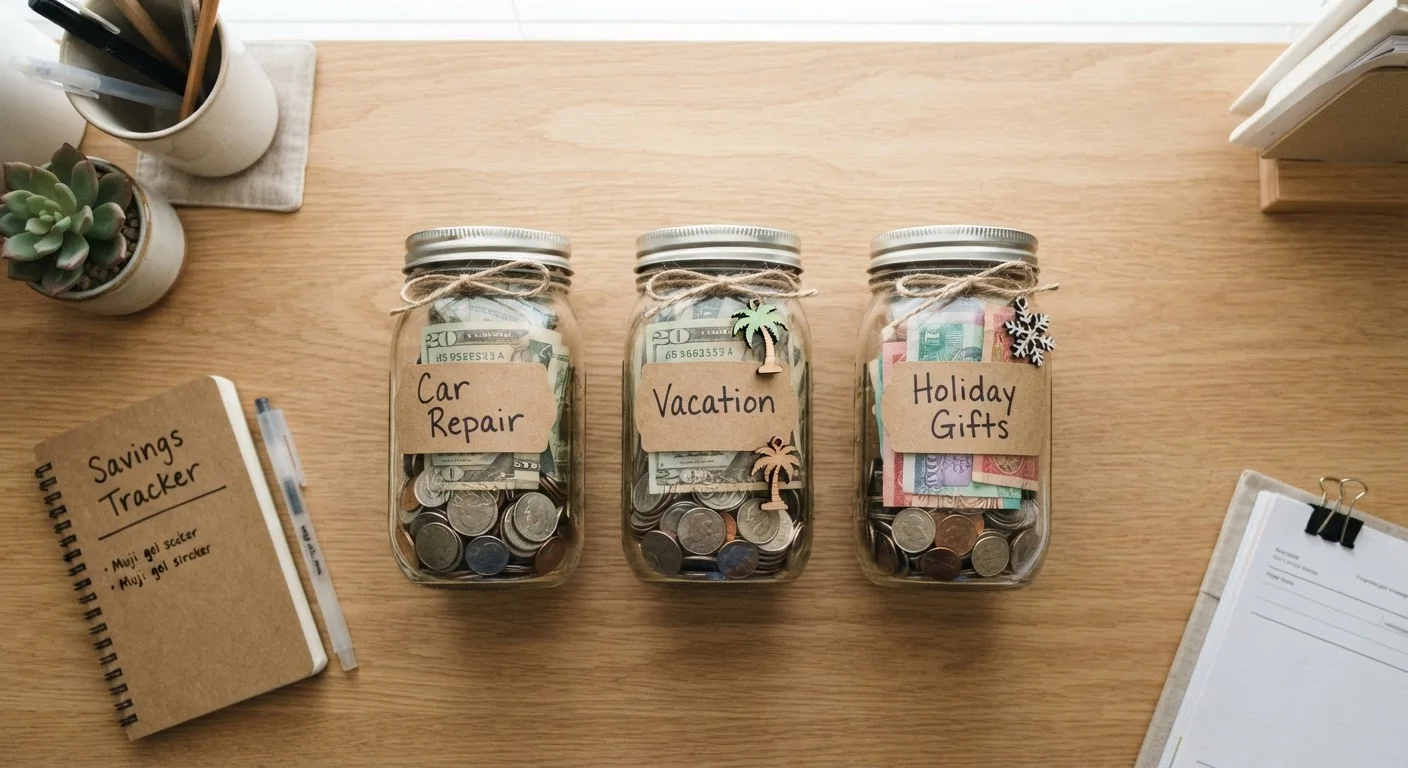
Photo credit: FaqBulletin.com | Information Made Easy
In this article
Discover what sinking funds are, how they differ from emergency funds, and how to set them up for predictable large expenses.
Key Takeaways
- A sinking fund targets a known future expense — an emergency fund covers the unknown.
- You calculate contributions by dividing the target amount by months until the expense.
- Keeping each sinking fund in a separate account prevents accidental spending.
- Common uses include car repairs, home maintenance, annual insurance premiums, and holidays.
- Automating sinking fund transfers makes the habit nearly effortless to maintain.
- Sinking funds reduce reliance on credit cards or loans for large predictable costs.
Why "Surprise" Expenses Are Rarely Truly Surprising
Car registration, holiday gifts, a back-to-school supply run, an annual insurance premium — none of these are actually surprises. They happen every year, roughly on schedule, and yet millions of households still feel blindsided when the bill shows up. The real problem is not the expense itself but the absence of a plan to fund it.
That is precisely the gap a sinking fund fills. Rather than absorbing a large lump-sum payment from a single paycheck — or putting it on a credit card — you spread the cost evenly across the months leading up to it. The financial sting disappears. What remains is a routine, manageable contribution.
Understanding how sinking funds fit into the broader picture of household budgeting is a useful starting point. The complete household budgeting framework walks through how to structure income, spending, and savings categories together in one cohesive plan.
~$1,500
Average annual car maintenance cost per vehicle
According to the American Automobile Association (AAA), average annual vehicle maintenance and repair costs have consistently exceeded $1,000 per year for typical passenger vehicles.
1 in 3
Americans who would struggle to cover a $400 unexpected expense
Federal Reserve surveys have repeatedly found that a significant share of U.S. households lack sufficient liquid savings to cover a modest unplanned expense without borrowing.
$998
Average U.S. household holiday spending
National Retail Federation consumer surveys have tracked average holiday spending for U.S. households in the roughly $900–$1,000 range in recent years — a cost that arrives on a fully predictable schedule each year.
Sinking Funds vs. Emergency Funds: A Critical Distinction
These two tools are often confused, but they serve fundamentally different purposes and should never share the same account.
An emergency fund is your financial buffer against unpredictable crises — a layoff, an unexpected medical bill, a tree falling on your roof. It is reactive, designed to be drawn on when life goes sideways. Most guidance suggests holding three to six months of essential expenses. For a deeper look at sizing one, see how much emergency fund is actually enough.
A sinking fund, by contrast, is proactive. You know the expense is coming — you are simply pre-paying it in installments. Using your emergency fund for a planned car repair is a misuse of that account; it depletes your true safety net for something that was entirely foreseeable.
Keeping the two separate in both purpose and account structure protects both tools.
“A budget is telling your money where to go instead of wondering where it went. Sinking funds take that principle one step further — they tell your money where it's going months before it needs to arrive.”
— Dave Ramsey, Personal finance author and radio host
How to Set Up and Calculate a Sinking Fund
Setting up a sinking fund takes about ten minutes and a little arithmetic. Here is the basic method:
- Name the expense and set a target. Be specific. "Car maintenance" is better than "auto stuff." Estimate the cost honestly — check past bills or research average costs for your situation.
- Set a deadline. When do you need the money? Annual car registration due in October? Holiday spending in December? Count the months from now until then.
- Divide and automate. Target amount ÷ months remaining = your monthly contribution. A $600 home maintenance fund spread over 12 months means $50 a month.
- Open a separate account. Assign one savings account (or sub-account, if your bank allows them) per fund. Label it clearly.
- Automate the transfer. Schedule it to move the day after payday so the money is allocated before you can spend it elsewhere. The behavioral science behind automated savings explains why this step alone dramatically improves follow-through.
Once the expense arrives, transfer the accumulated balance to your checking account and pay the bill. Then reset the fund for the next cycle.
Common Categories Worth a Dedicated Sinking Fund
Not every expense needs its own fund, but the following categories consistently catch households unprepared:
- Vehicle maintenance and registration — oil changes, tires, registration fees, and the occasional unexpected repair add up quickly over a year.
- Home maintenance — HVAC servicing, roof inspections, appliance upkeep, and seasonal projects are predictable in aggregate even when individual timing varies.
- Medical and dental costs — annual deductibles, dental cleanings, glasses, or planned procedures.
- Holidays and gifts — birthdays, winter holidays, and family events follow a reliable calendar.
- Annual subscriptions and insurance premiums — paying annually often saves money, but only if the lump sum is ready.
- Travel — even modest trips benefit from a dedicated savings pool built months in advance.
Start with whichever category would most likely push you toward credit card debt today. Once that fund is running smoothly, add the next priority. For households working with limited margin, the savings strategies for tight budgets article offers ways to find those first few dollars to contribute.
Use Bank Sub-Accounts to Stay Organized
Many online banks allow you to create multiple labeled savings buckets within a single account — no need to open separate accounts at different institutions. Labeling each bucket with its specific goal makes it easy to track progress and reduces the temptation to redirect funds. Check whether your current bank or credit union offers this feature before opening a new account.
Building the Habit and Staying Consistent
The biggest risk to a sinking fund is raiding it for something other than its intended purpose. A few practices help guard against that:
- Label your accounts with the specific goal — seeing "Holiday Fund" when you log in creates a psychological barrier to casual withdrawals.
- Treat contributions as non-negotiable line items in your monthly budget, not optional savings after discretionary spending.
- Revisit targets once a year. Costs rise, timelines shift, and new categories emerge as your household's needs evolve.
Over time, the discipline of maintaining a handful of sinking funds fundamentally changes how you experience money. Large bills stop feeling threatening. Debt for predictable purchases becomes increasingly rare. And your emergency fund stays intact for actual emergencies — which is exactly where it belongs.
This article is for general informational and educational purposes only and does not constitute personalized financial advice. Consult a qualified financial professional for guidance specific to your situation.
Frequently Asked Questions

Author
Personal Finance Editorial Team
Personal Finance Editorial Team is the collective byline for our editorial team and contributor network. Articles published under this byline or an editorial pen name are researched, written, and reviewed according to our editorial standards for clarity, consistency, and independence before publication.
View all articles →