
Good Debt vs. Bad Debt: A Distinction That Actually Matters
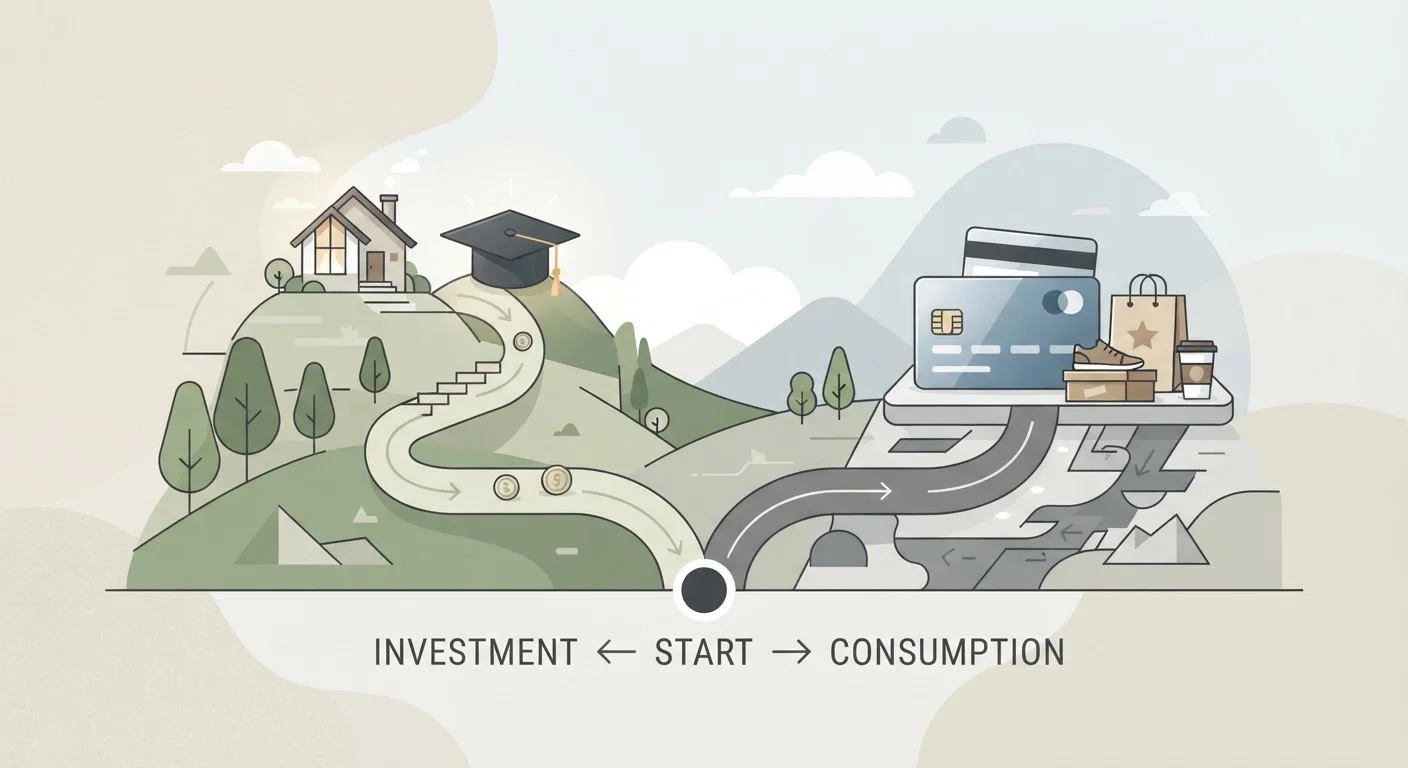
Photo credit: FaqBulletin.com | Information Made Easy
In this article
Explore the concept of "good" and "bad" debt, what makes the distinction meaningful, and where it breaks down in real household situations.
Key Takeaways
- Good debt typically finances assets or opportunities that grow in value or increase earning power.
- Bad debt usually funds depreciating purchases at high interest rates with no lasting financial benefit.
- The good/bad framework is useful but breaks down when borrowing terms or personal circumstances shift.
- Interest rate, repayment timeline, and your overall cash flow matter more than the debt label alone.
- Carrying so-called good debt can still strain a household budget if the payment load is too high.
Encourages borrowing for assets that build wealth
Debt used to purchase a home or fund an education can increase net worth or earning power over time, making the interest cost a worthwhile trade-off in many cases.
Helps households avoid high-cost consumer borrowing
Recognizing that revolving credit card debt at 20%+ APR is financially damaging steers people away from a cycle that's notoriously difficult to escape.
Provides a simple decision filter under financial stress
When money is tight and options feel overwhelming, having a quick mental model reduces decision fatigue and can prevent impulsive borrowing decisions.
Aligns with how lenders assess creditworthiness
Lenders themselves distinguish between installment debt (mortgages, auto loans) and revolving consumer debt when evaluating risk, so understanding the categories helps borrowers anticipate how their profile looks.
Oversimplifies highly variable real-world debt situations
A mortgage at an unaffordable payment-to-income ratio causes just as much financial harm as a credit card balance — the asset label doesn't insulate the borrower from cash-flow pressure.
Student loan value depends entirely on outcomes
The "investment in yourself" framing only holds if the degree leads to sufficient income; borrowing heavily for programs with limited employment returns can produce lasting financial strain.
Interest rate variation within categories is ignored
Not all mortgages, auto loans, or personal loans are equal — a high-rate loan in any category can outweigh its supposed benefits, and the framework gives no guidance on evaluating actual terms.
Can create a false sense of security with "good" debt
Borrowers who assume their mortgage or business loan is automatically manageable may underestimate total debt load and squeeze out emergency savings or retirement contributions.
Ignores the role of overall debt-to-income ratio
Stacking multiple "good" debts — a mortgage, a car loan, and student loans simultaneously — can push a household's debt-to-income ratio into territory that limits financial flexibility and borrowing options.
What the Good Debt / Bad Debt Framework Actually Says
The core idea is straightforward: debt used to acquire something that grows in value or increases your income is "good," while debt used to fund consumption — things you spend and forget — is "bad." Mortgages, student loans, and business financing are the classic examples of good debt. High-interest credit card balances and payday loans sit firmly in the bad column.
This framing has practical value. It gives households a quick filter when deciding whether to borrow, and it correctly identifies a real pattern: debt that builds assets tends to leave borrowers in a stronger financial position over time, while debt that funds depreciating purchases compounds financial stress. For readers new to managing money, it's a useful place to start — but it's a starting point, not a complete answer. For a clear breakdown of terms like APR, amortization, and utilization rate, see Key Terms Every Debt Holder Should Understand.
The Pros: Why This Distinction Has Real Merit
Used carefully, the good/bad framework does meaningful work in everyday financial decision-making.
Encourages borrowing for assets that build wealth
Debt used to purchase a home or fund an education can increase net worth or earning power over time, making the interest cost a worthwhile trade-off in many cases.
Helps households avoid high-cost consumer borrowing
Recognizing that revolving credit card debt at 20%+ APR is financially damaging steers people away from a cycle that's notoriously difficult to escape.
Provides a simple decision filter under financial stress
When money is tight and options feel overwhelming, having a quick mental model reduces decision fatigue and can prevent impulsive borrowing decisions.
Aligns with how lenders assess creditworthiness
Lenders themselves distinguish between installment debt (mortgages, auto loans) and revolving consumer debt when evaluating risk, so understanding the categories helps borrowers anticipate how their profile looks.
~43%
Americans carrying credit card balances monthly
Federal Reserve data consistently shows roughly four in ten U.S. adults carry revolving credit card debt month to month, making high-interest consumer debt a widespread household challenge.
20%+
Average credit card APR in recent years
The Consumer Financial Protection Bureau has reported average credit card interest rates exceeding 20% in recent periods, highlighting the steep cost of revolving consumer debt.
The Cons: Where the Framework Breaks Down
The label doesn't tell the whole story. A debt classified as "good" can become a serious financial burden depending on the terms you accept and the income you're working with.
Oversimplifies highly variable real-world debt situations
A mortgage at an unaffordable payment-to-income ratio causes just as much financial harm as a credit card balance — the asset label doesn't insulate the borrower from cash-flow pressure.
Student loan value depends entirely on outcomes
The "investment in yourself" framing only holds if the degree leads to sufficient income; borrowing heavily for programs with limited employment returns can produce lasting financial strain.
Interest rate variation within categories is ignored
Not all mortgages, auto loans, or personal loans are equal — a high-rate loan in any category can outweigh its supposed benefits, and the framework gives no guidance on evaluating actual terms.
Can create a false sense of security with "good" debt
Borrowers who assume their mortgage or business loan is automatically manageable may underestimate total debt load and squeeze out emergency savings or retirement contributions.
Ignores the role of overall debt-to-income ratio
Stacking multiple "good" debts — a mortgage, a car loan, and student loans simultaneously — can push a household's debt-to-income ratio into territory that limits financial flexibility and borrowing options.
Auto Loans: A Gray Area Worth Noting
Car loans are often cited as a middle-ground case. The vehicle depreciates immediately and continuously, which pushes auto debt toward the "bad" column. But for many households, a reliable vehicle is essential to employment and daily life — making the borrowing functional even if not wealth-building. The key variable is the interest rate and whether the payment fits your budget without crowding out savings. A reasonable-rate loan on a practical, reliable vehicle is very different from an extended, high-rate loan on a vehicle beyond your means.
A More Useful Way to Evaluate Any Debt
Rather than asking "is this good or bad debt?" ask three sharper questions: What is the all-in cost, including the interest rate and any fees? Does the monthly payment fit comfortably within your budget without crowding out savings or emergency funds? And what happens to your financial position if your income drops?
A student loan at a manageable rate for a high-demand field clears all three tests fairly easily. The same loan at an aggressive interest rate for a degree with limited income potential does not — regardless of the label applied to it. Debt is rarely good or bad in the abstract; it's good or bad for your specific situation.
If you're carrying debt while also trying to save, the tradeoffs are real and worth thinking through carefully. Saving While Carrying Debt: Finding the Right Balance walks through how households can pursue both goals at once without sacrificing financial stability.
This article is for general informational and educational purposes only and does not constitute personalized financial, tax, or legal advice. Consult a licensed financial professional for guidance specific to your circumstances.

Author
Personal Finance Editorial Team
Personal Finance Editorial Team is the collective byline for our editorial team and contributor network. Articles published under this byline or an editorial pen name are researched, written, and reviewed according to our editorial standards for clarity, consistency, and independence before publication.
View all articles →