
Mental Health Glossary: Key Terms Explained in Plain Language
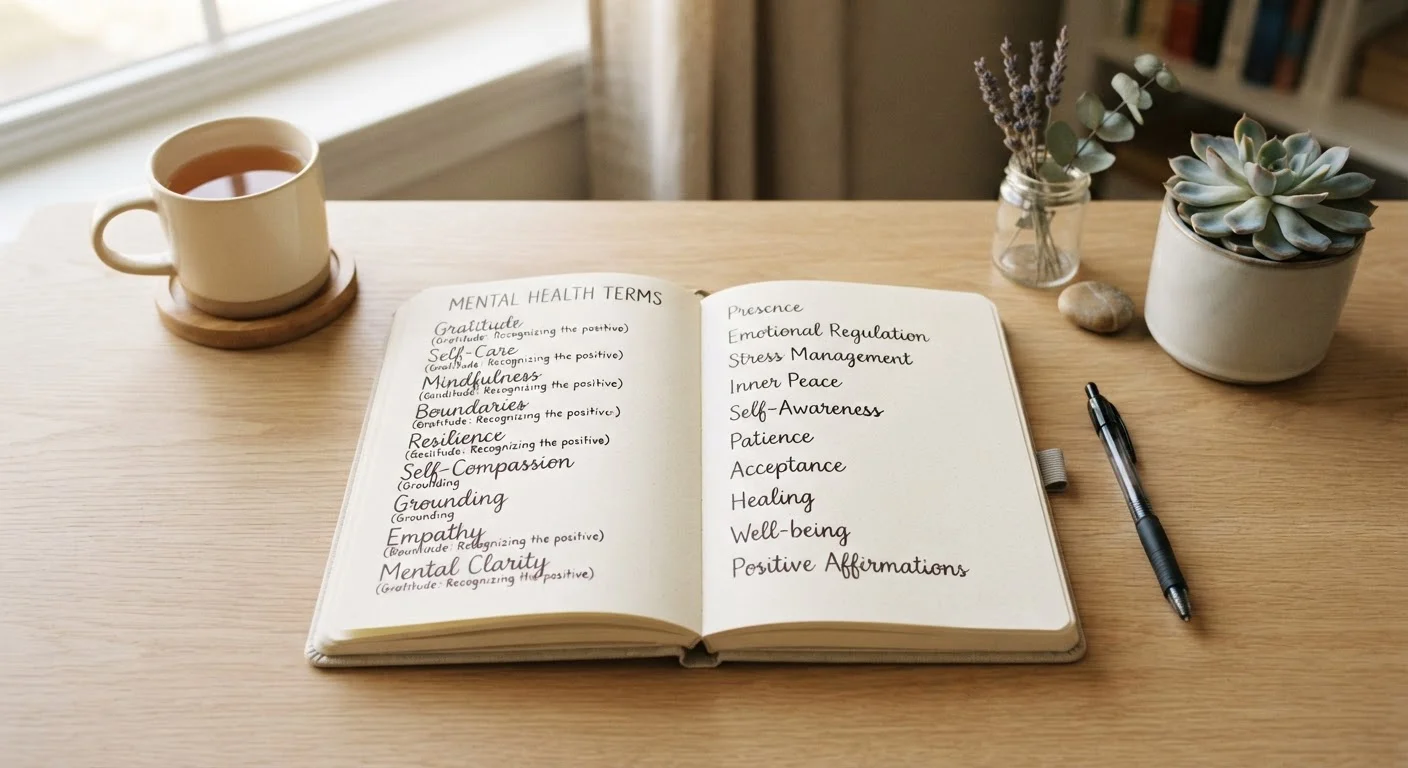
Photo credit: FaqBulletin.com | Information Made Easy
In this article
From 'cognitive distortion' to 'window of tolerance' — a plain-language reference for the mental health terms you've heard but may not fully know.
Why Mental Health Vocabulary Matters
Words shape how we understand and talk about what we experience. When someone hears a clinician mention "affect" or reads about "emotional dysregulation" in an article, unfamiliar terminology can become a barrier rather than a bridge. Building even a basic mental health vocabulary helps you have clearer conversations with providers, better understand a diagnosis, and approach your own wellbeing with less confusion and less stigma.
This glossary is designed as a plain-language reference - not a diagnostic tool. It covers terms that appear frequently in therapy settings, mental health literature, and public health conversations. Think of it as a starting point rather than a clinical reference.
This Is General Information, Not Medical Advice
The definitions in this glossary are intended to support general health literacy and education. They are not a substitute for evaluation or guidance from a licensed mental health professional. If you or someone you know is struggling, please reach out to a qualified clinician or contact a crisis resource such as the 988 Suicide and Crisis Lifeline.
If you're just beginning to explore this topic, our starter guide for overwhelmed adults covers core concepts and daily habits in accessible language.
Core Terms Defined
The following definitions cover some of the most commonly encountered mental health terms - from therapy jargon to concepts you may have seen in mainstream health coverage. Each one is explained without clinical shorthand so it's usable in everyday conversation.
You'll notice several of these terms - like rumination, cognitive distortion, and emotional dysregulation - are especially relevant to understanding how therapy approaches like CBT and DBT work. For a complementary look at how digital tools interact with these concepts, see our article on digital mental health tools.
Just as financial literacy calls for knowing foundational terms - as covered in resources like our common financial terms glossary - mental health literacy depends on a shared vocabulary that makes complex experiences easier to name and address.
Key Facts and Support Resources
Understanding mental health terminology is only part of the picture. Context matters too - including how common mental health challenges are, how long people wait before seeking help, and where to turn when professional support is needed.
| Adults with any mental illness (US) | Approximately 1 in 5 (SAMHSA National Survey on Drug Use and Health, 2022) |
| Average delay before seeking treatment | 11 years (National Alliance on Mental Illness (NAMI)) |
| Primary therapy for cognitive distortions | Cognitive Behavioral Therapy (CBT) (American Psychological Association) |
| Crisis support line (US) | Dial or text 988 (Substance Abuse and Mental Health Services Administration (SAMHSA)) |
| Protective factors studied for depression | Social connection ranks among the strongest (National Institute of Mental Health (NIMH)) |
These figures underscore why accessible mental health education has real-world value. When families and individuals can name what they're experiencing, they're better positioned to seek timely, appropriate care. Below are vetted resources worth bookmarking.
988 Suicide & Crisis Lifeline
A free, confidential crisis support service available 24/7 by call or text in the US. Provides immediate help for people in emotional distress or mental health crises.
NAMI (National Alliance on Mental Illness)
NAMI offers peer support groups, educational programs, and a helpline for individuals and families navigating mental health conditions across the US.
NIMH Mental Health Information
The National Institute of Mental Health publishes plain-language overviews of mental health conditions, treatments, and ongoing research, reviewed by clinical experts.
This article is for general informational and educational purposes only and does not constitute medical or mental health advice. Always consult a licensed mental health professional for concerns about your own or a loved one's mental health.

Author
Health & Wellness Editorial Team
Health & Wellness Editorial Team is the collective byline for our editorial team and contributor network. Articles published under this byline or an editorial pen name are researched, written, and reviewed according to our editorial standards for clarity, consistency, and independence before publication.
View all articles →