
Bodyweight Training vs. Resistance Bands: What the Research Actually Shows
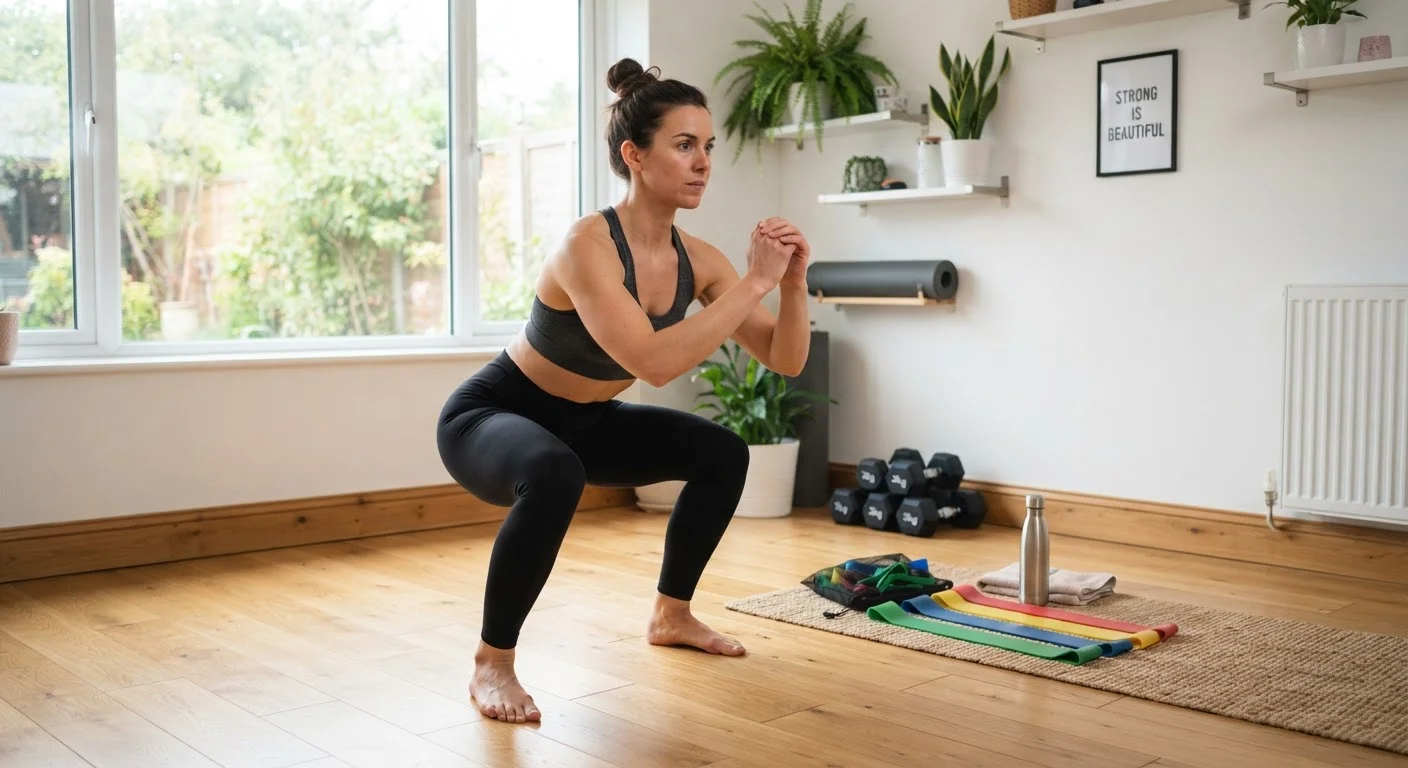
Photo credit: FaqBulletin.com | Information Made Easy
In this article
Compare bodyweight exercises and resistance bands across muscle activation, convenience, and progression to find your best fit.
Key Takeaways
- Bodyweight training and resistance bands both produce measurable strength and muscle gains when programmed consistently.
- Resistance bands offer adjustable load that more closely mimics progressive overload used in traditional weightlifting.
- Bodyweight exercises require zero equipment and develop functional movement patterns alongside strength.
- Research suggests resistance bands can match free weights for muscle activation in several exercises.
- The best choice depends on your goals, available space, budget, and where you are in your fitness journey.
What the Research Actually Measures
When comparing these two training modes, exercise scientists typically examine three outcomes: muscle activation (measured via electromyography), strength gains over time, and the ability to progressively overload muscles as they adapt. Neither mode is ignored by researchers - both have a meaningful body of published evidence.
A key concept worth understanding is progressive overload - the principle that muscles must be challenged with gradually increasing demand to continue developing. This is where the two approaches diverge most clearly in practice, even when both produce real results in controlled settings.
For a broader look at how home-based exercise stacks up in general, see our honest comparison of home vs. gym workouts.
Muscle Activation and Strength Gains: Side by Side
Studies using electromyography have shown that resistance bands can produce muscle activation levels comparable to free weights for exercises like bicep curls, squats, and rows. A frequently cited area of advantage is the ascending resistance curve of bands - tension increases as the band stretches, loading the muscle differently than gravity-based bodyweight moves.
Bodyweight exercises, particularly compound movements like push-ups, pull-ups, and squats, activate multiple muscle groups simultaneously and build what researchers describe as functional strength - the kind that translates into everyday tasks. Studies consistently show that well-structured bodyweight programs produce significant strength improvements in untrained and moderately trained individuals.
| Bodyweight Training | Resistance Bands | |
|---|---|---|
| Equipment cost | Free | Low (bands are affordable) |
| Portability | Highest - no gear needed | High - fits in a bag |
| Progressive overload ease | Moderate - requires technique knowledge | High - change band resistance simply |
| Muscle activation | Strong for compound movements | Comparable to free weights in studies |
| Joint stress | Moderate - dependent on form | Generally low - controllable load |
| Suitable for beginners | Yes, with foundational movements | Yes, highly adaptable resistance |
| Skill learning curve | Steeper for advanced progressions | Minimal |
Where bodyweight training faces a ceiling is in advanced trainees. Once a push-up is easy, progressing requires moving to more technically demanding variations (archer push-ups, one-arm progressions) - a skill-learning curve that not everyone finds intuitive.
Convenience, Cost, and Accessibility
Bodyweight training requires no equipment and no financial outlay - a significant factor for households managing tight budgets. A small, clear floor space is all that's needed. Resistance bands, while affordable compared to weights or machines, do represent a modest purchase and require storage.
For portability, both options travel well. Bands fit in a bag; bodyweight exercises need only a body. For families with children or older relatives, bands offer a gentler entry point with controllable resistance levels, reducing joint stress compared to loading bodyweight on deconditioned muscles.
Combine Both for Maximum Flexibility
Many exercise physiologists recommend integrating both methods rather than choosing one exclusively. Using resistance bands for pulling movements (rows, bicep work) and bodyweight for pushing and core exercises gives you the advantages of each. This hybrid approach is especially practical for households where multiple fitness levels need to be accommodated.
It's worth noting that exercise modality choice also intersects with sleep quality and recovery. Our article on how exercise affects sleep explores that relationship further.
Progression and Long-Term Sustainability
Resistance bands have a practical edge in structured progression. Moving from a lighter to a heavier band - or combining bands - mirrors the incremental load increases used in gym-based strength training. This makes programming more intuitive and measurable over weeks and months.
Bodyweight progression works differently: you manipulate leverage, tempo, range of motion, and unilateral loading rather than adding external weight. This is equally valid but demands more exercise knowledge to apply correctly. For users interested in how strength training integrates with cardiovascular health, our cardio vs. strength training comparison covers that intersection in detail.
Ultimately, adherence is the most important variable in any exercise program. Research consistently finds that the method a person actually enjoys and sticks with produces the best outcomes - making personal preference a legitimate factor in your decision.
This article is for general informational and educational purposes only and does not constitute medical or fitness advice. Consult a qualified healthcare or exercise professional before beginning any new training program, especially if you have existing health conditions or injuries.

Author
Health & Wellness Editorial Team
Health & Wellness Editorial Team is the collective byline for our editorial team and contributor network. Articles published under this byline or an editorial pen name are researched, written, and reviewed according to our editorial standards for clarity, consistency, and independence before publication.
View all articles →