
The U.S. K-12 System Explained: Grades, Schools, and What Happens When
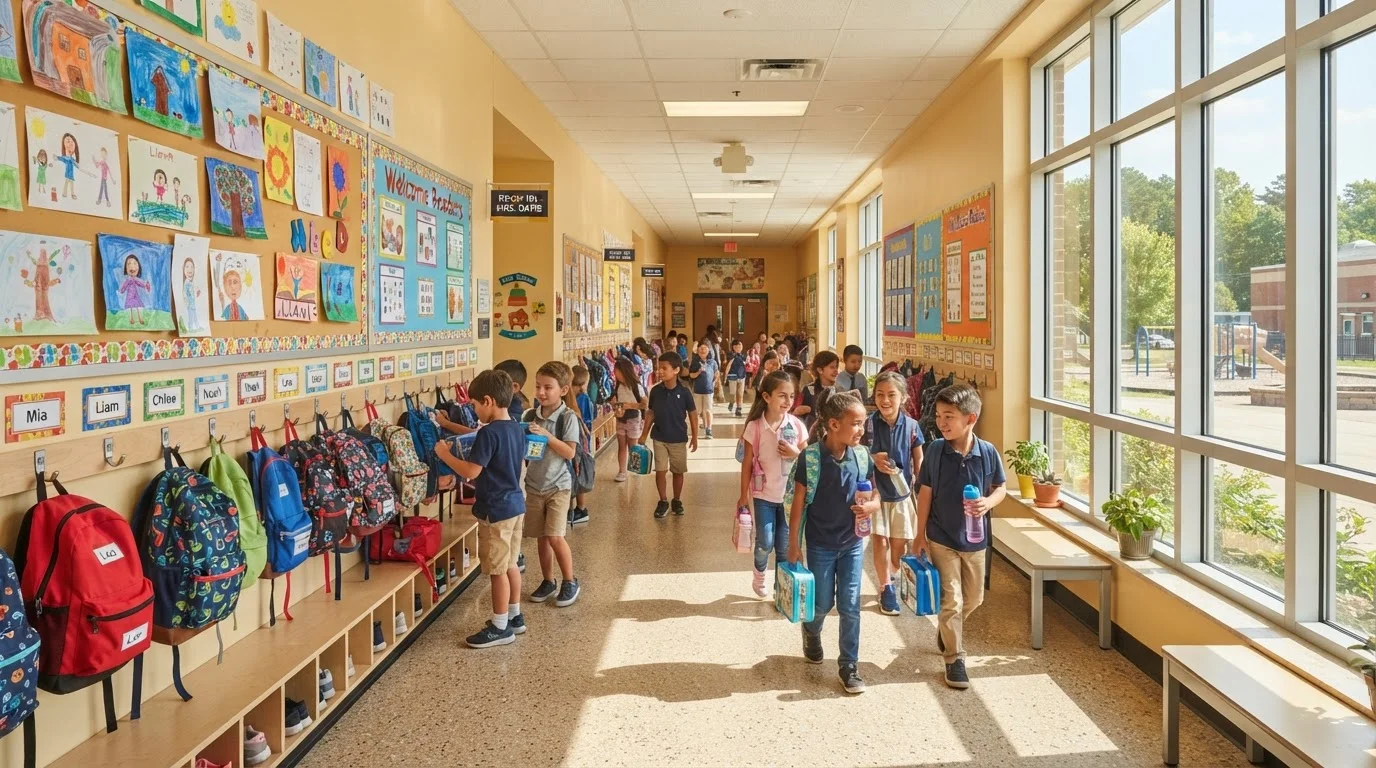
Photo credit: FaqBulletin.com | Information Made Easy
In this article
A plain-language breakdown of how American K-12 education is structured, from kindergarten through senior year.
Key Takeaways
- K-12 spans 13 grade levels, from kindergarten through 12th grade, across three school stages.
- Most children enter kindergarten around age 5 and graduate high school around age 18.
- School structures vary by district - some use a K-5/6-8/9-12 model, others differ.
- Key academic milestones include standardized assessments, credit accumulation, and graduation requirements.
- State and local governments set most K-12 rules; the federal government plays a supporting role.
How the K-12 System Is Organized
American K-12 education moves through three distinct school stages. While exact grade groupings vary by district, the most common structure looks like this:
- Elementary school: Kindergarten through Grade 5 (ages 5-11)
- Middle school: Grades 6-8 (ages 11-14)
- High school: Grades 9-12 (ages 14-18)
Some districts use a K-4 elementary paired with a Grades 5-8 middle school, or combine junior high and high school into a 7-12 campus. What matters for families is knowing which grades belong to which building in their district - because transitions between schools are among the most socially and academically significant moments in a child's education.
If you're navigating enrollment for the first time or after a move, see our step-by-step enrollment guide for documents to gather and questions to ask upfront.
Grade Bands Vary by District
Not every district uses the K-5/6-8/9-12 model. Some communities have K-6 elementary schools paired with 7-9 junior highs, or use a K-8 model that skips a separate middle school entirely. Before assuming a grade-band structure, confirm how your specific district is organized - especially when planning school transitions.
Elementary School: Building the Foundation (K-5)
Elementary school is where children develop foundational literacy, numeracy, and social skills. Students in these grades typically work with a single homeroom teacher who covers most core subjects - reading, writing, math, science, and social studies - with specialists handling art, music, and physical education.
Key milestones in elementary school include:
- Early literacy benchmarks - most states expect students to read independently by the end of 3rd grade, and some states have retention policies tied to this.
- Standardized testing - most states administer annual reading and math assessments beginning in 3rd grade, as required under federal law.
- Introduction to gifted or intervention services - schools typically screen for learning differences and advanced abilities during these years.
For a plain-language guide to the scores and assessments your child's school reports use, see our parent's reference guide to standardized testing.
49.6M
Students enrolled in U.S. public K-12 schools
According to the National Center for Education Statistics, approximately 49.6 million students attended public elementary and secondary schools in a recent school year.
13,000+
Public school districts in the United States
The NCES reports more than 13,000 local education agencies (school districts) operating across the country, each with its own policies and structures.
~90%
U.S. students in public schools
Roughly 90 percent of K-12 students attend public schools; the remainder attend private schools or are homeschooled, according to NCES data.
Middle School: The Transition Years (Grades 6-8)
Middle school marks a significant structural shift. Students move from a single teacher to a team of subject-area specialists - one for math, one for English, another for science, and so on. This mirrors the subject-by-subject format they'll use in high school and beyond.
Academically, these grades introduce pre-algebra and algebra, persuasive writing, lab-based science, and a first look at world history. Socially, middle school is where peer relationships and identity development intensify.
From a planning perspective, 8th grade matters more than many families realize. Many districts allow students to take high-school-credit courses (often Algebra I or a foreign language) during 8th grade. These credits can count toward high school graduation requirements, potentially opening room for advanced coursework later.
Check for High School Credit Opportunities Early
Ask your middle school counselor whether any 8th-grade courses - particularly math or foreign language - carry high school credit in your district. Taking advantage of these opportunities can give students more scheduling flexibility in high school and may allow them to access AP or dual enrollment courses sooner.
High School: Credits, Transcripts, and Graduation (Grades 9-12)
High school operates on a credit system. Students earn credits by passing courses, and each state sets a minimum number of credits required to graduate - typically in the range of 20 to 26 credits, depending on the state. Districts may require more than the state minimum.
The four high school years are commonly referred to by these names:
- 9th grade
- Freshman year - students begin building their official transcript.
- 10th grade
- Sophomore year - PSAT is often taken here for practice.
- 11th grade
- Junior year - typically the most academically intensive; SAT, ACT, and AP exams are often taken.
- 12th grade
- Senior year - college applications, final credit completion, and graduation.
Grades 9 and 10 are the time to establish strong study habits and explore electives. Grades 11 and 12 are when college and career planning accelerates. Our K-12 to college-ready guide offers a comprehensive look at the full planning arc across all four years.
Who Governs K-12 Schools?
Authority over K-12 education in the U.S. is primarily held at the state level. Each state sets its own academic standards, graduation requirements, teacher licensing rules, and compulsory attendance ages. Local school districts then implement those rules, often adding their own requirements on top.
The federal government's role is mainly financial and oversight-based. It provides funding to districts serving high proportions of low-income students (Title I funding) and sets accountability conditions tied to that funding - including the annual testing requirements families see in 3rd through 8th grade. However, the federal government does not set curriculum or control day-to-day school operations.
This decentralized design means that what a 6th grader studies in Texas may differ substantially from what a 6th grader studies in Massachusetts. When families move across state lines, the academic transition can involve real gaps or overlaps in content - something worth discussing with receiving school staff when enrolling. Once students complete high school, the terminology shifts considerably; our higher education glossary explains the key college-planning terms families will encounter next.
Frequently Asked Questions

Author
Education Editorial Team
Education Editorial Team is the collective byline for our editorial team and contributor network. Articles published under this byline or an editorial pen name are researched, written, and reviewed according to our editorial standards for clarity, consistency, and independence before publication.
View all articles →