
The Myths Surrounding Full-Coverage Auto Insurance
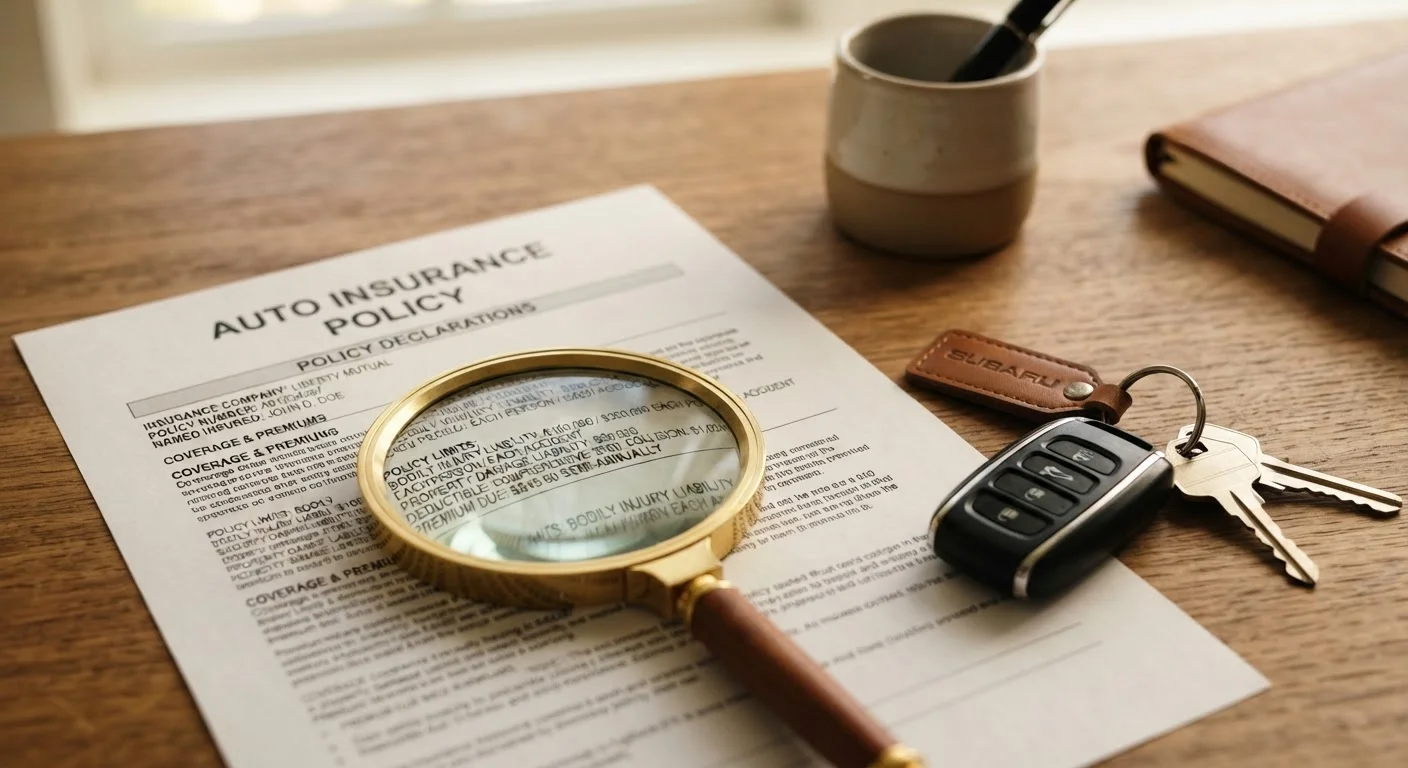
Photo credit: FaqBulletin.com | Information Made Easy
In this article
"Full coverage" doesn't mean everything is covered. Common misconceptions about what auto insurance actually pays for — and what it doesn't.
Key Takeaways
- 'Full coverage' is an informal term - no standard policy definition exists across insurers.
- Even comprehensive policies exclude personal belongings, mechanical failure, and ride-share gaps.
- Your deductible reduces every claim payout, regardless of how much you pay in premiums.
- Liability limits in a full-coverage policy can still leave you personally exposed after a serious accident.
- Gap insurance is a separate product that full coverage does not automatically include.
Why 'Full Coverage' Is a Misleading Label
Ask ten drivers what 'full coverage' means and you'll likely get ten different answers. That's not a coincidence - the term has no standard regulatory definition in the United States. It's industry shorthand that gets repeated at dealerships, loan offices, and kitchen tables without anyone pausing to read the policy language behind it.
In practice, most insurers treat 'full coverage' as a combination of liability, collision, and comprehensive protection. But knowing those three words exist is very different from understanding what each one actually pays - and, more importantly, what each one refuses to pay. The myths below are among the most financially consequential misunderstandings American drivers carry about their own policies.
Myth
Full coverage means every possible loss or damage will be paid for by my insurer.
Fact
No policy covers every scenario. 'Full coverage' typically bundles liability, collision, and comprehensive - each with its own exclusions and limits.
The phrase 'full coverage' is an industry shorthand, not a legal or regulatory term. Insurers do not define it uniformly. What most people mean when they say it is a policy that combines liability (damage you cause others), collision (damage to your vehicle in an accident), and comprehensive (theft, weather, animals, and other non-collision events).
Even that combination leaves meaningful gaps. Mechanical breakdown, normal wear and tear, intentional damage, and losses that fall below your deductible are routinely excluded. See how each coverage type actually works for a plain-language breakdown of what each component protects.
Myth
Full coverage pays for whatever is stolen from inside my car.
Fact
Personal property inside a vehicle - laptops, luggage, tools - is typically excluded from auto insurance and instead falls under homeowners or renters insurance.
Comprehensive coverage reimburses damage to the vehicle itself, including a broken window or stolen stereo that was factory-installed. It does not extend to the bag of electronics on the back seat. Most insurers treat items inside a car as personal property, which is the domain of your homeowners or renters policy - and even then, a deductible and sub-limits may apply.
Drivers who routinely carry expensive equipment should review their homeowners or renters policy for off-premises personal property coverage and confirm whether a separate rider is needed.
Myth
I won't owe anything out of pocket after a covered claim because I have full coverage.
Fact
Your deductible is subtracted from every covered claim payout - if you chose a $1,000 deductible, you absorb that amount before insurance pays anything.
Premium cost and out-of-pocket exposure move in opposite directions. Drivers who select a high deductible to lower their monthly premium are, in effect, self-insuring the first portion of any claim. A $500 fender repair with a $500 deductible results in a $0 insurance payout - yet the claim may still affect your rate.
Before selecting a deductible, consider whether you could realistically cover that amount on short notice. Misunderstanding deductibles is one of the most common - and costly - insurance errors new car owners make.
Myth
Full coverage protects me financially no matter how serious an accident I cause.
Fact
Liability coverage has stated dollar limits. If damages exceed those limits, you are personally responsible for the difference.
A policy that carries 50/100/50 liability limits (meaning $50,000 per person, $100,000 per accident for bodily injury, and $50,000 for property damage) will not pay a cent beyond those caps. In a multi-vehicle accident with serious injuries, medical costs alone can exceed six figures. The gap between what insurance pays and what courts award becomes your personal debt.
Higher liability limits and an umbrella policy are separate decisions from whether you carry collision and comprehensive. For a direct comparison of what liability-only versus broader coverage actually includes, see our side-by-side look at liability-only vs. full-coverage auto insurance.
Myth
Full coverage automatically includes gap insurance if I'm financing my car.
Fact
Gap insurance is a separate, optional product. Standard full-coverage policies do not include it unless you specifically add it.
When a financed vehicle is totaled, the insurer pays actual cash value - what the car is worth at the time of loss, not what you still owe the lender. Because new vehicles depreciate quickly, the loan balance can easily exceed the payout, leaving the owner responsible for the difference. Gap coverage (Guaranteed Asset Protection) pays that difference.
Lenders sometimes offer gap products at the point of financing, but it can also be added through your insurer - often at lower cost. If you're financing a vehicle and want to understand where full-coverage policies fall short, skipping gap coverage is one of the most consequential oversights new car owners make.
Myth
If I drive for a ride-share app, my personal full-coverage policy protects me during trips.
Fact
Most personal auto policies exclude commercial use. Coverage gaps exist when the app is active but no passenger has yet been accepted.
Ride-share companies typically provide some coverage once a ride is accepted and while a passenger is in the vehicle. However, the period when a driver has the app open but hasn't matched with a rider is a documented gray zone - personal policies may deny claims, and the ride-share company's coverage is limited. Drivers in this situation should ask their insurer about a ride-share endorsement, which is an add-on specifically designed to close that gap.
What Drivers Should Actually Do With This Information
Clearing up these myths isn't about alarm - it's about making deliberate choices. A few practical steps make a meaningful difference:
- Read the declarations page. This one-to-two-page summary at the front of your policy lists your actual coverage types, limits, and deductibles in plain numbers. It's the fastest way to see what you're actually paying for.
- Match liability limits to your assets. If your net worth exceeds your liability limits, you carry personal exposure in a serious at-fault accident. Review limits annually, particularly after major life changes.
- Ask about exclusions explicitly. When you add or renew coverage, ask your insurer what is not covered - not just what is. Agents are required to answer truthfully.
- Understand premium-rate drivers. Coverage decisions aren't the only thing affecting your cost. Credit scores, zip codes, and market-wide adjustments can raise your premium even if you've never filed a claim.
Policy Language Controls - Not the Label
If there is ever a dispute over a claim, your insurer will refer to the actual policy contract - not the phrase 'full coverage' that appeared in a sales conversation. Verbal assurances from agents do not override written policy exclusions. Always request changes or additions to coverage in writing, and keep a copy of your current declarations page somewhere accessible.
The goal isn't to pay more - it's to pay for protection that actually matches your risk. A policy that looks comprehensive on paper may leave significant exposure in place. Taking an hour to review your declarations page and speak with your insurer is the most cost-effective risk management most drivers will ever do.

Author
Automotive Editorial Team
Automotive Editorial Team is the collective byline for our editorial team and contributor network. Articles published under this byline or an editorial pen name are researched, written, and reviewed according to our editorial standards for clarity, consistency, and independence before publication.
View all articles →