
What 'Transmission Flush' Actually Means-and When Shops Recommend It Too Soon
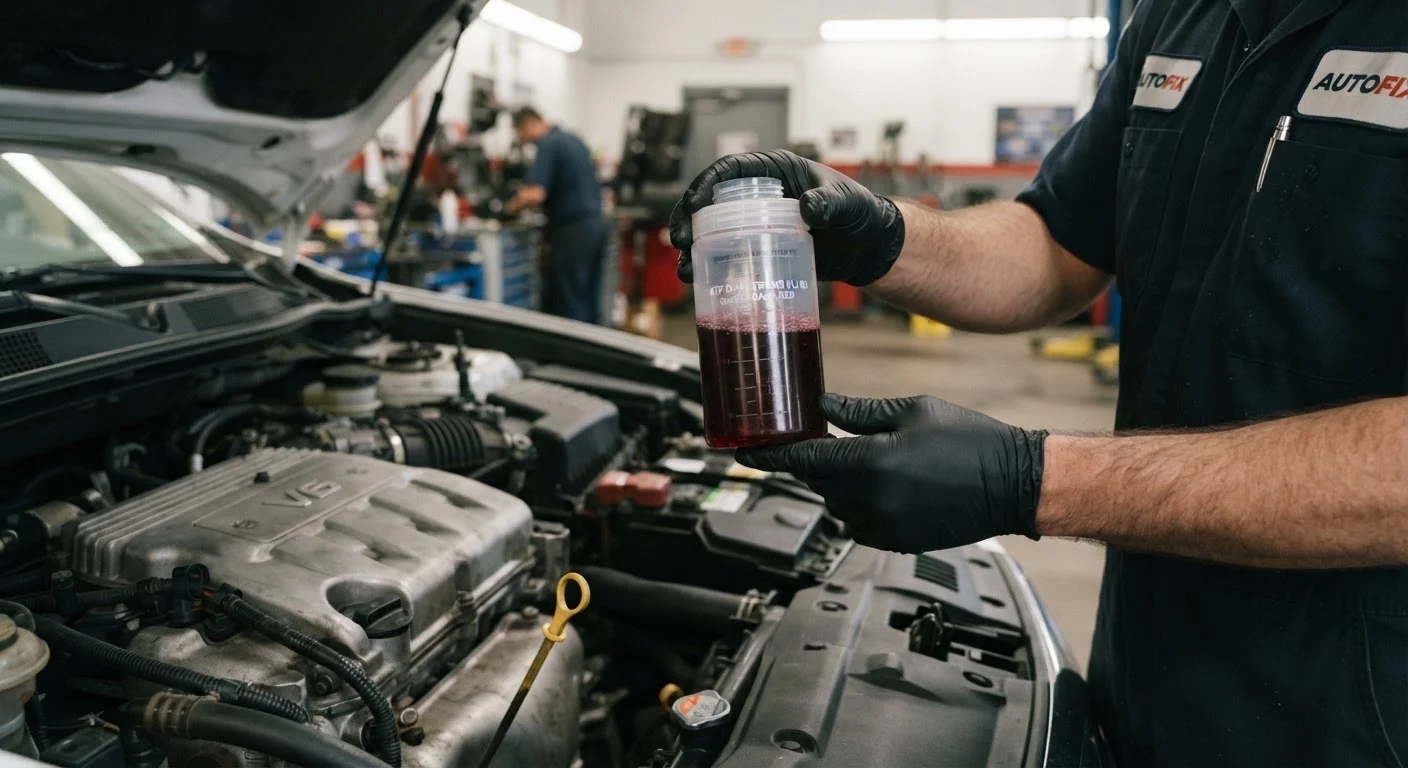
Photo credit: FaqBulletin.com | Information Made Easy
In this article
Transmission service is important, but the timing matters. Learn what a flush involves and when your vehicle actually needs one.
Key Takeaways
- A transmission flush replaces nearly all old fluid; a drain-and-fill replaces only about half.
- Most manufacturers recommend transmission service every 30,000-60,000 miles, but intervals vary widely by vehicle.
- Shops sometimes recommend flushes prematurely - always check your owner's manual first.
- Dark, burnt-smelling fluid is a legitimate reason to consider service; slightly discolored fluid often is not.
- A flush on a severely neglected transmission may cause more harm than good in some cases.
- Consulting your owner's manual and a trusted mechanic protects you from unnecessary service costs.
What Actually Happens During a Transmission Flush
When a shop performs a transmission flush, a technician connects a flushing machine to the transmission cooler lines. The machine either uses the transmission's own pump or an external pump to circulate fresh automatic transmission fluid (ATF) through the system, pushing old fluid out. The process continues until the fluid exiting the system runs clean and matches the color and clarity of new ATF.
This is meaningfully different from a drain-and-fill, the simpler alternative. In a drain-and-fill, the technician removes the transmission pan drain plug or drops the pan, lets old fluid drain by gravity, and refills with new ATF. Because fluid also sits in the torque converter and cooler lines, a drain-and-fill typically replaces only around 40-50% of the total fluid volume. A flush replaces closer to 90-100%.
For a broader look at all the fluids your vehicle depends on, see Car Fluids Decoded.
30,000-60,000 mi
Typical transmission service interval range
Many manufacturer maintenance schedules place automatic transmission service in this range for normal driving conditions, though intervals vary significantly by make, model, and transmission type.
~50%
Fluid replaced in a typical drain-and-fill
Because fluid remains in the torque converter and cooler lines, a gravity drain typically replaces only around half of the total transmission fluid volume.
90-100%
Fluid replaced during a machine flush
A properly performed flush using a flushing machine can displace nearly all of the old fluid from the transmission system, including the converter and cooler lines.
Why Shops Recommend It - Sometimes Too Eagerly
Transmission service is a legitimate and necessary part of vehicle ownership. The problem is timing. Some shops recommend a flush at every oil change interval, or as soon as a vehicle hits 30,000 miles, regardless of the vehicle's actual service schedule or fluid condition. This generic approach can result in drivers paying for service their vehicle simply doesn't need yet.
Shops may also flag slightly discolored fluid as a red alert. ATF naturally darkens over time and with heat cycling - that alone doesn't mean the fluid has failed. What actually matters is whether the fluid has lost its protective additives, which requires either testing or comparison against the manufacturer's service interval.
Start With Your Owner's Manual
Your vehicle's owner's manual contains the manufacturer-specified transmission service interval - often listed under both a normal and a severe-duty schedule. This is the most reliable guide to when service is actually due. If you don't have your manual, most automakers publish them online through their official websites.
Before agreeing to any transmission service, pull out your owner's manual and look up the scheduled maintenance section. Some modern vehicles - particularly those with continuously variable transmissions (CVTs) or dual-clutch automatics - have very specific fluid requirements and intervals that differ sharply from older automatic transmissions. A handful of sealed transmissions carry a "lifetime fluid" designation, though many mechanics caution that "lifetime" fluid still benefits from eventual replacement.
When Service Is Genuinely Warranted
There are clear situations where transmission service is the right call. If your fluid is dark brown or black and smells burnt, the fluid has degraded and is no longer protecting internal components effectively. If you've been using your vehicle for heavy towing, frequent stop-and-go driving in extreme heat, or other conditions classified as "severe duty" in your owner's manual, more frequent service may be appropriate.
Additionally, if you've purchased a used vehicle with an unknown service history, having the transmission fluid inspected - and potentially replaced - is a reasonable precaution. Fresh fluid gives you a documented baseline going forward.
One important caveat: if a transmission is already showing symptoms - slipping between gears, hesitation on acceleration, rough or delayed shifts - a flush is not a remedy. Those symptoms point to mechanical, hydraulic, or electronic issues that require proper diagnosis from a qualified transmission specialist. Adding fresh fluid to a failing transmission will not restore worn clutch packs or fix a failing solenoid.
How to Protect Yourself From Unnecessary Service
The most effective defense is your owner's manual. The manufacturer's maintenance schedule reflects actual engineering decisions about how long the fluid chemistry holds up under normal operating conditions. That schedule - not a shop's posted service menu - is your baseline.
When a service advisor recommends a transmission flush, it's reasonable to ask two questions: What specific condition in my vehicle indicates this is needed now? And what does my owner's manual say about the service interval? A shop that can answer both clearly and honestly is one worth trusting.
If you're uncertain about fluid condition, ask to see the fluid on a dipstick or white rag before authorizing service. This simple visual check - dark, burnt smell versus clean, reddish - gives you immediate, firsthand information about whether service is urgent or premature. When in doubt, a second opinion from an independent mechanic is always a reasonable step.
Frequently Asked Questions

Author
Automotive Editorial Team
Automotive Editorial Team is the collective byline for our editorial team and contributor network. Articles published under this byline or an editorial pen name are researched, written, and reviewed according to our editorial standards for clarity, consistency, and independence before publication.
View all articles →